Software as a Sanction
The export ban on Claude Fable 5 reveals something bigger than a single compliance incident. Frontier AI has become infrastructure — and infrastructure can be switched off.
An API feels like a subscription. You pay for access, integrate it into your workflows, agree on uptime and pricing, and assume the thing behaves like ordinary software. That assumption collapsed last week. When the US government issued an export control directive on June 12, 2026, suspending all access to Claude Fable 5 and Claude Mythos 5 by foreign nationals, a frontier model transformed overnight from a SaaS product into a geopolitical instrument.
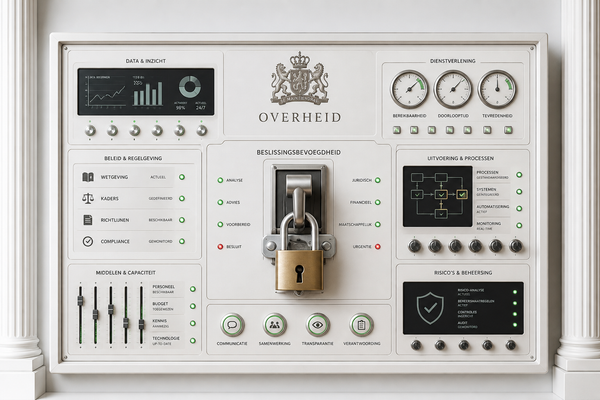
That is the real story in the Anthropic dossier. The episode is not primarily about a jailbreak, or whether the US government overreacted. The more important lesson is administrative. Washington has demonstrated that model access itself has become a lever in the export control panel — not just chips, not just model weights, not just cloud capacity, but API access as a category.
Those who dismiss this as a one-off panic response are thinking too small. Those who conclude that every frontier model is now permanently under export restriction are thinking too large. The more interesting space is in between: this measure does not yet look like a polished, permanent regime. It looks like a policy prototype. And in Washington, prototypes are often the most consequential phase — precisely because they are rough enough to deploy fast.
The facts first
The most reliable anchor here is not a leak. It is Anthropic itself. In an official statement dated June 12, 2026, the company confirmed that the US government had issued a directive suspending access to Fable 5 and Mythos 5 for "any foreign national," including foreign employees of Anthropic. According to the company, the letter arrived at 5:21 PM Eastern Time that day, without a publicly articulated explanation of the specific national security risk.
Anthropic did offer its own account. The government, it said, had received information about a method for jailbreaking Fable 5. According to the company, the vulnerabilities involved were relatively straightforward and already known, or at least plausible for other frontier models as well. That framing put the tension on the table immediately: the government treated the combination of high capability and bypass risk as sufficient grounds for abrupt action, while Anthropic argued the reported gaps were serious but not unique.
That this was no overnight misunderstanding became clear three days later. Semafor reported on June 15, 2026 that Anthropic staff would meet with senior White House officials. The Verge described on June 16, 2026 how the company had spent the weekend in crisis discussions and sent people to Washington. The measure was not a rumor, a screenshot saga, or forum panic. It was real, abrupt, and politically escalated at the highest levels.
The irony that makes this case so sharp
There is a pointed irony running through this episode: Anthropic had essentially handed the government the vocabulary for its own shutdown.
When Anthropic launched Claude Fable 5 and Claude Mythos 5 on June 9, 2026, the company leaned heavily on safety framing. These models, it said in substance, are powerful enough to meaningfully assist bad actors with cyberattacks and dangerous biological research. They are, explicitly, dual-use. They could only be released broadly because Anthropic had built in new safeguards and guardrails — while simultaneously acknowledging that fully watertight jailbreak resistance is probably not a realistic goal.
That is a defensible product narrative as long as everything holds. But the moment any doubt arises about those guardrails, the same language shifts from marketing-plus-responsibility into administrative evidence. If a lab tells the world that its model has frontier-level capability, can accelerate offensive misuse, and is only safe enough because of controlled access — then it is a short step for the state to conclude: fine, then access is a national security object.
The safety rhetoric did not just serve as justification for the release. It almost immediately served as justification for the shutdown as well. That dynamic makes this episode larger than Anthropic alone. It illustrates how the language of self-regulation can flip into the language of sovereign appropriation.
Why this is less legally strange than it looks
For many observers, an export ban on an API model still feels counterintuitive. You can stop a chip at a port. You can put a machine on a list. But a model running over remote access looks more like a license than an export object.
Yet this move does not come out of nowhere, legally or administratively.
Under the Export Administration Regulations, the concept of a deemed export has existed for decades: releasing technology or source code to a foreign person within the United States constitutes a legal export of knowledge, even without any physical product crossing a border. The same principle applies outside the US as a deemed reexport. The underlying logic is old: transfer to persons can constitute export, even when nothing ships in a box.
That is exactly why the detail about the directive covering foreign Anthropic employees matters so much. The measure does not just invoke nationality as a policy criterion; it invokes an existing export law framework in which access, knowledge, and person are already legally linked.
Add to that the fact that US AI policy has been moving steadily toward remote access as a category of concern. A Bureau of Industry and Security rule from January 15, 2026 on advanced computing commodities already required applicants to disclose remote end users in sensitive jurisdictions, secure IaaS environments against unauthorized access, and restrict transfer of model weights to undisclosed end users. Formally, that rule did not yet treat an API model as a standalone product category. Conceptually, the regulatory thinking was already heading in that direction.
And earlier still, a Federal Register rule from September 11, 2024 on reporting requirements for advanced AI models laid out explicitly why dual-use foundation models are relevant to defense, cyber misuse, and use by foreign adversaries. That rule asked for information on red-team results, cybersecurity measures, and protection of model weights. Frontier AI was already on the map as a national security object. The June 12 directive feels sudden. It is not unprecedented.
Not a regime yet — but a prototype
None of that means there is now a clean, stable, transparent export regime for frontier models in place. Too much is missing.
There is no publicly visible routine classification that puts Claude Fable 5 or Claude Mythos 5 into a standard regulatory category the way advanced chips are handled. The directive itself is not public. The technical basis for the declared acute risk is thin. And the whole intervention looks more like an emergency brake than a carefully announced sector rule.
That is exactly what makes this episode important. It shows policy in raw form, before the manual is written. The building blocks are suddenly visible:
- capability-based control, - nationality-based access restriction, - remote-access-as-export, - and frontier model access as a national security instrument.
That is not a complete rulebook. It is something potentially more consequential: a precedent that is already operationally viable before it has been standardized. Hardware export controls are slow, logistically complex, and often porous. Switching off a frontier API for specific user categories is administratively far faster. That makes the instrument attractive in any future situation where Washington decides it cannot afford procedural delay.
Why this probably will not stop at Fable 5
There are at least three reasons to think this episode will not remain a rare anomaly.
The first is that it fits a broader pattern in US AI strategy. The United States has been trying to do two things simultaneously for several years: spread its own AI stack globally among allies and partners, while ring-fencing strategically sensitive capabilities against adversaries or risk categories. That looks contradictory. It is not. What you want to export as national infrastructure, you also want to be able to cut off.
The second reason is more uncomfortable for the labs themselves. Frontier companies have spent years actively normalizing capability politics — warnings about dual-use, advocacy for export controls, concerns about distillation, emphasis on trusted access. In Anthropic's own policy paper on global AI leadership, that logic is laid out in detail. As long as such measures are aimed at geopolitical adversaries, that sounds strategically mature. When the same state logic turns back toward your own product, it becomes a power problem.
The third reason is purely operational. A chip shipment requires borders, licenses, and physical enforcement. An API model requires compliance and access management. That makes model access administratively attractive as an emergency instrument — not because it is always legally uncontested, but because it works fast in practice.
Why this is also not automatically the new normal
That still does not mean every frontier model can or will be closed to entire populations at any moment.
The public evidentiary basis in this case is weak. Anthropic acknowledges the incident but implicitly contests the proportionality. Critics note that comparable cyber capabilities exist elsewhere, and that Chinese open-weight models are only months behind. If that is true, a broad ban weakens not just potential adversaries but also allies, defenders, and international teams that specifically rely on American models.
Washington also cuts itself if it uses this instrument too loosely. It is hard to call on the world to build on American frontier AI while simultaneously demonstrating that access can shift over a weekend from a commercial promise to an executive order. Trust is also infrastructure. Whoever wants to be an export power must show not only strength but predictability.
The most accurate framing is therefore neither that this was one-off hysteria, nor that a fully new standard regime is now in effect. The more precise conclusion is that the threshold has been lowered. The instrument has become conceivable, administratively manageable, and legally defensible enough to be used again.
What Europe should take from this
The sharpest consequence may not be in Washington at all. It is in Europe.
Until now, "AI sovereignty" has often been discussed as a matter of industrial policy, innovation ambition, or symbolic independence from Silicon Valley. The Fable ban makes that framing suddenly more prosaic. Dependence on American frontier APIs is now also a continuity risk.
A European company can operate fully legally, compliantly, and contractually cleanly — and still be caught out if the US government decides that access to a model can no longer be treated as purely commercial. That risk does not only affect end users. It affects integrators, security teams, support organizations, and international engineering departments where nationality, location, and access rights are intertwined.
The timing sharpens that lesson. On June 12, 2026, Anthropic announced a major partnership with TCS: Claude for tens of thousands of employees across dozens of countries, specifically in regulated sectors. Almost simultaneously, Washington showed that cross-border model access can be abruptly suspended in an emergency. There is an uncomfortable truth buried in that juxtaposition: the export of American AI and its administrative shutoff capability are not opposites. They are two sides of the same infrastructure.
Three fairly practical lessons follow for Europe.
First, multi-provider architecture becomes rational even when one American provider is currently clearly better. Not because diversification is fashionable, but because monoculture has now proven geopolitically fragile.
Second, open-weight fallback deserves a more serious place in enterprise design. An open model may be weaker, more expensive to operate well, or less elegant in practice — but it has one underappreciated property: it cannot be disabled by a directive from a foreign government.
Third, European model capacity acquires a harder business case. Not only out of pride, not only for privacy reasons, but out of operational necessity. Once model access becomes an export control instrument, "sovereignty" shifts from ambition to delivery assurance.
The actual lesson
The Fable 5 ban is best understood as an emergency measure with precedent value. Not as a completed new era — but as the first large-scale demonstration of an administrative reality that had long been building beneath the surface.
In Washington, frontier AI is no longer just a clever product to be regulated. It has become a strategic asset that can be opened, directed, and closed. Once a model is deemed highly capable, dual-use, and susceptible to jailbreak, that switch is on the table.
That is the shift that sticks. Not whether Anthropic wins this week's lobbying battle. Not even whether the technical trigger was serious enough. But the recognition that a frontier API no longer reads only as software — it also reads as infrastructure on which states can exercise power.
And infrastructure, as every sector eventually learns, is never truly neutral.
Sources
Anthropic statements and policy
- Anthropic: statement on suspension of Fable/Mythos access, June 12, 2026 — confirmation of the directive and suspension for foreign nationals
- Anthropic: launch of Claude Fable 5 and Claude Mythos 5, June 9, 2026 — safety framing, dual-use positioning, and guardrail claims
- Anthropic: policy paper on global AI leadership, May 2026 — export control logic and trusted access as explicit policy positions (note: "2028" in the URL refers to the article's time horizon, not the publication year)
- Anthropic × TCS partnership, June 12, 2026 — large-scale global rollout as contrast to abruptly shutoff access
News coverage
- Semafor: Anthropic goes to Washington, June 15, 2026 — White House meetings and political escalation
- The Verge: crisis talks and political escalation, June 16, 2026 — weekend crisis discussions and Washington delegation
Legal framework
- 15 CFR §734.13 — deemed export — transfer of technology to foreign persons as legal export
- 15 CFR §734.14 — deemed reexport — the same principle applied outside the United States
- Federal Register, January 15, 2026 — remote end users, IaaS security, and model weights in advanced computing rules
- Federal Register, September 11, 2024 — frontier AI as national security object; red-teaming, cybersecurity, and weight protection