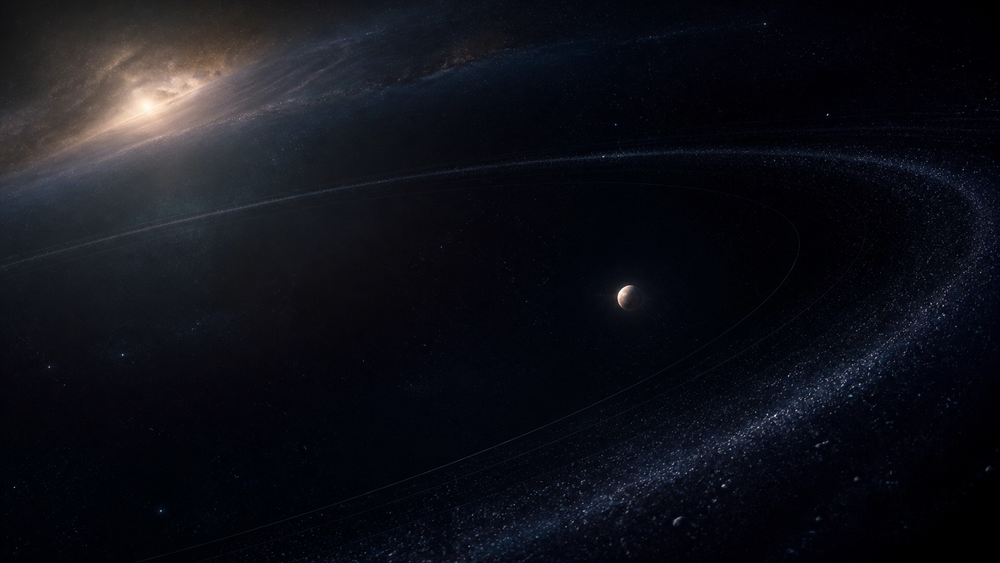
Pluto at 20: the vote that demoted a planet
Prague, 24 August 2006. After ten days of deliberation at the International Astronomical Union's General Assembly, 424 astronomers cast their ballots on a resolution that would end nine decades of planetary habit. The result: 237 in favour, 157 against, 30 abstentions. Pluto — discovered in 1930, taught to every child with a solar system mobile, named after a suggestion from an eleven-year-old girl in Oxford — ceased to be a planet.
Nine years later, NASA's New Horizons transmitted its first close-up of what those 424 astronomers had reclassified. It showed a 1,000-kilometre nitrogen glacier — now called Sputnik Planitia — younger-looking terrain than anyone expected, tectonic-like mountain ranges of water ice, and a layered atmospheric haze that changes with the seasons. A complex, active world.
The contrast between those two moments — a vote on a definition, and a photograph of a glacier — captures everything that has kept the argument alive for twenty years. Pluto was not expelled from science. It was placed, by a legitimate but contested vote, between two honest definitions of what a planet is: a dynamical ruler of its orbit, or a geophysical world in its own right.
The vote and its legitimacy problem
The resolution that reclassified Pluto required three properties: a body must orbit the Sun, must be nearly round through self-gravity, and must have "cleared the neighbourhood" around its orbit. Pluto passes the first two. It fails the third: it is one member of the Kuiper Belt, not its gravitational governor.
The IAU says more than 2,500 astronomers attended the General Assembly. The 424 who voted on the final Pluto resolution were those still present at the closing business session, after some delegates had already left. That participation figure — small relative to the meeting, smaller still relative to the global astronomical community — gave critics a durable process objection that no subsequent confirmation of the decision has fully neutralised.
It should be said clearly: low turnout is not a scientific refutation. Formal bodies decide by participating eligible members, not plebiscite. The result is valid. But the narrowness of the final count made this a poor vehicle for public consent on a word that most people believed they already understood. This was not a coup; it was an institutional decision with unusually large symbolic consequences and unusually weak buy-in. Both things are true.
The immediate context matters as well. A rival draft resolution, proposed earlier at the same meeting, would have produced twelve planets: the original eight, plus Ceres, Pluto, Charon and the newly discovered Eris. Kuiper Belt discoveries had made the absence of any formal rule untenable. If Pluto retained its status on grounds of historical familiarity, why not Eris — broadly similar in size, equally round, equally remote? Prague was not primarily an attempt to demote Pluto. It was an attempt to stop the word "planet" from becoming an unbounded inventory.
Clearing the neighbourhood: a serious answer to a real question
The third criterion is where the science gets interesting. The IAU's position is that a planet is not merely round; it is dynamically dominant. Over the history of the Solar System, its gravity has accreted, scattered or gravitationally controlled most comparably sized material in its orbital zone. On that reading, the eight planets are the winners of a formation competition. Pluto is large enough to be round, but it remains one member of the Kuiper Belt — not its architect.
That is a meaningful scientific distinction. It connects taxonomy to the structure and history of the system, and it gives the familiar eight a precise physical reason for their grouping beyond historical accident. It also draws a usable boundary: the list does not expand every time a telescope finds another round outer-system body.
But the wording has a limitation that should not be obscured. "Cleared" does not mean swept empty: Earth has near-Earth asteroids, Jupiter has its Trojan clouds, and every orbital zone continues to accumulate small bodies. The criterion describes dynamical dominance, not an absence of debris. More fundamentally, zone-clearing capacity depends on distance from the Sun. An orbit further from the centre is wider and slower; the same mass has a harder gravitational task dominating it. Alan Stern and colleagues have made the point with deliberate sharpness: an Earth-sized object at Pluto's distance would also fail the IAU clearing test. The criterion selects a relationship — body plus orbit plus local population — not an inherent physical property of the body itself. That distinction is why the argument has endured across two decades.
The geophysical counter-argument
The opposing view, developed most persistently by Stern and set out formally in a 2017 paper co-authored with Kirby Runyon and others, defines a planet as any sub-stellar body that has never undergone nuclear fusion and has sufficient self-gravity to become round. Orbital context becomes an adjective, not a criterion: Pluto is a Kuiper Belt planet; Earth's Moon and Jupiter's Europa can be satellite planets. By this count, the Solar System contains roughly 110 known planets.
The attraction is straightforward. The definition follows properties of the object itself — its gravity, shape, internal differentiation, and geological behaviour — rather than its neighbourhood. It also matches how many researchers already speak: planetary scientists routinely describe the "planetary processes" of moons and dwarf planets, meaning exactly the kind of geological activity that doesn't change depending on which orbital zone an object inhabits.
The cost is equally real. A 110-planet Solar System loses the simple distinction between the eight bodies that shaped the system's large-scale architecture and the many round worlds that did not. The disagreement is not, at bottom, a contest between fact and sentiment. It is a clash of legitimate purposes. Dynamicists need the IAU partition; planetary geologists often do not.
In 2026, the official position is unambiguous: IAU materials continue to list Pluto as a dwarf planet and confirm the 2006 definition has not changed. The geophysical definition has not displaced that standard. What it has done is remain a live alternative in the scientific literature — which is a more significant fact than either side of the public debate tends to acknowledge.
What New Horizons changed — and what it could not
The 14 July 2015 flyby transformed the scientific picture of Pluto. Sputnik Planitia's nitrogen glacier was not predicted at anything like its observed scale. The apparent youth of parts of the surface — relatively few craters, suggesting ongoing geological renewal — overturned the assumption of a static, frozen body. Evidence suggests possible tidal heating and hints at an internal water-ice ocean. None of this had been visible from any Earth-based or orbital telescope.
The crucial interpretive discipline is this: New Horizons changed what Pluto is understood to be. It did not change what the IAU criterion measures. A more geologically active Pluto still shares its orbital region with hundreds of Kuiper Belt objects. No image of a glacier settles a definition based on dynamical dominance.
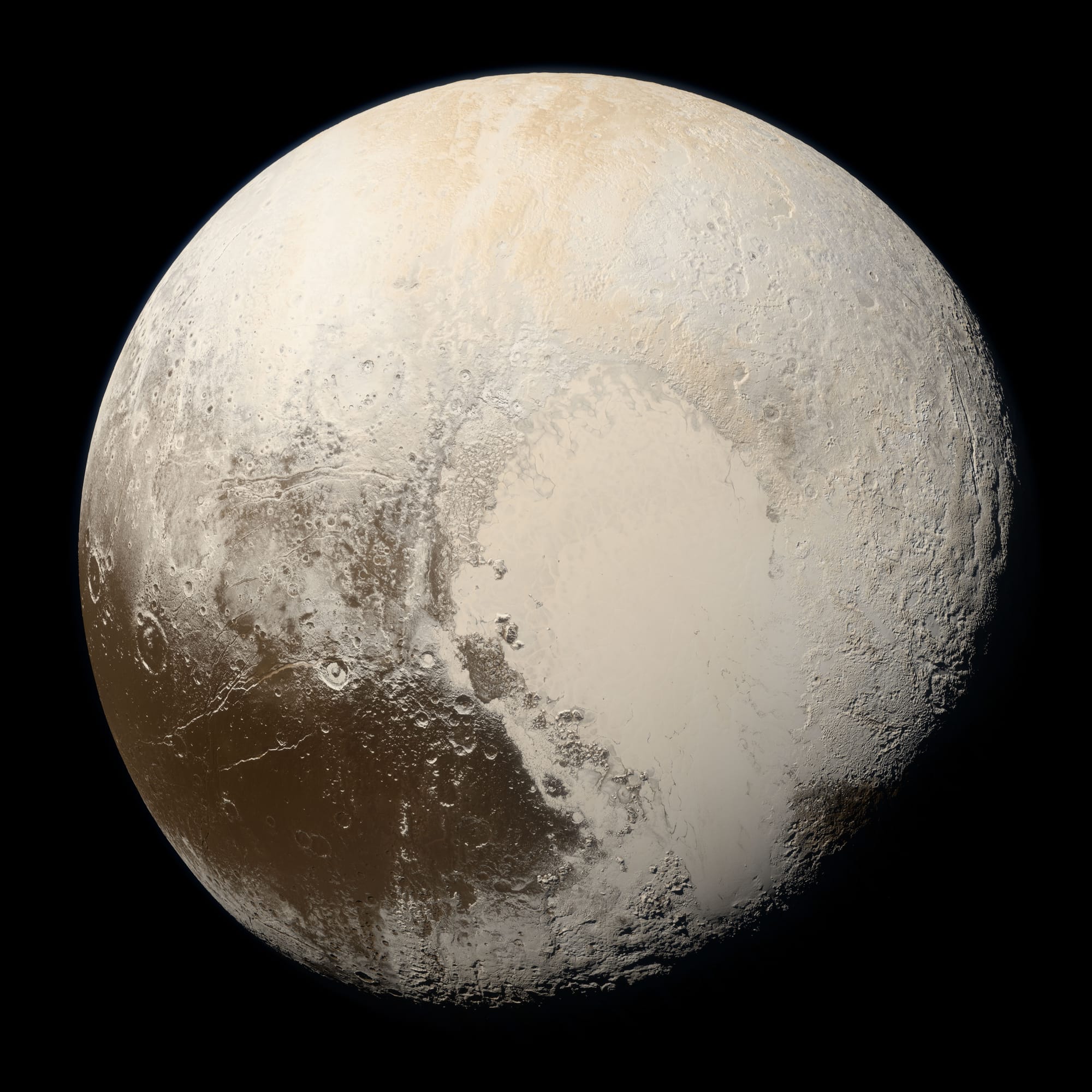
What the mission did change was the cultural and philosophical weight of the argument. Before 2015, it was easy to picture Pluto as a frozen pebble at the edge of the map — not worth the definitional trouble. Afterwards, it had a nitrogen glacier, atmospheric layers and landforms that look like mountains. It became legible as a world to people who are not planetary scientists. New Horizons did not establish that Pluto must be called a planet. It made clear that "dwarf planet" is not a synonym for geologically trivial, and that a classification can be technically correct without capturing everything that matters about a place.
Ceres, exoplanets, and the wider lesson
Pluto was not the first world to be reclassified. Ceres was described as a planet after its 1801 discovery, then progressively grouped with the asteroids as further discoveries accumulated. It became a dwarf planet alongside Pluto in 2006. Historical work by Metzger and colleagues suggests the earlier reclassification was driven by shifting geophysical understanding, not merely by the discovery of similar-looking neighbours — which complicates the folk explanation that shared orbits alone demoted the asteroids.
Eris, meanwhile, is Pluto's decisive contemporary. Its discovery in 2005 sharpened a question that had been avoidable: if Pluto is a planet, what principled feature excludes an object of comparable size in the same population? Eris is slightly smaller in diameter than Pluto but more massive. The IAU answered with orbital dominance; the geophysical camp answers that both should carry the broader name.
Exoplanets reveal why a universal definition remains elusive. The IAU Commission F2's working definition for objects beyond our Solar System uses an upper mass boundary (below deuterium-burning threshold), an orbital condition, and a mass-ratio requirement — while referring back to Solar-System conditions for the lower size threshold. Exoplanet observers cannot usually measure geological roundness or orbital clearing in the ways that Solar-System scientists can. A single word is being asked to work across radically different observational regimes, which is more than any one definition can cleanly handle.
That is the broader lesson Pluto's story teaches. Definitions are neither arbitrary labels nor discoveries engraved in nature. They are accountable conventions: they should state their purpose, work across the data they describe, and remain revisable when their costs outweigh their usefulness. The IAU definition does this reasonably well for Solar-System dynamics. It does it less well for planetary geology, and worse still for exoplanet observation. That is not a scandal; it is a normal feature of scientific classification.
The public that still resists
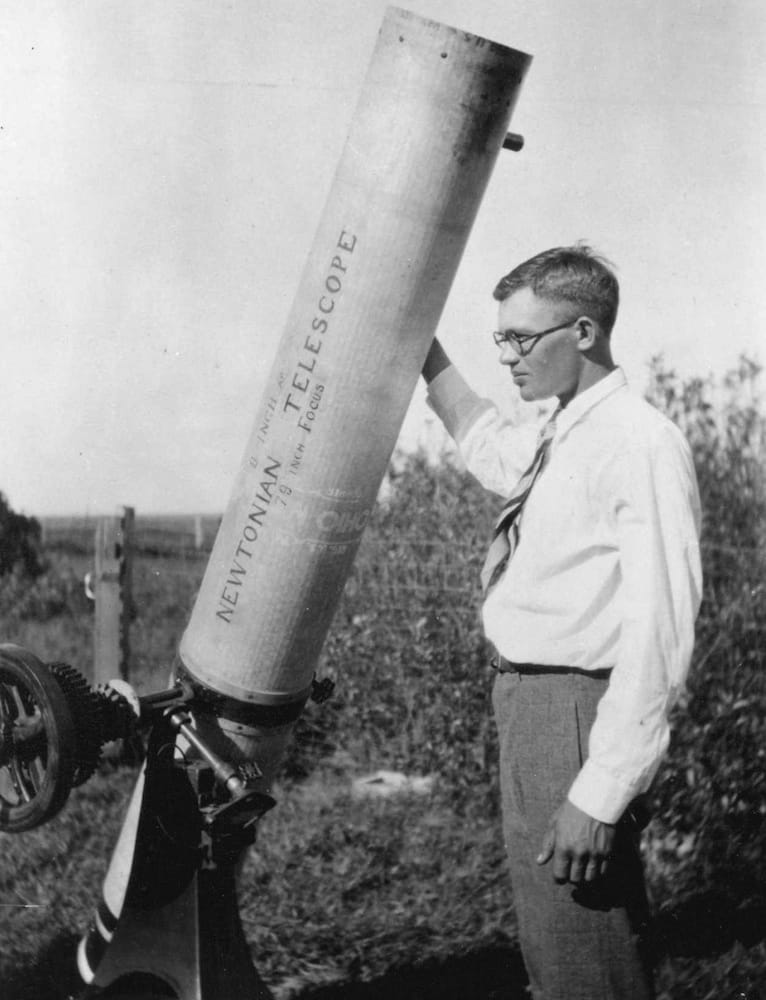
New Mexico's House Joint Memorial 54, passed in 2007, ceremonially declared Pluto a planet whenever it passes over the state's skies and named 13 March "Pluto Planet Day" in honour of Clyde Tombaugh, whose family had roots there. The resolution has no authority over astronomical nomenclature. It is revealing precisely for that reason: a legislature was preserving a local and cultural truth while leaving the technical classification entirely untouched.
Public resistance to the 2006 vote was never only about the count of nine versus eight. Pluto had occupied a vivid place in shared education since its discovery. The word "demoted" invited a status story — a beloved small member expelled by insiders at the end of a long conference. The small final turnout made that story emotionally durable, because it was partly accurate as institutional description, even if wrong as scientific critique.
The productive lesson is not that science should defer to popular attachment. It is that technical authority and public meaning are distinct things, and the institutions that hold technical authority have an obligation to distinguish between them. "Pluto is a dwarf planet" is a precise official statement about orbital dynamics. "Pluto matters less than it did before the vote" is neither science nor a necessary implication of Resolution B5. The IAU was slow to make that separation clear in 2006. Twenty years of public argument is partly the cost of that silence.
What the debate has produced, in the end, is something more useful than a verdict. It has produced a genuinely educational controversy: one that shows how scientific categories work, why definitions have purposes and costs, and how a photograph of a glacier can change the meaning — if not the formal status — of a word decided by 424 votes in Prague.
Sources
IAU definitions and vote
- Astronomy FAQs — Pluto — IAU. Official answers on the current definition and status of Pluto as a dwarf planet.
- Resolution B5/B6 (2006) — IAU. The original resolution text adopted at the 2006 General Assembly in Prague, establishing the three-part planetary definition.
- 2006 General Assembly: result of the IAU Resolution votes — IAU. Official vote counts: 237 for, 157 against, 30 abstentions.
The geophysical definition
- A Geophysical Planet Definition — Runyon et al., 48th LPSC (2017). The formal paper proposing a definition based on body properties rather than orbital context, under which the Solar System contains roughly 110 planets.
New Horizons and Pluto's geology
- New Horizons — NASA. Mission overview and findings from the 14 July 2015 Pluto flyby, including Sputnik Planitia and atmospheric data.
- Pluto's Puzzling Patterns and Pits — NASA. Details on Sputnik Planitia's structure and the evidence for ongoing geological renewal.
- The Geology of the Pluto System — Moore et al. Comprehensive scientific treatment of the New Horizons geological data.
Historical classification and Ceres
- The Reclassification of Asteroids from Planets to Non-Planets (2018) — Metzger et al. Historical analysis showing that shifting geophysical understanding — not merely shared orbits — drove the asteroid reclassification.
Exoplanet definitions
- The IAU Working Definition of an Exoplanet (2022) — Lecavelier des Etangs & Lissauer. Analysis of how the working definition operates across different observational regimes.
- IAU Commission F2 — IAU. The commission's formal documents and working definitions for exoplanetary objects.
Public response
- New Mexico Legislature, House Joint Memorial 54 (2007) — NM Legislature. The resolution ceremonially declaring Pluto a planet when passing over New Mexico, illustrating the gap between technical classification and public meaning.