When Cheaper Beats Better: The AI Model Wars of 2026
April 24, 2026. OpenAI drops GPT-5.5 with frontier performance across benchmarks—58.6% on SWE-Bench Pro, 82.7% on Terminal-Bench, commanding leads. Hours later, DeepSeek V4 lands with 7x lower pricing and open weights under MIT license. Reddit's r/LocalLLaMA erupts. Production teams scramble to re-evaluate roadmaps.
The paradox: GPT-5.5 wins performance benchmarks. DeepSeek wins production deployments.
Why? They're playing different games.
> "The performance gap is linear. The cost gap is order-of-magnitude. That changes everything."
The choice between GPT-5.5 and DeepSeek V4 isn't determined by performance gap (5-15%, compensatable via retries), but by economics, architecture, and strategic control. When cost drops 7-20x, the game changes. Let's examine how.
---
The Performance Picture — GPT-5.5 Leads, But Not Universally
Start with the benchmarks. GPT-5.5 leads, but the gap isn't what marketing suggests.
Coding agents (SWE-Bench Pro): - Claude Opus 4.7: 64.3% ← leider - GPT-5.5: 58.6% - DeepSeek V4-Pro: 55.4% - Gap: 3.2 points (5%)
Command-line workflows (Terminal-Bench 2.0): - GPT-5.5: 82.7% ← clear lead - DeepSeek V4-Pro: 67.9% - Gap: 14.8 points (GPT-5.5's strength)
Web browsing agents (BrowseComp): - GPT-5.5 Pro: 90.1% ← top - DeepSeek V4-Pro: 83.4% ← beats Opus! - Claude Opus 4.7: 79.3% - Gap: 6.7 points (DeepSeek competitive)
Terminal-heavy workflows show GPT-5.5's clearest advantage—a 14.8 point gap that matters if your agents live in bash. But web browsing? DeepSeek not only competes, it beats Claude Opus 4.7. The gap narrows depending on workload.
Long context efficiency tells a different story. Both models offer 1M token context windows, but DeepSeek's new attention mechanism delivers 10x cheaper inference on long contexts through DeepSeek Sparse Attention. Traditional approaches (GPT-5.5, Opus) pay linear costs. DeepSeek pays logarithmic.
r/LocalLLaMA's consensus: "3-6 months behind frontier, not years." That's a closable gap, not a fundamental architectural deficit.
GPT-5.5 leads. But the lead is narrower than you think and domain-dependent. Command-line power users: GPT-5.5 wins big. Web browsing, long-context RAG: DeepSeek competes or wins. The question becomes: does the performance gap justify the cost gap?
---
The Economics Revolution — 7-20x Cost Difference
Here's where the game flips.
Absolute pricing (output tokens per million):
| Model | $/M Output |
|---|---|
| GPT-5.5 Pro | $180 |
| GPT-5.5 | $30 |
| Claude Opus 4.7 | $25 |
| DeepSeek V4-Pro | $3.48 |
| DeepSeek V4-Flash | $0.28 |
Cost multipliers: - DeepSeek V4-Pro vs GPT-5.5 Pro: 98% cheaper - DeepSeek V4-Pro vs GPT-5.5: 8.6x cheaper - DeepSeek V4-Pro vs Opus 4.7: 7x cheaper
Abstract percentages don't convey scale. Let's run scenarios.
Scenario 1: Low-Volume, High-Stakes (<1M tokens/month) - Use case: Legal research, medical diagnosis, financial analysis - Cost @ 1M output: GPT-5.5 $30/month, DeepSeek $3.48/month - Difference: $26.52/month - Winner: GPT-5.5 — when a single error costs >$500, accuracy beats savings
Scenario 2: Medium-Volume (10-50M tokens/month) - Use case: Customer support, code review, documentation Q&A - Cost @ 10M output: GPT-5.5 $300/month, DeepSeek $34.80/month - Difference: $265.20/month (~88% savings) - Cost @ 50M output: GPT-5.5 $1500/month, DeepSeek $174/month - Difference: $1326/month (88% savings) - Winner: DeepSeek V4 — cost savings > retry overhead from 5-15% performance gap
Scenario 3: High-Volume RAG (200M tokens/month) - Use case: Enterprise search, multi-document synthesis, knowledge base queries - Cost @ 200M output: GPT-5.5 $6000/month, DeepSeek $696/month - Difference: $5304/month (88% savings) - Winner: DeepSeek V4 — the only economically feasible option at scale
> "At 10M tokens per month, DeepSeek saves $265/month. At 200M, it saves $5300. The break-even isn't at extreme scale—it starts at medium volume."
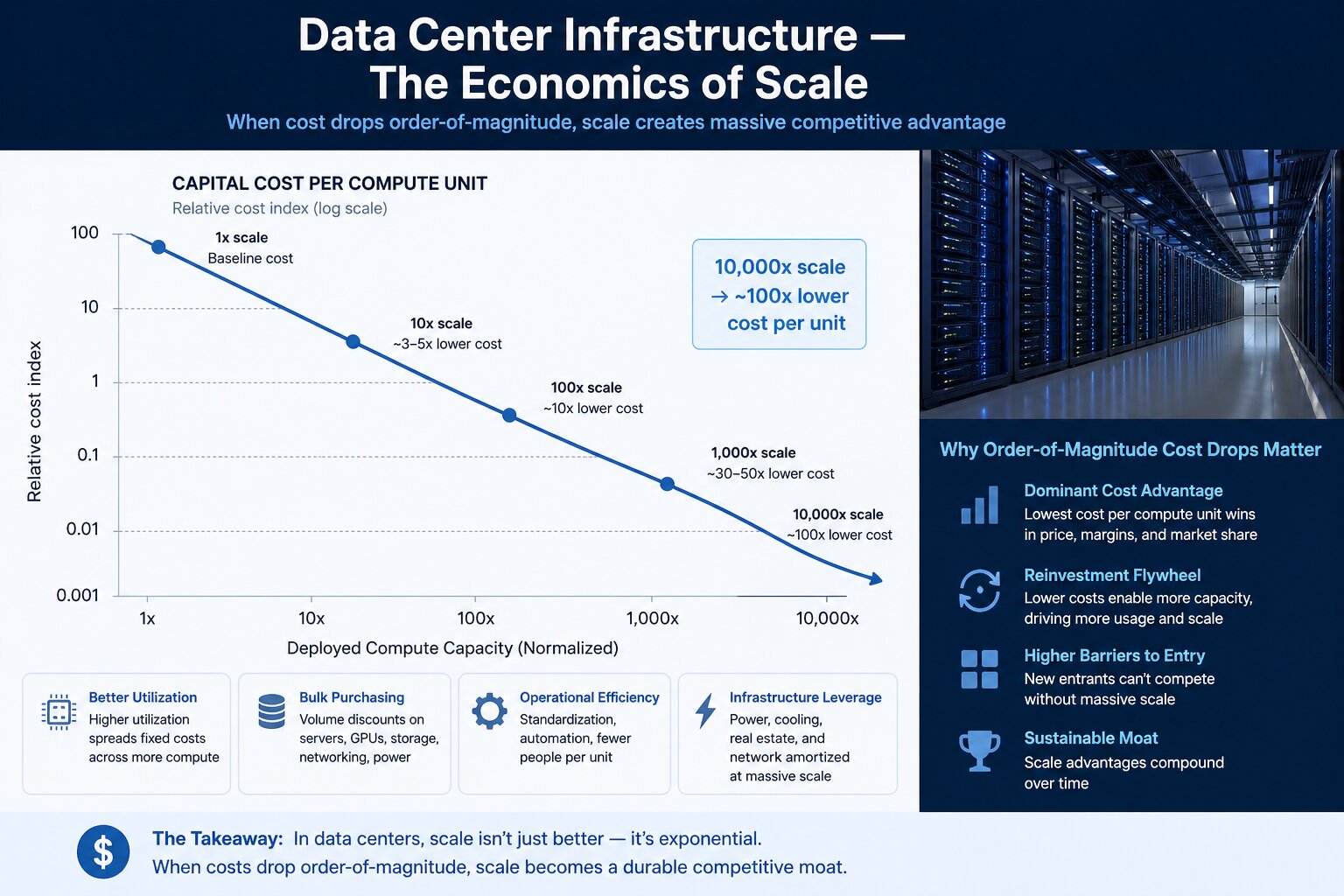
The economics enable a different strategy: when DeepSeek costs 1/10th, you can afford 10x experimentation budget. Run 10 variations, pick the best. GPT-5.5 teams run 1 attempt, hope it works. Performance gap (5-15%) becomes compensatable through volume.
For >90% of use cases—anything above 10M tokens/month—cost difference is decisive.
---
The Architectural Advantage — Interleaved Thinking
Beyond economics, DeepSeek V4 introduces an architectural innovation that solves a fundamental agent problem: chain-of-thought amnesia.
Traditional agent problem: Multi-step workflows lose reasoning context at each tool call. Model generates reasoning → calls tool → receives result → forgets original reasoning chain → hallucinates next step.
Example: Debug a failing test. Model reasons about root cause, calls `git diff` to check recent changes, receives output—then proposes a fix unrelated to its original hypothesis because the reasoning chain was lost.
DeepSeek V4's innovation: Interleaved Thinking. The model preserves full reasoning trace across 20+ step workflows. Chain-of-thought persists through tool calls. Each step builds on explicit prior reasoning, not reconstructed context.
Impact: Multi-step agent workflows become fundamentally more reliable without expensive prompt engineering hacks (stuffing reasoning into tool arguments, external memory systems, ReAct loops with explicit trace serialization).
Why this matters: Agent complexity grows exponentially with steps in traditional architectures—each tool call introduces compounding error probability. Interleaved thinking = linear complexity growth, not exponential failure rates.
GPT-5.5 doesn't address this problem. Neither does Opus. DeepSeek V4 solves it architecturally.
> "Chain-of-thought amnesia is the silent killer of agent workflows. DeepSeek V4 fixes it architecturally, not via prompt hacks."
If your agents execute >10 steps regularly, this isn't a nice-to-have. It's structural.
---
The Open-Source Strategic Flip
MIT license changes the equation beyond pricing.
Data sovereignty: - DeepSeek: Self-host = data stays internal (GDPR/HIPAA compliant by design) - GPT-5.5: All data flows through OpenAI servers (contractual compliance, not architectural)
Vendor lock-in: - DeepSeek: Weights are permanently yours. No API dependency. Immune to pricing changes, deprecation cycles, ToS modifications. - GPT-5.5: Dependent on OpenAI uptime, pricing adjustments (GPT-4 Turbo dropped 66% in 18 months—then got deprecated), terms-of-service shifts
Fine-tuning competitive moat: - DeepSeek: Fine-tune for domain jargon (medical terminology, legal precedent, company-specific codebases) - GPT-5.5: No fine-tuning support (available only on GPT-4.5 and below—frontier models closed) - After fine-tuning, specialized DeepSeek can beat GPT-5.5 on niche domains. Medical diagnosis agents trained on clinical notes. Legal research tuned to jurisdiction-specific precedent. Code completion fine-tuned on internal libraries.
GPT-5.5 offers none of this. General-purpose performance, take-it-or-leave-it.
Self-hosting economics: Break-even for DeepSeek V4-Flash occurs at >6B tokens/month (~200M/day)—unrealistic for most. 2x A100 80GB cloud GPUs cost $2160-2880/month. DeepSeek API @ 100M tokens/month costs $34.80. API wins on pure economics.
But self-hosting isn't about cost. It's about control. Data never leaves your infrastructure. You set retention policies. You audit access. You customize behavior.
> "Open-source isn't about ideology. It's about strategic control: vendor independence, fine-tuning, data sovereignty. When the model is yours, the rules are yours."
Enterprise teams building agent systems with 5-10 year horizons evaluate this differently than startups optimizing 2026 runway. DeepSeek's MIT license offers an exit from vendor dependency. GPT-5.5 offers performance leadership—until the next model depreciates it.
---
Decision Framework — When to Use Which
Use GPT-5.5 when:
1. High-stakes, low-volume (<1M tokens/month) — one error costs >$1000, accuracy > cost 2. Command-line heavy workflows — Terminal-Bench score (82.7% vs 67.9%) shows clear lead 3. Maximum reliability > cost — enterprise SLAs, mission-critical systems where 5-15% performance edge justifies 7-20x cost 4. No fine-tuning needed — general-purpose capabilities suffice
Use DeepSeek V4 when:
1. Medium-to-high volume (>10M tokens/month) — saves $265-5300+/month vs GPT-5.5 2. Agent workflows with tool calls — interleaved thinking prevents chain-of-thought amnesia 3. Data privacy requirements — self-hosting mandatory (GDPR, HIPAA, proprietary data) 4. Domain specialization — fine-tuning for jargon, company-specific knowledge 5. Web browsing agents — BrowseComp score (83.4%) beats Opus, competitive with GPT-5.5 6. RAG systems — 10x cheaper long-context inference via sparse attention 7. Vendor independence — weights permanently yours, immune to pricing/ToS changes
Hybrid approach:
Many production teams run both: - GPT-5.5 for high-stakes final decisions (10% of workload) - DeepSeek V4 for high-volume preprocessing (90% of workload)
Economics @ 100M tokens/month: - 90% via DeepSeek: $313 (90M tokens) - 10% via GPT-5.5: $300 (10M tokens) - Total: $613 vs $3000 pure GPT-5.5 (80% savings)
Hybrid architecture: DeepSeek filters/preprocesses, GPT-5.5 validates high-stakes outputs. Best of both.
Practical recommendations by org type:

Startups: DeepSeek V4-Flash via API ($0.28 output) - Lowest friction (no self-hosting) - Adequate performance for MVP - Clear upgrade path when revenue justifies
Scale-ups (10-100M tokens/month): DeepSeek V4-Pro via API ($3.48 output) - Balance cost/performance - Interleaved thinking = better agent reliability - Self-hosting break-even unrealistic (>6B tokens/month)
Enterprises: Hybrid (DeepSeek self-hosted + GPT-5.5 API) - DeepSeek self-hosted for bulk + data privacy - GPT-5.5 for high-stakes validation - Fine-tuned DeepSeek for domain specialization - Total cost reduction: 50-80% vs pure GPT-5.5
Niche domains (medical, legal, scientific): Fine-tuned DeepSeek V4 - MIT license = unlimited fine-tuning - Domain jargon + specialized reasoning - Can beat GPT-5.5 after specialization on niche tasks - No alternative: GPT-5.5 offers no fine-tuning
---
Lessons — The Game Behind the Game
Lesson 1: Economic enablement > absolute performance
DeepSeek's 7-20x cost advantage unlocks experimentation budgets economically impossible with GPT-5.5. When retries cost 1/10th, you can afford 10x attempts. Performance gap (5-15%) becomes compensatable through volume.
Parallel: AI music generation. MiniMax's cost reduction (covered by Het Schrijfhuis in [From Tool to Co-Creator: AI Music's Identity Crisis](https://schrijfhuis.jongbloed.net/from-tool-to-co-creator-ai-musics-identity-crisis/?ref=schrijfhuis.jongbloed.net)) democratized music creation—not by beating Suno on absolute quality, but by making experimentation affordable. Same dynamic here: access > absolute quality when cost drops order-of-magnitude.
Lesson 2: Open-source = strategic moat
MIT license makes DeepSeek superior for long-term agent systems. Vendor independence, fine-tuning, self-hosting—none available with GPT-5.5. Not ideology. Strategy.
Parallel: Tesla's battery bet (2008). Incumbents optimized horsepower. Tesla optimized cost per kWh—a metric traditional automakers ignored. 16 years later, Tesla's battery advantage remains structural. DeepSeek optimizes economic enablement + strategic control. GPT-5.5 optimizes absolute performance. Different games, different time horizons.
Lesson 3: Community momentum matters
r/LocalLLaMA eruption + immediate vLLM/Hugging Face support = DeepSeek production-ready now. Not "interesting research." Production deployment within hours of release. Community validation accelerates adoption faster than closed-source marketing cycles.
vLLM native FP4/FP8 support landed same-day. GGUF quantizations (llama.cpp) within 72 hours. Claude Code seamless integration. This isn't academic—it's production infrastructure.
Lesson 4: Architectural innovation beats brute force
Interleaved thinking = fundamental improvement for multi-step workflows, not incremental performance boost. Solves problem GPT-5.5 doesn't address (chain-of-thought amnesia across tool calls). Architecture > scale.
Lesson 5: Performance gap is closable
3-6 months behind frontier (community consensus), not fundamental architectural deficit. Gap narrowed from GPT-4 → DeepSeek V3 (12+ months) to GPT-5.5 → DeepSeek V4 (3-6 months). Trajectory clear. Compensatable through retries at ~1/10th cost.
> "They're not competing on the same axis. GPT-5.5 optimizes absolute performance. DeepSeek optimizes economic enablement + strategic control. Different games, different winners."
---
When Cheaper Beats Better
The paradox resolves: GPT-5.5 wins performance benchmarks. DeepSeek wins production deployments.
Economics: 7-20x cost difference enables 10x experimentation budget. Performance gap (5-15%) compensatable via retries at <1/10th cost.
Architecture: Interleaved thinking solves multi-step workflow reliability—problem GPT-5.5 doesn't address. Not incremental improvement. Structural.
Strategic control: MIT license + fine-tuning + self-hosting = long-term vendor independence. GPT-5.5 = permanent dependency on OpenAI roadmap, pricing, ToS.
Market signal: r/LocalLLaMA eruption, same-day framework support, enterprise hybrid deployments. Community votes with production systems, not benchmarks.
The frontier moved April 24, 2026. Not because GPT-5.5 set new performance records (it did). Because DeepSeek V4 proved frontier-adjacent performance at 1/10th cost with open weights is production viable now.
When cost drops order-of-magnitude, the game changes. Democratization via economics unlocks use cases impossible at frontier pricing. Better performance matters when cost is no object. When budget constrains exploration, cheaper wins.
Final question: Are you optimizing for absolute performance (GPT-5.5), or for economic enablement + strategic control (DeepSeek V4)?
Answer determines your agent architecture for the next 5 years.
*
Sources
DeepSeek V4 — Release & Capabilities
- DeepSeek unveils V4 model — Fortune — Market positioning and competitive pricing analysis
- DeepSeek previews new AI model — TechCrunch — Capabilities and performance benchmarks
- China's DeepSeek Unveils New AI Model — Yicai Global — Hardware infrastructure and launch timing
- DeepSeek promises world-class reasoning — Engadget — Reasoning capability overview
- Why DeepSeek V4 matters — MIT Tech Review — Strategic implications for AI landscape
- China's DeepSeek releases V4 preview — CNBC — Competitive dynamics in AI market
- DeepSeek unveils next-gen AI — SCMP — Efficiency breakthroughs
- DeepSeek V4 Released — ModemGuides — Release logistics and availability
Pricing & Cost Comparisons
- DeepSeek-V4 arrives with near SOTA intelligence — VentureBeat — Cost comparison across frontier models
- DeepSeek V4 Pro costs 98% less — Decrypt — Economic analysis of pricing tiers
- DeepSeek V4 Pro costs 98% less — Yahoo Tech — Additional pricing analysis
- DeepSeek V4 Pro on GPT-5.5 day — UC Strategies — Same-day launch timeline and cost positioning
Benchmark Comparisons
- DeepSeek V4 vs Opus vs GPT-5.5 — Lushbinary — Comprehensive benchmark comparison
- DeepSeek V4 vs GPT-5.5 comparison — Skywork AI — Head-to-head performance evaluation
- DeepSeek V4 Pro vs GPT-5.5 — Artificial Analysis — Independent benchmark verification
- DeepSeek V4 Flash vs GPT-5.5 — Artificial Analysis — Flash tier performance analysis
GPT-5.5 — Release & Enterprise
- Introducing GPT-5.5 — OpenAI — Official GPT-5.5 release announcement
- OpenAI releases GPT-5.5 — TechCrunch — Integration with ChatGPT platform
- Model Drop: GPT-5.5 — Handy AI — Technical deep dive on capabilities
- GPT-5.5 in Microsoft Foundry — Azure Blog — Azure integration details
- What Enterprise Users Should Know — Gartner — Enterprise adoption guidance
- OpenAI introduces GPT-5.5 — Blockchain News — Enterprise capabilities overview
- OpenAI Spud: GPT-5.5 pretraining done — Abhishek Gautam — Background on development timeline
Enterprise Implementation
- GPT-5 enterprise implementation guide — Swarnendu De — Practical deployment strategies
- GPT-5 for Enterprises — Bluetick Consultants — CTO/CIO decision framework
- Introducing GPT-5 — OpenAI — Context on GPT-5 architecture evolution
Architecture & Open-Source
- China's DeepSeek with 1M context — Interesting Engineering — Long-context efficiency analysis
- DeepSeek V4 Open-Source AI Model — IndexBox — Open-source positioning analysis
- DeepSeek License FAQ — MIT license details and terms
- DeepSeek-V4-Pro-FP8 — Hugging Face — Technical implementation and quantization details
- DeepSeek V4 preview release — Binance — Community reaction and adoption