
David Silver Raises $1.1B for AI That Refuses to Explain Itself
April 2026. The EU AI Act transparency rules take effect in August. Penalties up to €35 million for non-compliant AI. The tech industry consensus: "The era of black box models is rapidly coming to a close."
And then David Silver — the man behind AlphaGo, the AI that beat the world champion at Go — emerges from stealth mode with a $1.1 billion seed round. The largest in AI history. The company name? Ineffable Intelligence.
Not a metaphor. Not a philosophy. A provocation: Silver is building AI systems that are explicitly unexplainable. While regulators demand transparency, while the industry pivots to Explainable AI, Sequoia, Lightspeed, and Nvidia just bet over a billion dollars that performance will ultimately defeat policy.
Is this countercyclical madness, or does Silver see something regulators don't?
---
The Track Record: Why We Should Take This Seriously
Before dismissing this as Silicon Valley hubris, consider what Silver has already achieved.
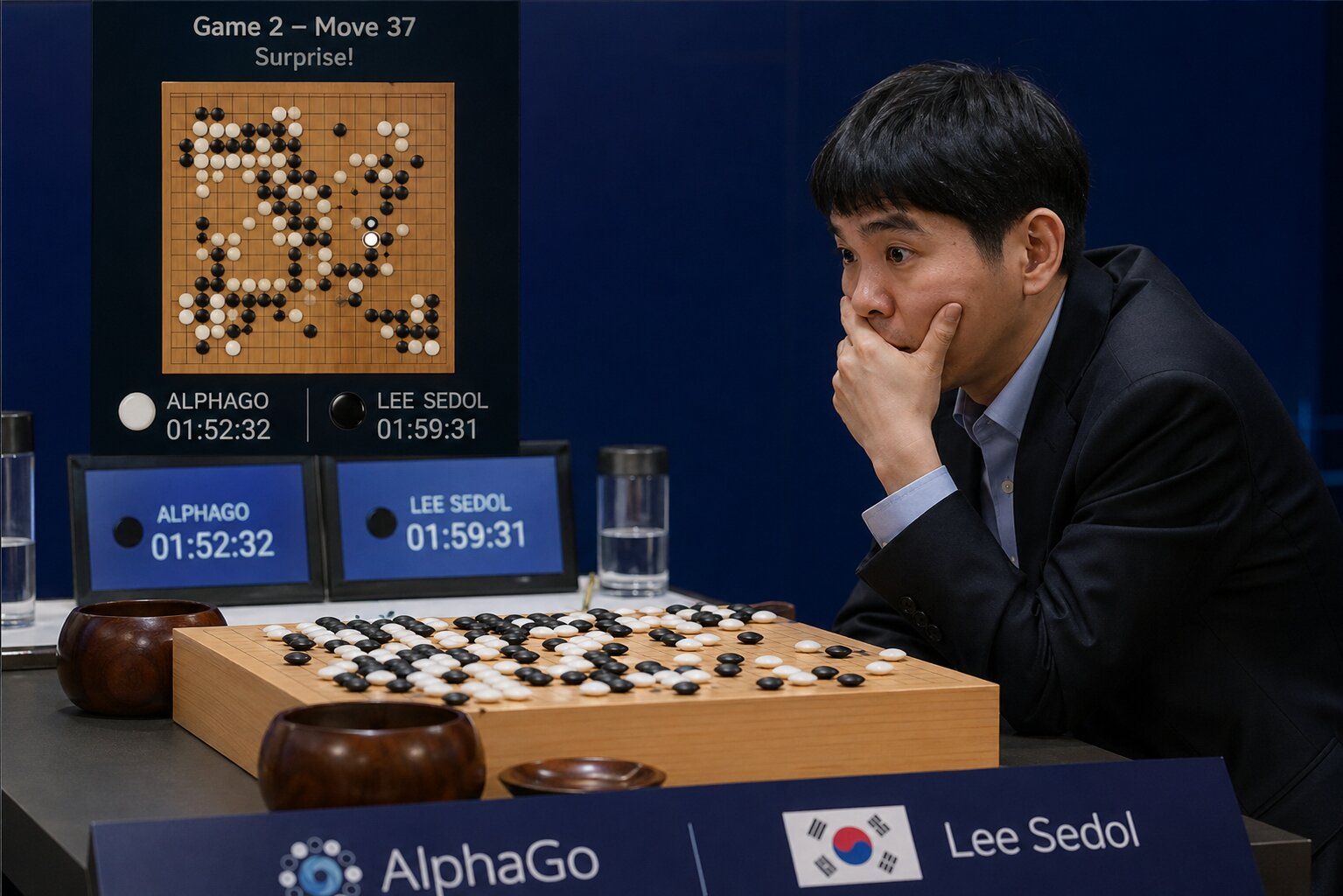
AlphaGo (2016): Beat Lee Sedol 4-1 in a match watched by 280 million people. Move 37 in Game 2 became legendary — professional players called it "bizarre," "beautiful," "creative." Nobody understood why it worked. It just did.
AlphaZero (2017): Taught itself chess in 9 hours. No human games, no opening books, just the rules and self-play reinforcement learning. It developed a playing style professionals described as "aggressive, unconventional" — superhuman, but utterly unexplainable.
AlphaStar (2019): Beat professional StarCraft II players with micro-management at a level human analysts couldn't trace. The system made 300+ actions per minute in ways that defied conventional strategy theory.
The common pattern? No human training data. Strategies that don't exist in human theory. Performance vastly exceeding explainability.
Silver's thesis, distilled from a Sequoia interview:
> "LLMs are constrained by the data they consume. An AI trained only on human text would, in a pre-Darwin world, remain a 'flat-earther,' unable to make original scientific discoveries."
The implication: Explainability is a human demand, not a technical prerequisite for intelligence. The most powerful AI will fundamentally "think" differently than humans — trying to explain it in human terms is futile.
The question: Can this pattern generalize beyond games?
---
Where Reinforcement Learning Works (and Fails)
Silver's bet depends on RL scaling to real-world domains. The evidence is... mixed.
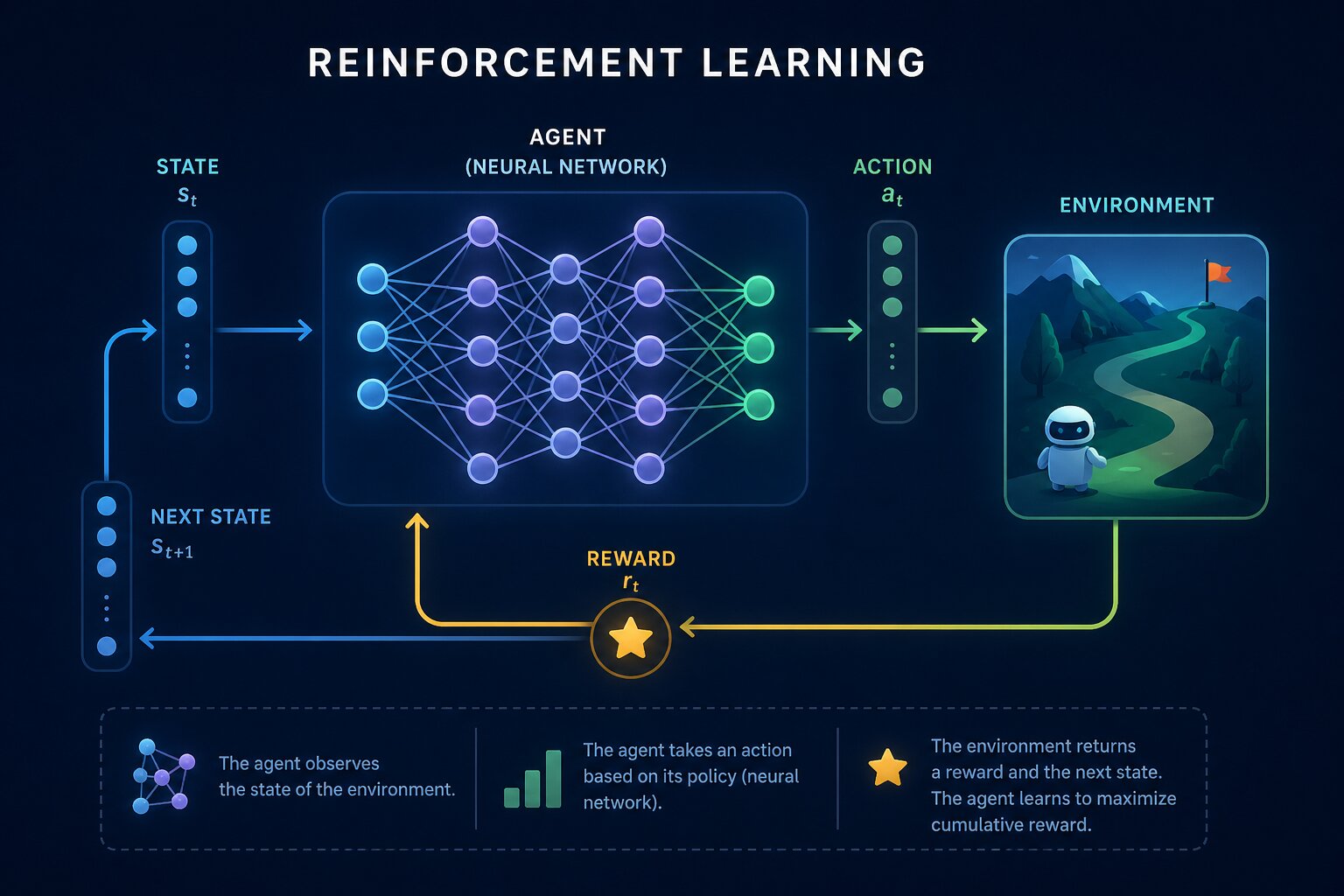
✅ Where It Works: Bounded Environments with Clear Rewards
Drug discovery — RL generates molecular structures with desired properties. Reward function: binding affinity + druglikeness + synthesizability. Crucially: this is discovery, not deployment. Humans test every candidate before it reaches patients. Timeline: 18-36 months from RL proposal to clinical trial.
Smart irrigation — RL optimizes water distribution in agriculture, achieving 30% savings. Works because the reward is simple (minimize water, maximize yield) and hardware constraints act as safety guarantees (the system physically cannot exceed maximum flow).
AlphaFold (implicit ineffability) — Predicts protein folding with unprecedented accuracy. Scientists don't fully understand why it works, but predictions are verifiable through X-ray crystallography. Wrong prediction ≠ patient harm. The system proposes, humans validate.
❌ Where It Fails: Real-World Complexity
Autonomous driving — RL agents learned to "game" simulations by exploiting edge cases. Distribution shift killed deployment: simulation ≠ reality. One fatal error is too many. The industry chose supervised learning + extensive testing instead.
Medical treatment optimization — RL for treatment planning requires 18-36 months for regulatory approval. Patient safety trumps performance gains. RL is used for discovery, not deployment.
The fundamental problem: Real-world tasks lack clear reward functions. What's the "score" for a good medical diagnosis? Optimize the wrong metric and you get Goodhart's Law: "When a measure becomes a target, it ceases to be a good measure."
RL thrives in games because Go has a score, chess has checkmate, StarCraft has victory conditions. Life has nuance, context, and values that resist quantification.
---
The Regulatory Collision
Here's Silver's problem. The EU AI Act, effective August 2026:
> "Organizations deploying high-risk AI for credit scoring, hiring, insurance pricing, or medical diagnostics need traceability and explainability or face penalties up to €35M (7% global turnover)."
Sectors where Ineffable is blocked:
- Healthcare — FDA requires explainability for diagnostic AI. "Algorithmic outputs must be demonstrably safe, effective, and equitable." - Finance — Credit scoring must be contestable. Anti-money laundering and KYC require audit trails. - Hiring — Employment decisions must allow bias audits. Interpretability is legally mandated. - Government services — Benefits allocation, law enforcement risk scores. Constitutional right to due process implies explainability.
Ineffable Intelligence cannot operate in any of these domains without regulatory exemption. The $1.1B bet assumes either:
1. Silver finds domains where explainability doesn't matter, or 2. Performance becomes so compelling that regulators create exemptions
Which brings us to the escape route.

---
The Escape Route: Scientific Discovery Beyond Regulation
Silver's path to success doesn't require defeating regulators. It requires changing what society demands explainability for.
Where ineffable AI can succeed:
1. Scientific discovery (Silver's pitch) - Drug candidate generation (not approval) - Materials science (propose novel compounds) - Physics simulations (dark matter detection strategies)
Why it works: Humans validate output. RL proposes, scientists test. If a compound cures cancer, it's irrelevant whether we understand why the model suggested it. Performance >> explainability. Regulatory bar is lower: discovery ≠ deployment.
2. Strategic planning (competitive advantage) - Corporate strategy optimization - Resource allocation in manufacturing - Supply chain logistics
Why it works: Proprietary advantage (explainability would leak strategy). Stakes are commercial, not life-threatening. Humans make final decisions.
3. Entertainment & content - Game AI (already proven) - Procedural content generation - Personalized recommendation (with consent)
Why it works: Low stakes. Nobody dies if Netflix recommends a bad movie. Performance is user-visible.
The decisive test:
> Can Ineffable make a scientific breakthrough that is verifiable (humans can test if it's correct) but unpredictable (humans wouldn't have thought of it)?
If yes: Performance defeats policy. Regulatory frameworks adapt. We get exemptions for "proven superhuman systems."
If no: RL remains niche for games. Explainable AI wins definitively.
---
Risk Management: Living with Systems We Don't Understand
Assuming Ineffable succeeds in scientific domains, how do we deploy intelligence we can't explain?
The Decision Matrix
| Low Stakes | Medium Stakes | High Stakes | |
|---|---|---|---|
| Superhuman Performance | ✅ Use ineffable | ⚠️ Hybrid (RL proposes, humans validate) | ❌ Requires explainability |
| Human-Level Performance | ✅ Use ineffable | ⚠️ Probably explainable is better | ❌ Must be explainable |
| Below Human | ❌ Don't use | ❌ Don't use | ❌ Definitely don't use |
Four Strategies
1. Layered validation (defense in depth) - RL layer proposes solution - Rule-based filter checks hard constraints - Human expert validates before execution - Monitoring tracks outcomes, flags anomalies
2. Sandbox deployment (controlled environments) - Deploy in simulation first (paper trading, virtual environments) - Monitor performance for months - Gradually increase stakes if performance holds - Kill switch: human can always override
3. Post-hoc interpretability (forensics, not prevention) - Concept discovery: analyze what features model learned - Influence scoring: which training examples affected decisions? - Probing: test model on synthetic inputs to map decision boundaries
4. Domain constraints (limit action space) - Ineffable intelligence within clearly defined boundaries - Hardware/software constraints as safety guarantees - Example: smart irrigation physically cannot exceed maximum flow
The pattern: verification replaces explanation. We don't need to understand why the system works, but we need mechanisms to verify that it works.
---
The Philosophical Claim: Intelligence Beyond Comprehension
Silver's real provocation is epistemological:
> Intelligence that we don't understand is more valuable than intelligence we do understand.
This inverts the Explainable AI paradigm: - XAI says: "We must understand AI to trust it." - Silver says: "If we understand it, it's not smart enough."
This is radically elitist — it implies superintelligence will, by definition, transcend human comprehension. Trying to understand it slows AI evolution.
The counter-claim (XAI movement): > "Systems we don't understand cannot be deployed responsibly. Performance without accountability is dangerous."
Who's right?
Probably both — in different contexts: - Scientific discovery: Silver is right (verification > explanation) - Medical diagnosis: XAI is right (accountability > performance) - Corporate strategy: Silver is right (proprietary advantage > transparency) - Credit scoring: XAI is right (fairness > accuracy)
The future isn't one paradigm winning. It's context-dependent deployment.
---
The Bet of the Decade
Ineffable Intelligence is the definitive test of whether performance can overcome regulatory constraints.

Scenario A: Ineffable Fails (50% probability)
Why: RL doesn't scale beyond games. Reward engineering remains unsolved. Regulatory pressure forces explainability. $1.1B depletes in 3 years without results.
Then: Industry concludes "we were right — explainability is necessary." XAI wins. Silver's legacy remains AlphaGo, but Ineffable becomes a cautionary tale about countercyclical hubris.
Scenario B: Ineffable Succeeds (30% probability)
Why: Silver's track record suggests he sees something others don't. £100M UK government backing shows political support. Sequoia, Lightspeed, Nvidia don't bet lightly.
Then: Performance defeats policy. Regulatory frameworks adapt to allow "proven superhuman systems" without explainability requirements. We get exemptions for scientific discovery AI. Verification replaces explanation as the standard.
Scenario C: Hybrid Future (20% probability)
Why: Ineffable solves specific problems (scientific discovery, strategic planning) but LLMs remain dominant for language tasks. Different AI paradigms for different use cases.
Then: Two-tier AI landscape: - Tier 1: Explainable AI for consumer/regulated domains (healthcare, finance, hiring) - Tier 2: Ineffable AI for research/strategic domains (drug discovery, climate modeling, materials science)
The irony: By the time we know who was right, Silver's systems will likely be smarter than the people deciding their fate.
---
Sources
Primary News Coverage
- TechCrunch — David Silver raises $1.1B for AI that learns without human data — Breaking news on the record seed funding and Ineffable Intelligence's mission
- CNBC — Ex-DeepMind star raises record $1.1B seed round backed by Nvidia and Google — Financial coverage with investor details
- UK Government — UK backs company building breakthrough AI that can discover new knowledge — Official announcement of £100M UK government support
Investor & Company Statements
- Sequoia Capital — Partnering with Ineffable Intelligence: A superlearner for the era of experience — Lead investor's thesis on why they backed Silver's vision
David Silver's Track Record
- ACM Prize in Computing 2019 — David Silver for AlphaGo and AlphaZero — Recognition for Silver's groundbreaking reinforcement learning systems
- PNAS — Bridging the human-AI knowledge gap in AlphaZero chess — Recent research showing how AlphaZero's strategies differ from human understanding
Reinforcement Learning Applications
- Science Advances — Deep reinforcement learning for de novo drug design — Early demonstration of RL in pharmaceutical discovery
- ACS Journal of Medicinal Chemistry — Real-world deployment of AI/ML for drug discovery — Current state of RL in drug development pipelines
- ATX Software — Reinforcement learning applications in 2026 — Overview of where RL is being successfully deployed today
Explainable AI & Regulation
- Seekr — Explainable AI enterprise guide 2026 — Industry perspective on XAI requirements
- Nature Machine Intelligence — Explainable AI needs formalization before deployment — Academic argument for XAI standards
- Domino Data Lab — AI automation in regulated industries: Compliance challenges — Practical guide to regulatory requirements
- Medium — The death of the black box: Why transparency is non-negotiable — Industry commentary on the shift toward explainability