The Fall That Wasn't
1,550 years since Rome's end — and historians still can't agree what ended
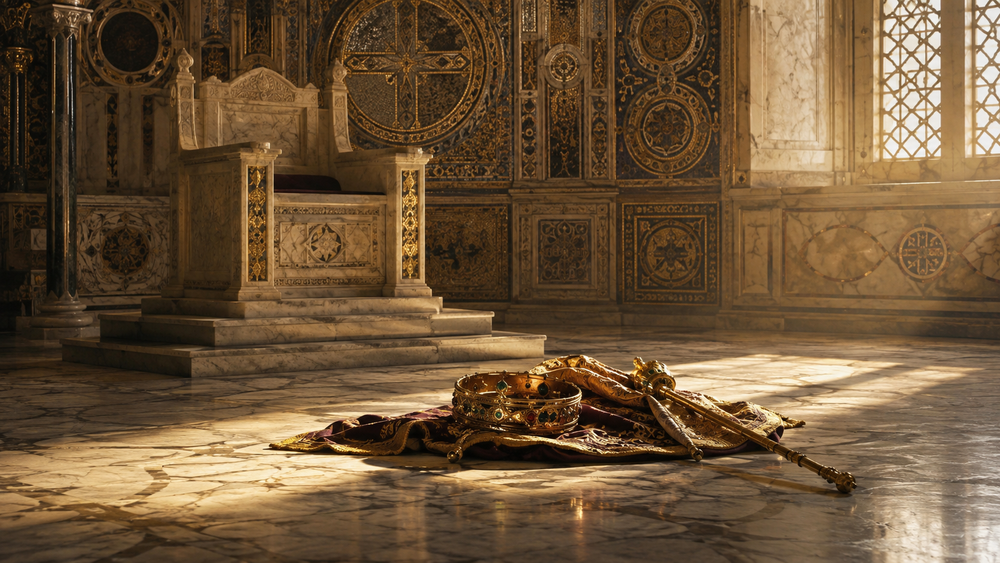
On 4 September 476, in the imperial palace at Ravenna, a teenage boy handed over the emblems of office and retired to a villa in Campania. His name was Romulus Augustulus — a name that managed, in two words, to invoke both the city's legendary founder and its first emperor, as if someone had tried to compress all of Rome into a single person and ended up with a teenager who had no real power and a generous pension. The man who compelled his resignation, Odoacer, was the commander of the federate troops in Italy. He sent the western imperial insignia east, to Constantinople. And that, the textbooks tell us, is where Rome ends.
The date has served this function reliably for fifteen centuries. It appears in survey courses, encyclopaedias, timelines. Edward Gibbon built a six-volume architecture around the idea of decline moving toward this conclusion. The convenience of 476 is structural: stories need endings, and a single day — a boy, a barbarian, a handover — is the kind of ending that sticks.
The problem is that it wasn't quite an ending. Or wasn't yet. Or wasn't everywhere at once.
One emperor, already unrecognized
Romulus Augustulus was not the sole claimant to the western throne when Odoacer removed him. Julius Nepos, displaced by Romulus's father Orestes the previous year, still governed Dalmatia. More significantly, he still had the formal recognition of Zeno, the eastern emperor in Constantinople. Romulus had never received that recognition. In the constitutional logic of the Roman empire — where legitimacy flowed in part from acceptance by the senior court — the removal of an emperor who was not formally acknowledged was not quite the same as ending the empire.
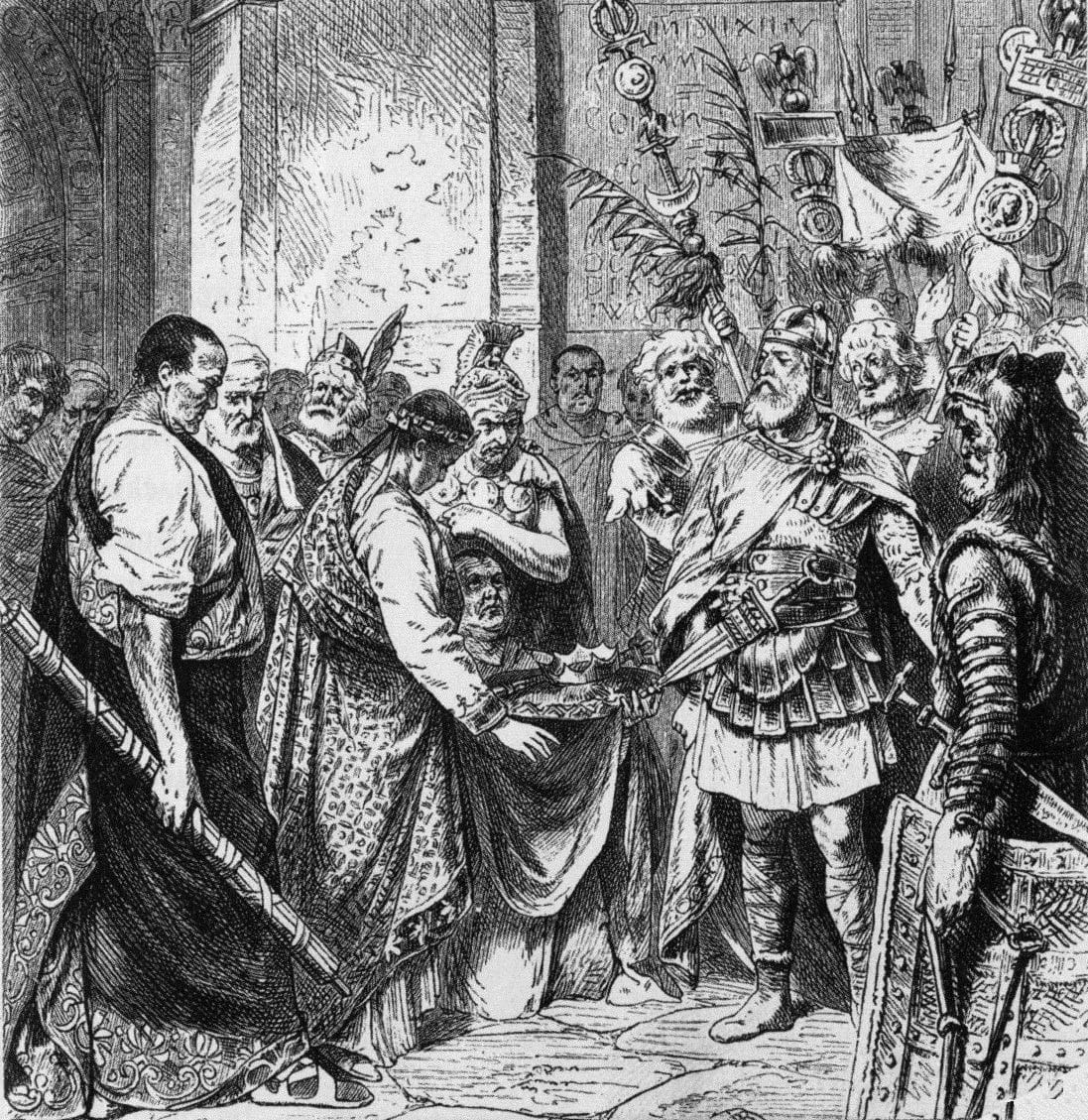
Odoacer understood this. His next move is what complicates the conventional narrative. He did not claim the purple for himself. He did not appoint a replacement western emperor. Instead, the Roman senate sent the imperial insignia to Constantinople with a message: one emperor was enough. Odoacer sought the title of patricius — a prestigious Roman rank — and ruled Italy as king under nominal eastern suzerainty. The gesture was a constitutional rupture, but its stated logic was impeccably Roman. The west was not seceding from Rome. It was returning its extra emperor.
Zeno received the insignia and gave Odoacer his patricius title, but privately continued to treat Julius Nepos as the legitimate western emperor until Nepos was assassinated in 480. For four more years after 476, there was a western emperor. He just wasn't in Italy.
What life looked like on 5 September
The inhabitants of the Italian peninsula did not wake the morning after the coup in a recognizably post-Roman world. Odoacer retained the senate, preserved Latin administration, maintained Roman legal forms, kept the tax structures functioning, and left the existing governing class largely in place. Coins continued to display imperial imagery. A Roman aristocrat managing his estates in 477 would have found the administrative landscape, if not entirely comfortable, at least legible.
Under Theoderic — who defeated Odoacer in 493 after a long siege and then had him killed at a dinner, an event that should probably count as the most consequential meal in late-antique history — public building and bureaucratic life could revive in parts of Italy. Theoderic's court at Ravenna employed Roman administrators including Cassiodorus and Boethius. The philosopher who wrote the Consolation of Philosophy did so while awaiting execution on charges of treason, but he wrote it in Latin, in a philosophical tradition that stretched back to Cicero, under a Goth who styled himself as the heir to Roman governance.
None of this should be prettified. Theoderic had Boethius executed. The political order was different, and the difference was felt. But the image of a switch being thrown — civilization on, civilization off — does not survive contact with the evidence.
Bryan Ward-Perkins supplies the necessary corrective. His The Fall of Rome and the End of Civilization (2005) is an argument from archaeology rather than administration. He asks not whether Roman legal forms survived but whether the material complexity that sustained Roman life did. Changes in pottery quality across the western provinces are measurable: the standardized, well-fired ceramics of the high imperial period gave way, in many areas, to coarser, locally produced ware. Construction in stone became rarer. Long-distance trade contracted. Literacy rates appear to have declined. A surviving senate or code of law does not prove that the world capable of producing them at scale survived intact.
Ward-Perkins's warning is precise: institutional continuity and material collapse can coexist. A governing class can maintain impressive forms while the economic base that created them shrinks around them. If you measure Rome by its senatorial families, 476 looks like a transition. If you measure it by whether ordinary people could buy standardized goods or access literate administration, the picture is darker.
The argument historians are actually having
Three historians, three different lenses. Peter Heather's The Fall of the Roman Empire (2006) treats the western collapse as a genuine failure of state — driven by external military pressure from the Huns and successor migrations, compounded by fiscal-military strain and the progressive loss of revenue-generating provinces. For Heather, the barbarian groups were not absorbed into a flexible Roman system; they overwhelmed a system that was already under severe stress. The fifth century was not a frictionless cultural handover.
Walter Goffart reoriented the debate earlier, in Barbarians and Romans, A.D. 418–584 (1980). His claim: barbarian groups could be integrated through Roman fiscal arrangements — assigning shares of tax revenues — rather than through the wholesale seizure of land. Accommodation was more sophisticated, and more Roman in its mechanisms, than the conquest narrative implies. Later scholars have accepted that fiscal arrangements mattered while arguing about how much of the story they explain.
These three — Heather's collapse, Goffart's accommodation, Ward-Perkins's material evidence — are not competing answers to the same question. They illuminate different mechanisms operating at different scales. A state can genuinely fail. Elites can genuinely accommodate to new rulers. Non-elites can face a genuine deterioration in living conditions. All three can be true simultaneously. The argument only becomes irresolvable when we insist on a single verdict.
Why 476 became the date
The "fall" reading arrived relatively quickly. Marcellinus Comes, a chronicler writing in Constantinople in the 510s, described the western Roman empire as having perished when Odoacer took power. He was writing within living memory of the event — some people still alive in 510 had been adults in 476. And yet his framing served a specific context: from Constantinople, the western court's end was useful to narrate as a bounded event. The eastern empire was continuous, still Roman, still functioning. The western interruption was over. Marcellinus's "fall" interpretation tells us something about how Constantinople understood itself, not only about what actually ended in Ravenna.
Gibbon is the larger shadow that falls across every discussion of 476. His History of the Decline and Fall of the Roman Empire, published in volumes between 1776 and 1789, did not invent the date but gave it literary authority. A six-volume narrative of a thousand-year decline requires a climax, and 476 serves structural as well as historical purposes in Gibbon's account. What is less often noted is that Gibbon himself was cautious. In a footnote to chapter 36, he acknowledged that the precise year of the western empire's extinction was not positively known, while identifying 476 as the conventional era with chronicle support. The man most responsible for fixing the date in the anglophone imagination flagged, in a footnote, that it was a convention.
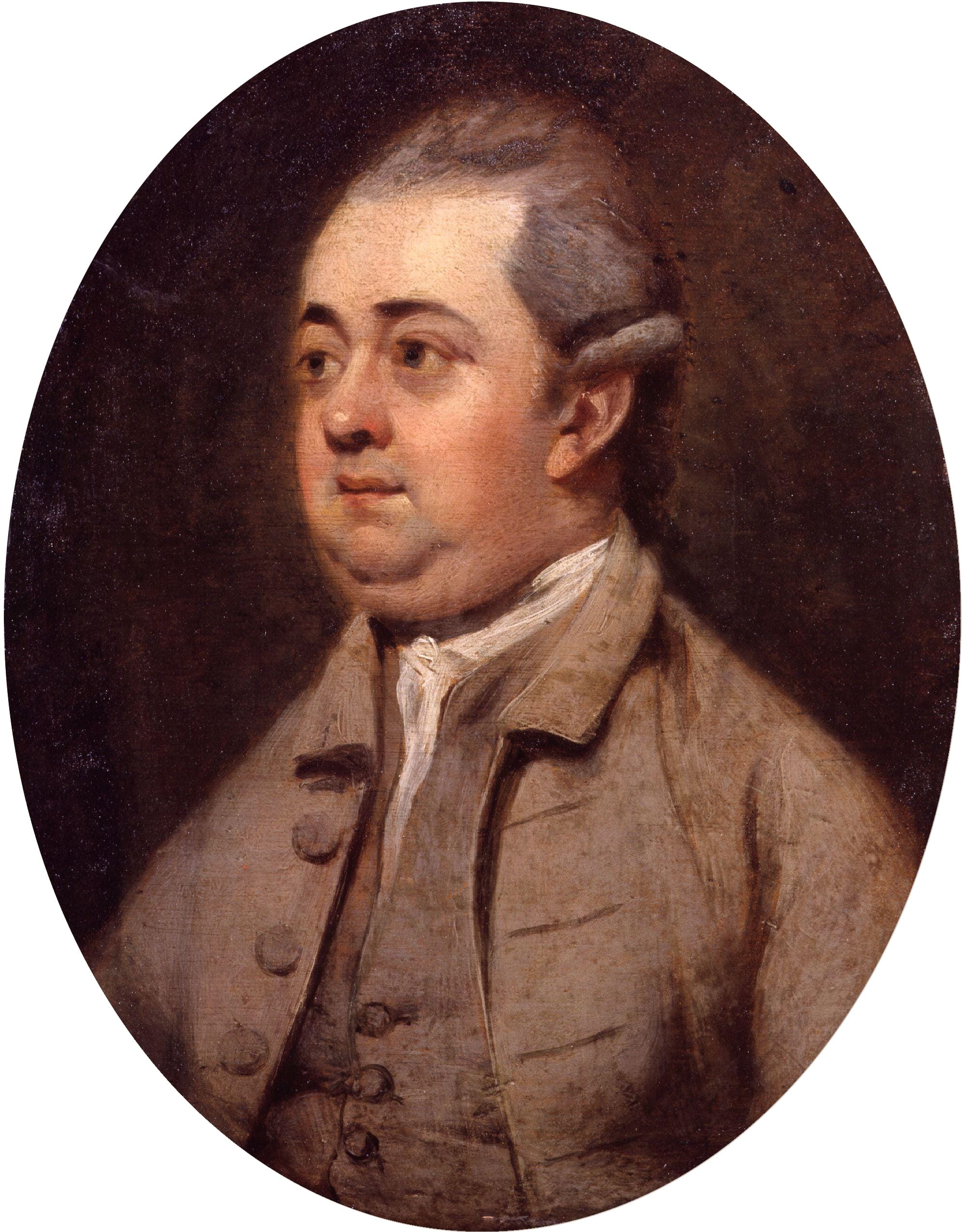
Gibbon remains a monument — to eighteenth-century prose style, to the ambition of historical synthesis, to the ways moral and religious frameworks shape historical argument. He is not simply "wrong" about 476. But his causal framework, centered on Christianity and moral decline, cannot stand in for present evidence, and his narrative needs for a terminal date have shaped how people understand the question more than the evidence warrants.
Rome after Rome
The simplest challenge to 476 as Rome's end is geographical. The eastern Roman empire did not end in 476. It continued to call itself Roman, to govern under Roman law, to speak Greek (increasingly) while maintaining Latin as the prestige language of administration and legal culture. It endured until 1453, when Constantinople fell to the Ottoman sultan Mehmed II — nearly a thousand years after the supposed extinction.
The label "Byzantine" that historians find useful for distinguishing the medieval eastern empire from its classical predecessor was not a contemporary self-description. The people governed from Constantinople called themselves Romaioi — Romans. Justinian, who reigned from 527 to 565, is the most vivid expression of this self-understanding. He systematized Roman law in the Corpus Iuris Civilis — three major parts, compiled between 529 and 534 — creating a body of material that would shape European legal thought through the medieval period and beyond. He also launched military campaigns to recover North Africa from the Vandals and Italy from the Ostrogoths, missions that only made sense if "Rome" had not already ended and if its western territories were legitimate objects of restoration rather than foreign countries.
Justinian's Italy campaign was slow, destructive, and ultimately produced a peninsula more damaged than it had been under the Ostrogoths. But the point is the claim it embodied: Constantinople's Rome was still Rome.
The Church wove through both stories. Its organization, literacy, property holdings, and legal culture connected late-Roman and early medieval worlds across the western provinces. To call it a "warehouse" that preserved Rome intact would misrepresent how much the Church changed — how thoroughly it absorbed local cultures, adapted its organization, modified its Latin. But it functioned as an institutional bridge: carrying administrative patterns, preserving documents, maintaining connections that secular power could no longer sustain. The bishop's court handled matters the civil magistrate no longer could. Monastic scriptoria copied texts that might otherwise not have survived. The connections were real even when the preservation was imperfect.
What the date actually measures
Romulus's resignation was consequential. The western court was gone. No western emperor would be installed in Italy again. That is a real historical fact, and a western succession list has to end somewhere. 476 is a defensible place to put the mark.
What the date does not measure is the extinction of Roman civilization, the simultaneous collapse of Roman institutions, or the clear border between a Roman and a post-Roman world. It measures the end of one particular — and already diminished — political arrangement. The fiscal-military capacity of the western empire had been contracting for decades before Odoacer arrived. The loss of North Africa to the Vandals — culminating in the fall of Carthage in 439 — had been more damaging in revenue terms than anything that happened in 476. The coup at Ravenna was the administrative conclusion of a longer deterioration, not its cause.
The modern resonance, for those who want one, is not the usual "our civilization is Rome" warning. It is something more specific and more useful. Institutions can outlive the political arrangements that created them — sometimes impressively, sometimes in hollowed-out forms that preserve appearances while losing substance. Material conditions can deteriorate while prestigious forms remain intact. A single date can be historically defensible (successions must be counted; courts must be tracked) and analytically inadequate (civilizations do not switch off on one afternoon in September).
History is capable of doing contradictory things at once. The fall that wasn't — or wasn't quite, or wasn't yet, or wasn't everywhere — is a more accurate account than the one a good ending demands.
Sources
Historical scholarship
- Ward-Perkins, Bryan. The Fall of Rome and the End of Civilization. Oxford University Press, 2005. — archaeological case for material collapse as distinct from institutional survival.
- Goffart, Walter. Barbarians and Romans, A.D. 418–584: The Techniques of Accommodation. Princeton University Press, 1980. — fiscal accommodation as an alternative to the conquest narrative.
Gibbon and his legacy
- Gibbon, Edward. The History of the Decline and Fall of the Roman Empire, 1776–1789. Chapter 36 footnote. — Gibbon's own acknowledgement that 476 was a convention rather than an established fact.
- Cambridge Companion to Edward Gibbon — overview chapter. — situates Gibbon's moral and religious framework in its eighteenth-century context.
Late-antique sources and legal texts
- Fordham University: Institutes of Justinian. — primary text of the Corpus Iuris Civilis, compiled 533 CE.
- Bloomsbury: Code of Justinian. — primary legal text establishing continuity of Roman law under the eastern empire.
- Brill: The Empire's Western Territories. — analysis of the fifth-century western empire's territorial and fiscal contraction.
Historiography and analysis
- Marcellinus Comes — historiographical analysis via Persée. — on Marcellinus's framing of 476 as a bounded event from a Constantinopolitan perspective.
- O'Donnell, James. "The Fabricated Fall of Rome." Time. — accessible overview of the conventional date's historiographical construction.
- German Archaeological Institute: "The View from Constantinople." — eastern imperial perspective on the western succession crisis.