
The Privacy Paradox — Why OpenAI Is Building An Anti-Cloud Tool
A strategic analysis of Privacy Filter and the hybrid future of AI
---
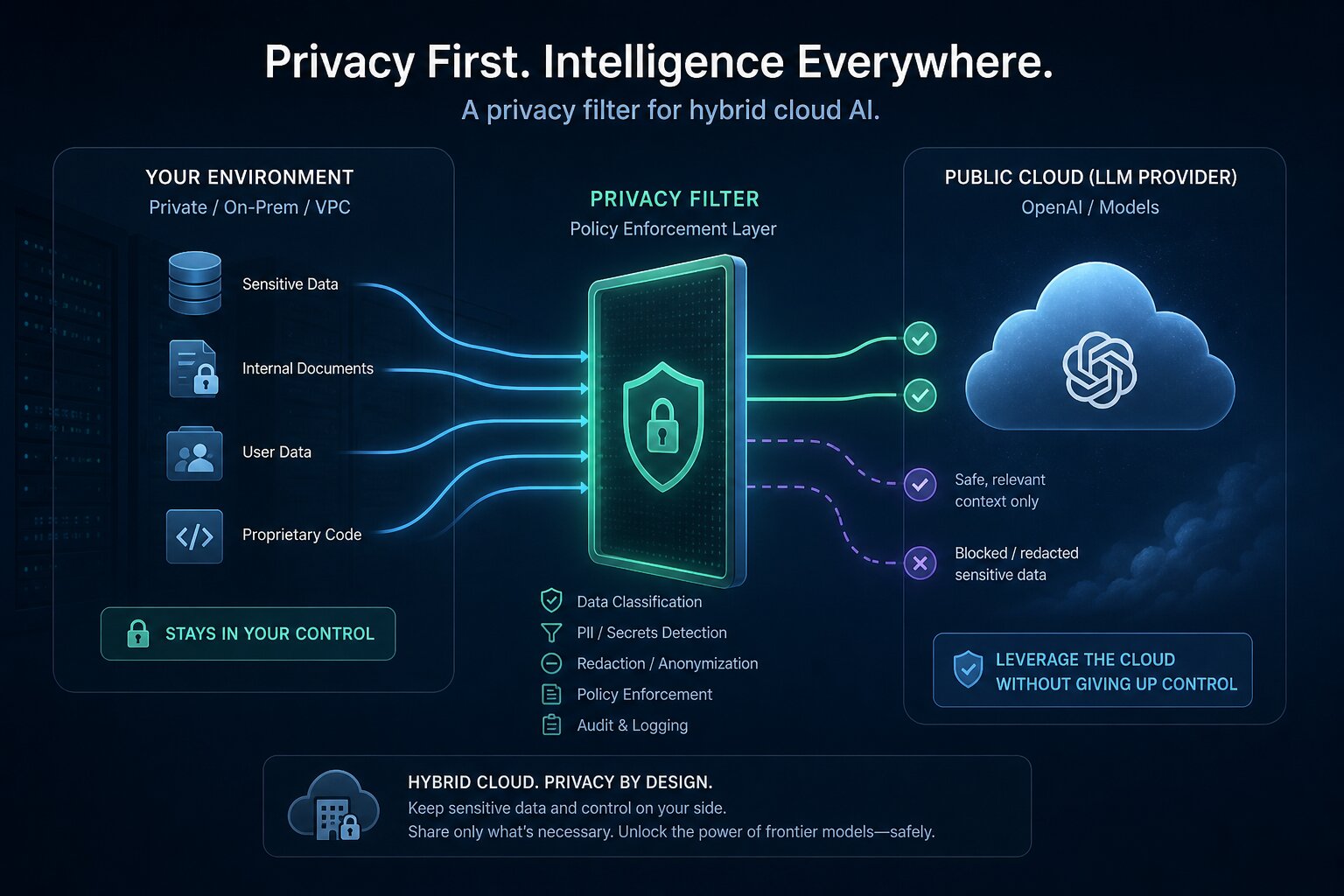
April 22, 2026. OpenAI, the company that makes billions sending your data to the cloud, launches Privacy Filter — a free, open-source tool that specifically does not send your data to the cloud. A model that runs locally, in your browser or on your laptop, detecting PII (Personally Identifiable Information) before it goes anywhere.
The paradox is striking. This is not altruism. It is a strategic move to unlock the next €1+ trillion market: regulated industries that want to use AI but cannot send their data away. Healthcare providers with patient data. Banks with financial transactions. Law firms with attorney-client privilege. All sectors where AI has enormous potential — but where data must never touch a third-party server.
What makes privacy suddenly so important that OpenAI builds free software for it?
The Growth Pain — Why Cloud AI Is Hitting A Wall
Cloud AI is growing explosively but hits a hard boundary: regulated sectors. The numbers speak clearly:
- €5.88 billion in cumulative GDPR fines — and still counting - 55% of enterprise AI inference now runs on-premises or on edge devices — three years ago that was 12% - Healthcare, finance, and legal see AI's potential but cannot send their data to the cloud
The problem is not technical. It is legal. GDPR demands data minimization by design. HIPAA prohibits sharing Protected Health Information without a Business Associate Agreement. The EU AI Act mandates transparency about where data goes. State-level AI legislation in the US is piling up.
The traditional solution: run locally. Your own hardware, your own models. But that means using open-weight models — Llama, Qwen, Mistral — delivering 70-85% of frontier performance for general tasks. Good enough for document summarization and classification, but trailing for complex reasoning and creative writing.
And that is where Privacy Filter enters the picture.
---
Privacy Filter — The Technical Side
Privacy Filter is an on-device PII detector. It runs in your browser (via WebGPU), on your laptop, or on-premise in your datacenter. Apache 2.0 licensed, fully open-source.
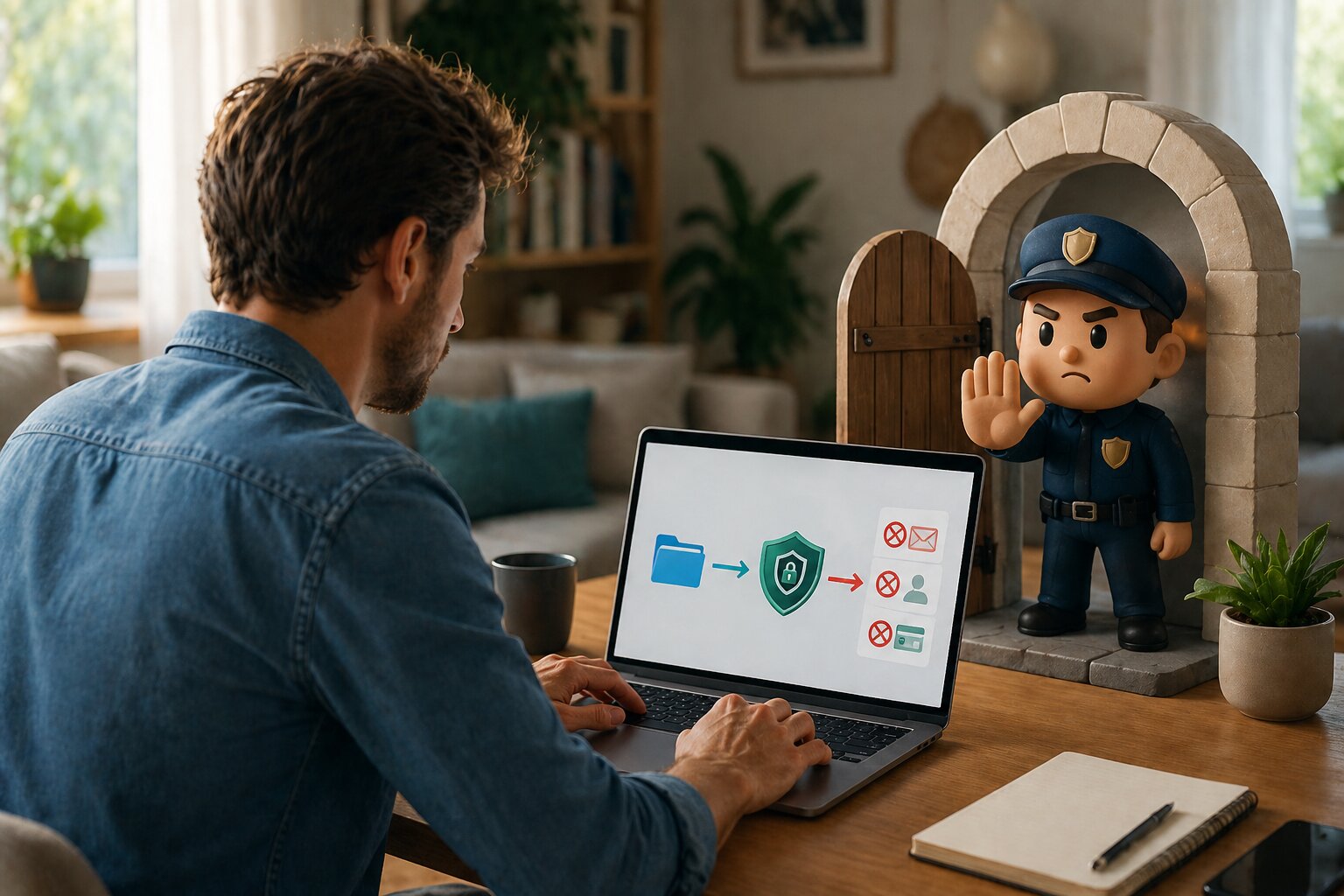
The specs: - 1.5 billion parameters total, but through Mixture of Experts only 50 million active during inference - 96.79% precision, 98.08% recall on PII detection - 20-40 millisecond latency locally — versus 800ms to 1.5 seconds for cloud PII APIs - Recognizes 8 PII categories: names, addresses, emails, phone numbers, URLs, dates, account numbers, secrets
The pattern works like this: user sends input to Privacy Filter (local, 20-40ms) which masks PII. Then the flow splits: sensitive data goes to a Local LLM (Ollama, Qwen), non-sensitive data goes to a Cloud API (DeepSeek, Claude, GPT-4). The response returns, PII is locally unmasked, and the user receives the result.
What makes Privacy Filter different from regex-based tools: context-awareness. It recognizes "Apple Park" as a company name, not a person. Regex tools see every capitalized word as a potential name — leading to false positives that make your content unusable.
What makes it different from cloud PII APIs (AWS Comprehend, Google DLP): data never leaves your machine. Cloud tools need to see your data to detect PII. That is exactly the problem you are trying to solve.
---
The Strategy — Privacy As On-Ramp, Not Obstacle
OpenAI earns nothing from Privacy Filter itself. They earn when companies send the sanitized data to their paid APIs.
The calculation is simple:
1. Hospital cannot send patient data to cloud → does not use AI 2. Hospital installs Privacy Filter (free) → PII removed locally 3. Sanitized data → safely to GPT-4 API → OpenAI earns
> "Privacy is not the obstacle for cloud AI. It is the on-ramp to regulated industries."
The market is gigantic. Healthcare, finance, legal — sectors with billions available but until now no access to frontier models. MailSPEC launched on April 29, 2026 JACE Version 3, the first production-ready sovereign email AI for healthcare. PHI (Protected Health Information) never leaves the client, but full AI functionality is available. That is the pattern Privacy Filter enables.
The irony: OpenAI builds the best anti-cloud tool to make cloud AI more accessible.
---
Hybrid — The Dominant Pattern Of 2026
The myth: local versus cloud is a binary choice. You choose either full data sovereignty (local) or frontier capability (cloud).
The reality: hybrid is the dominant pattern. Privacy where required, cloud where possible.
The tooling is mature:
- Ollama: 52 million downloads per month, zero-config GPU acceleration, OpenAI-compatible API - LM Studio: GUI for non-technical users who prefer avoiding the terminal - Privacy Filter: production-ready PII gateway with reliable detection rates

The hardware is affordable:
- 16GB VRAM is the sweet spot for 2026 (€1,500-€3,000 budget) - Break-even: 500K to 1M tokens per day versus cloud pricing - But when compliance is the driver, the math shifts — €2,500 hardware is cheaper than one GDPR fine
The quality gap is closed enough. Open-weight models deliver 70-85% of frontier quality for general tasks:
- Competitive: summarization, classification, document processing, basic code generation - Trailing: complex reasoning, creative writing, multimodal tasks
The critical design choice: Fail Closed.
With confidential data, NEVER use silent fallback to cloud. If the local model is unavailable → error, not quietly routing to cloud. This is the difference between "privacy by design" and "privacy by hope." You classify data in tiers (confidential → always local, internal → hybrid, public → cloud) and you stick to it.
> "Sovereign AI" sounds like something for governments and multinationals. But with Ollama (52M downloads/month) and €600 GPUs, half the developer world is already running locally.
Conclusion — Privacy Is Not The Obstacle, But The On-Ramp
Privacy Filter is a symptom of a larger shift. The AI industry has understood that regulated industries represent the next growth wave — but they can only be reached by enabling privacy, not ignoring it.
The mindset shift: not "local OR cloud," but "privacy where required, cloud where possible." Hybrid is not a compromise. It is the strategy.
Which data would you never send to the cloud? And what could you do with AI if that boundary disappeared? Privacy Filter makes that question less theoretical. The tools are here. The architecture is proven. The choice is now: which part of your AI stack stays local, and which part may go to the cloud?
The hybrid future is not something that is coming. It is already here.
Sources
OpenAI Privacy Filter
- OpenAI — Introducing Privacy Filter — Official announcement with technical specifications and design goals
- Hugging Face — openai/privacy-filter — Model card with architecture details, benchmark results, and usage examples
- GitHub — openai/privacy-filter — Source code repository with implementation details and integration guides
- The New Stack — OpenAI Privacy Filter runs on your laptop — Technical analysis of on-device deployment capabilities
- VentureBeat — OpenAI launches Privacy Filter — Enterprise implications and market positioning analysis
- Help Net Security — OpenAI tackles bad AI habits — Security perspective on PII handling challenges
Sovereign AI & Compliance
- Barnacle Labs — Sovereign AI Guide — Comprehensive overview of data sovereignty requirements for AI systems
- deepset — Sovereign AI — Architecture patterns for building sovereign AI infrastructure
- Secure Privacy — GDPR Compliance 2026 — Current GDPR enforcement trends and fine statistics
- Hostrunway — Sovereign GPU Clouds — GPU cloud infrastructure for compliance-first AI deployment
- Parloa — AI Privacy Rules 2026 — Overview of 2026 privacy regulations affecting AI deployment
- GlobeNewswire — MailSPEC JACE V3 — First production sovereign email AI for healthcare, demonstrating the Privacy Filter pattern
- Seresa.io — Sovereign AI for Agencies — Practical sovereign AI implementation for service businesses
Local vs Cloud Economics
- Lenovo Press — On-Premise vs Cloud AI TCO — Detailed total cost of ownership comparison for enterprise AI infrastructure
- ANCHOREO AI — On-Premises vs Cloud Cost — Break-even analysis for local versus cloud inference at various scales
- DEV Community — Local AI in 2026 — Practical guide to running production LLMs on consumer hardware
- Pooya Blog — Ollama Cloud Pricing 2026 — Hardware requirements and pricing comparison for Ollama deployment
Hardware & Tooling
- RoboDodd — Budget Local AI Hardware 2026 — Hardware recommendations for budget-conscious local AI deployment
- Tech Insider — Ollama Tutorial 2026 — Step-by-step setup guide for local LLM inference with Ollama
- ThunderCompute — What is Ollama — Introduction to Ollama's architecture and local inference capabilities
- Claude 5 Hub — Local LLM Mastery 2026 — Comparative guide to local LLM tools: Ollama, LM Studio, and llama.cpp
- Local AI Master — Choose Right AI Model — Model selection guide for different local inference use cases
Hybrid Architecture & Best Practices
- SitePoint — Hybrid Cloud-Local LLM Guide 2026 — Complete architecture reference for hybrid AI deployments
- eLink Design — Hybrid AI Architecture — Cloud routing patterns with local model fallback for privacy and cost optimization
- Microsoft TechCommunity — Privacy-First Hybrid AI — Microsoft's approach to hybrid AI combining Azure and local inference
- Multi-AI — Local AI vs Cloud AI — Privacy, speed, and cost comparison across deployment models
- Allganize — Cloud vs On-Prem LLM Strategy — Enterprise decision framework for AI deployment model selection
Agent & Deployment
- OpenClaw — Self-Hosted AI Agent Guide 2026 — Comprehensive guide to self-hosting AI agents with privacy guarantees
- AI Agent Ops — Self-Hosted AI Agent — Operational patterns for self-hosted agent deployment
- NVIDIA Blog — Secure Local AI Agent — NVIDIA's framework for building secure, always-on local AI agents
Privacy-Preserving Techniques
- Dialzara — Privacy Preserving AI Techniques — Survey of privacy-preserving techniques including federated learning and differential privacy
- Crewdle — Local AI Data Sovereignty — Data sovereignty implementation patterns for local AI deployments
- Cloud Security Alliance — Data Security AI Environments — Industry framework for securing data within AI processing environments