The note that will outlive everyone listening to it
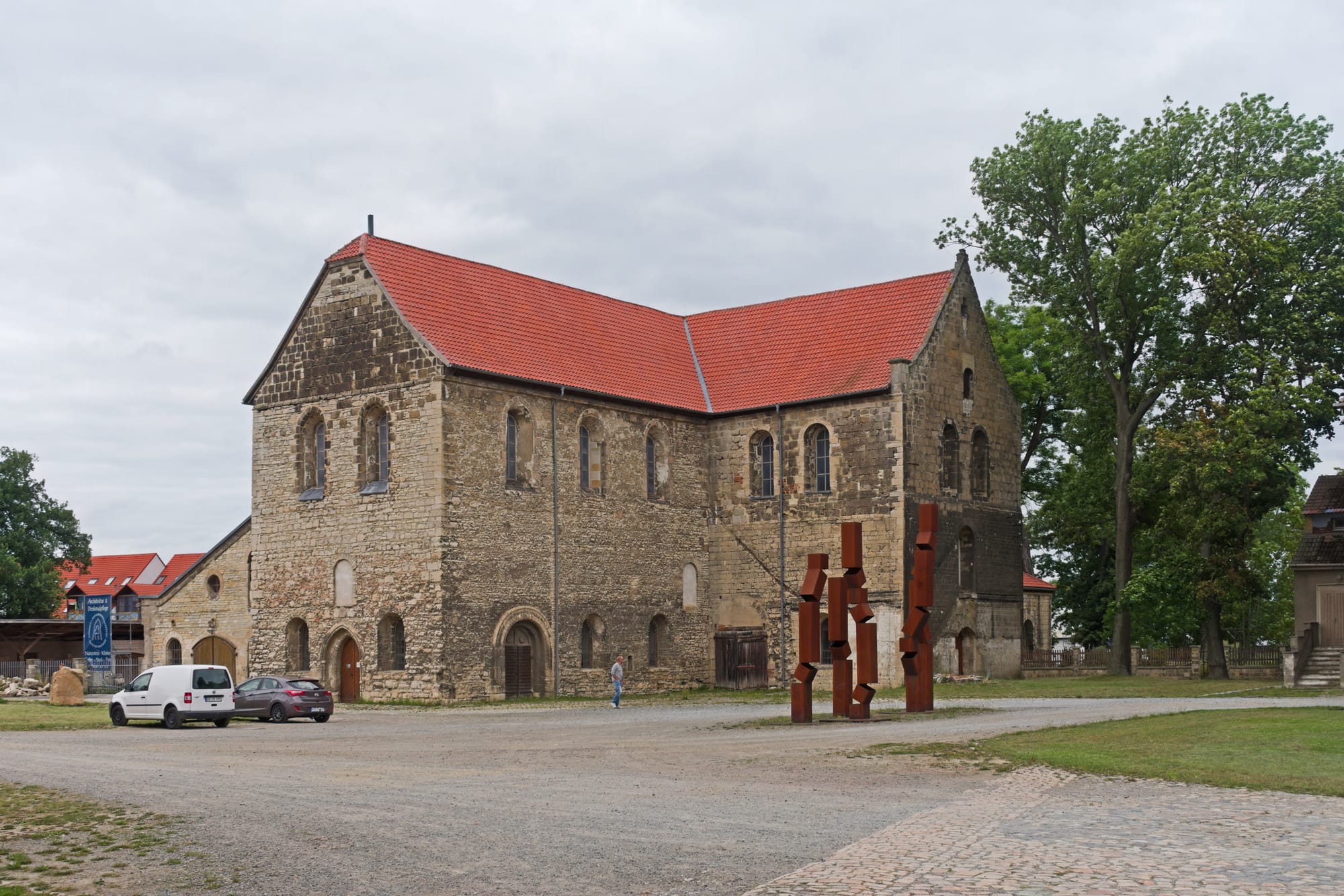
On 5 August 2026, more than 150 people gathered in a medieval church in Halberstadt, Germany, to hear an A organ pipe join seven others. The next scheduled change is in October 2027.
On a Wednesday morning in early August, a crowd arrived in St. Burchardi Church in Halberstadt to witness a musical event that had taken years to prepare. Not years of rehearsal — years of waiting. The 17th chord change in John Cage's ORGAN²/ASLSP had arrived: an A4 pipe was added to the seven already sounding, shifting the chord from seven notes to eight. Jeffrey Lependorf of the John Cage Trust described the result with deliberate care. A higher note becomes more prominent. The difference is real but subtle.
The crowd listened for three minutes before the change, then watched the A4 inserted, then listened again for three minutes after. More than 150 people inside the church, dozens more outside following a livestream. By any conventional measurement, not much happened. By Halberstadt's own measurement, something enormous did: the sound changed for the first time in years, and the next change won't come until October 2027.
That gap between what the ear registered and what the calendar marks is the project's central provocation.
The instruction with no endpoint
Most of the reporting on Halberstadt treats John Cage as though he composed a 639-year work. He did not. In 1985, Cage wrote ASLSP as a short piano piece — the title an abbreviation of "as slow as possible," whose initials also mirror "Lsp!", the final exclamation in Joyce's Finnegans Wake. Two years later, organist Gerd Zacher persuaded Cage to adapt it for organ, and gave the adaptation its premiere in Metz in approximately 29 minutes. Other organists have treated the instruction as the length of a CD. There is nothing in the score that declares either approach wrong.
That is the point. Cage wrote pitches and relative durations. He left the central temporal limit deliberately unresolved.
The organ makes this unresolved instruction different in kind, not just degree. A pianist must eventually lift a finger; an organ pipe can receive wind for as long as its apparatus and its caretakers endure. In 1997, a group of artists and scholars in Halberstadt took that distinction seriously enough to ask: how slow is actually possible? Their answer was not acoustical. They found a historical number. A recognizably modern keyboard organ had been installed in Halberstadt in 1361 — 639 years before the project's intended millennium start in 2000. So 639 years it would be.
The performance began on Cage's 89th birthday, 5 September 2001, with 17 months of silence. The first audible chord sounded on 5 February 2003. That opening matters. It establishes immediately that Halberstadt doesn't only slow down notes; it slows down waiting. A conventional concert begins. This one waited more than a year before it did.
The 639-year duration is therefore both Cage's composition and something that happened to it afterward — a collective decision to make his instruction literal on a civic and architectural scale. That distinction makes the project more interesting, not less. It asks whether a score belongs only to its composer, or whether an artwork can include the institutions, technologies, and future people needed to keep it alive.
The people behind the held key
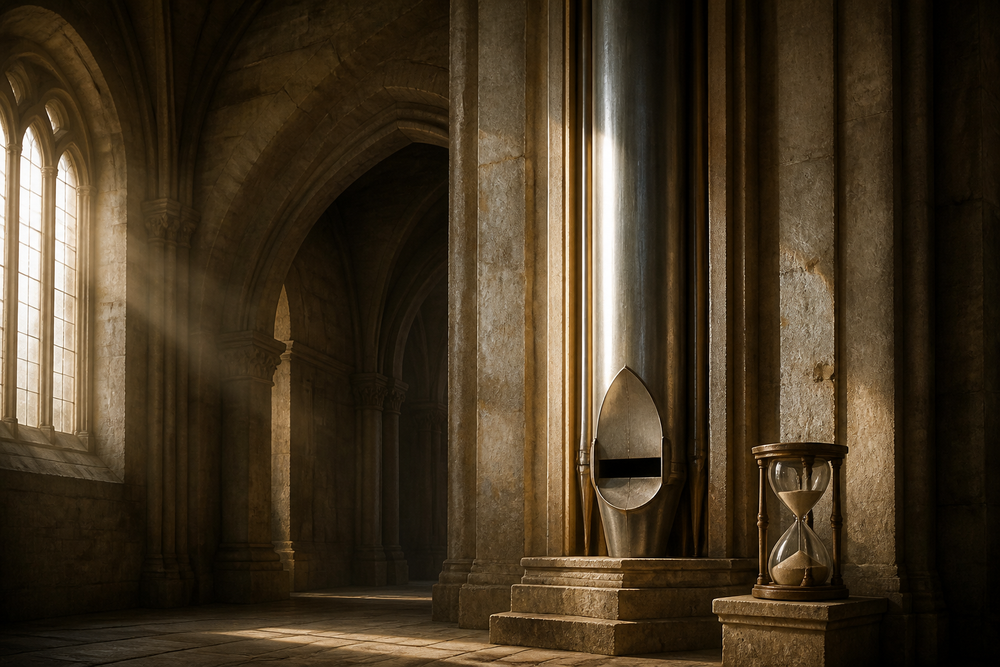
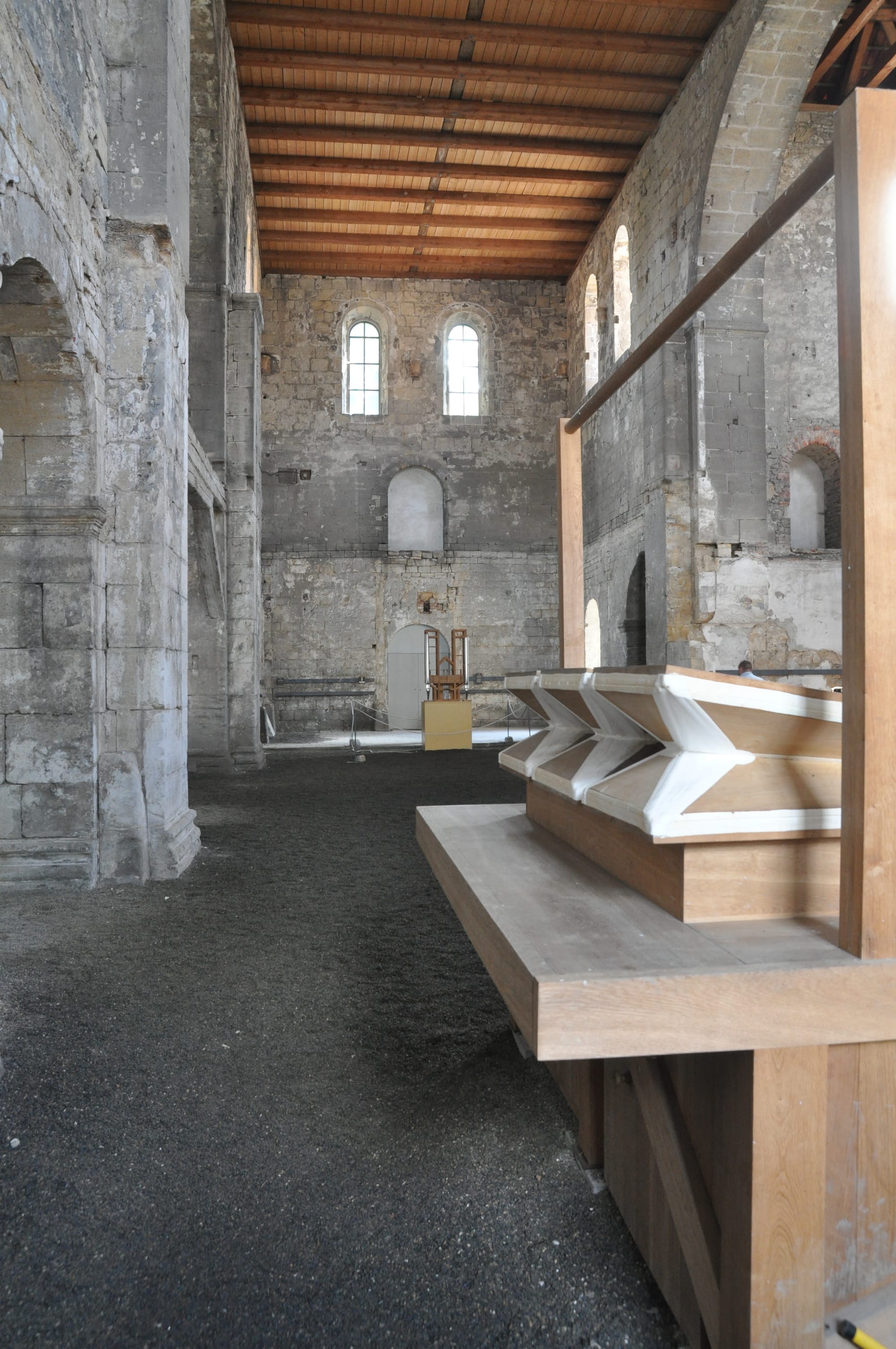
The practical reality of Halberstadt is worth describing plainly. An electrically powered blower maintains continuous airflow to the organ's pipes. Sandbags depress the relevant keys and pedals, holding the chord without human intervention. The organ itself is purpose-built and gradually assembled over the course of the performance — pipes are added as they become needed, rather than installed in advance.
No musician sits at the console. No performer needs to endure anything. What the project requires instead is something harder to dramatize: maintenance. Organ builders, church custodians, volunteers, administrators, donors — they are all, in a practical sense, performers. The sounding chord is not the musician's achievement. It is the result of an ongoing collective commitment to keep the air moving and the structure standing. The craft behind such instruments rarely receives the attention the music does — something explored in the invisible labor of the people who build the sound we hear.
This is the project's strongest conceptual departure from how we usually think about musical performance. Most long-duration art is framed around endurance: who can last? Halberstadt replaces individual endurance with collective stewardship. Its central figure is not the heroic soloist but the maintainer — the person who checks the air supply, replaces worn components, raises money, reads the schedule, and teaches the next person why any of this must continue.
There is an ecological undertone here without forcing a contemporary analogy. A performance projected to conclude in 2640 assumes a future public willing and able to inherit it. According to the project's official page, final tickets are being offered for the 2640 conclusion — a deliberately strange artifact. Purchasing one commits someone (or their descendants) to attending an event most current buyers will not live to see.
From 4'33" to 2640
The intellectual bridge to Cage's earlier work is clean.
In 1952, pianist David Tudor sat at a piano at Woodstock, New York, for four minutes and 33 seconds, marking three movements without intentionally sounding the instrument. Cage later recalled what he heard: wind, rain, the sound of the audience shifting in its seats. The piece was not silence. It was a reframing of what counts as music and who produces it. When a composer stops supplying notes, listening does not stop. The environment and the audience become the sound.
ORGAN²/ASLSP in Halberstadt is the inverse image. There is almost never silence. A chord persists so long that it begins to feel less like music and more like the church's own atmosphere — a quality of the building rather than an event inside it. Listeners stop following melodic development, because there isn't any. They begin noticing position, resonance, architecture. Moving a few meters across the nave changes what they hear significantly. The organ plays the church as much as the church houses the organ.
Both works displace the traditional boundary between composition and surroundings. 4'33" frames ambient sound as music. ORGAN²/ASLSP frames duration, infrastructure, and ongoing maintenance as part of performance. In neither case is the audience passive. In Halberstadt, the audience's decision to attend a chord change — to treat an imperceptible auditory shift as an occasion worth witnessing — is itself part of what makes it an occasion.
Chance remains relevant, though not quite in the sense Cage used it in his compositional method. No one can control the social and material conditions of 639 years. Wars, climate shifts, institutional collapse, technical failure, and the preferences of people not yet born will shape this work as surely as its score does. The project does not pretend otherwise. It stages the wager that the future will be worth inheriting — and that the people in it will find this particular inheritance worth keeping.
A work addressed to strangers
The audience for the 2640 conclusion does not exist yet. No one alive on 5 August 2026 can reasonably expect to attend. The final ticket-holders will be someone else's children's children, or further still, entering a church to hear the last bars of a piece begun before anyone currently living was born.
This is not a problem the project tries to solve. It is the point.
Cage's original instruction — "as slow as possible" — gains its full meaning at exactly the place where compliance becomes impossible to specify. No one can demonstrate that 639 years represents the actual lower limit. The performance might slow down further. The building might not survive. The institution might lose funding, conviction, or both. The score says nothing about what happens then.
What Halberstadt does is turn that irresolution into a public commitment rather than a philosophical question. The sandbags and the blower and the succession plan are evidence that someone decided the question was worth pursuing practically, not just conceptually. The 150 people who showed up on a Wednesday in August to hear an A4 pipe join seven others did something similar. They didn't need the sound to be dramatic. They decided their presence was the meaning of the occasion.
The note added on 5 August was small in sonic terms. It took years to become available. The next one is fourteen months away. Whether that's a long time depends entirely on what you're counting.
Sources
Event reporting
- John Cage chord change, 5 August 2026 — Associated Press — event reporting, A4 addition, Lependorf quote, audience and livestream figures, next scheduled change
- Official programme, 17th chord change, aslsp.org — date and event programme
History and context
- John Cage Organ Project — City of Halberstadt — local history, 1361 organ, 639-year rationale
- Passing the Time — The Diapason — 1987 organ version, Zacher premiere, performance history, Finnegans Wake reference
- ASLSP — John Cage Complete Works database — 1985 piano work record
Cage's wider work
- 4'33" — MoMA collection — premiere and Cage's listening concept
- About — John Cage Trust — Cage's legacy and "no such thing as silence"