The Compromise Buried in Every Piano Chord
Why Bach's "Well-Tempered Clavier" doesn't mean what most people think — and why your piano is lying to you, just a little
Strike a C major chord on any piano and something clicks into place. The sound feels resolved — stable, complete, in tune. That intuition is real. It is also, in a precise mathematical sense, a polite fiction.
The piano is not in tune. Not in the way a single sung note or a bowed string can be in tune. Instead, the piano is evenly out of tune — distributed so carefully across all twelve notes that the compromise becomes inaudible. That distribution has a name: equal temperament. It is not a natural fact about sound. It is an engineering decision, centuries in the making, so thoroughly embedded in Western music that we stopped noticing it was a decision at all.
This is the assumption that hides inside Johann Sebastian Bach's most famous title, and that makes Das Wohltemperirte Clavier one of the most misread phrases in music history.
The problem that started everything
Sound travels as vibrations — pressure waves at particular frequencies. Musical intervals that feel consonant correspond to simple ratios between those frequencies: an octave is 2:1, a perfect fifth is roughly 3:2, a major third roughly 5:4. Those ratios are not negotiable. They emerge from the physics of resonance and have been recognisable across cultures for thousands of years.
The problem is arithmetic. If you stack twelve perfect fifths — going from C up through G, D, A, E, B, and so on, all the way around the circle — you should arrive back at C, seven octaves higher. But you don't, quite. The stack of fifths overshoots by a small interval called the Pythagorean comma: roughly one eighth of a semitone. It sounds like almost nothing. Played in isolation, it is almost nothing. But on a fixed-pitch keyboard — one where each key plays one note and cannot bend — that gap has to go somewhere.
If you make all twelve fifths pure, your thirds will be too wide. Make the thirds pure instead, and your fifths will suffer. Tune one key perfectly, and others will wobble. The circle of fifths is a beautiful geometrical idea that refuses to close without cheating.
Every keyboard tuning system is a particular set of decisions about where to put the cheat.
Four answers to an impossible problem
Keyboard players and builders before 1700 lived with those decisions daily, and they developed several systematic approaches.
Just intonation privileges pure ratios in a single key. A C major chord in C major sounds luminous. Modulate to a distant key and notes that were fine a moment ago turn muddy. For a lute player retuning between pieces, manageable. For a pipe organist locked into a mechanical instrument during a service, catastrophic.
Meantone temperament — dominant in much of Europe from roughly 1500 to 1700 — splits the difference for nearby keys. Thirds become very close to pure. Fifths are slightly narrow. The payoff is a warm, sweet sound in the home keys. The cost is a "wolf interval," a fifth so badly out of tune that it growls rather than sings, lurking somewhere between the more exotic sharps and flats. Composers simply avoided triggering it.
Well temperament relaxed that prohibition. By distributing the comma unevenly but without creating a wolf, well-tempered systems made all 24 major and minor keys usable — not equally pleasant, but functional. The keys still differed from one another. C major had a different character from E major. That difference was considered a feature, not a bug. Theorists and composers of the period wrote extensively about "key colour": the idea that each key carried its own expressive weight, distinct from the others.
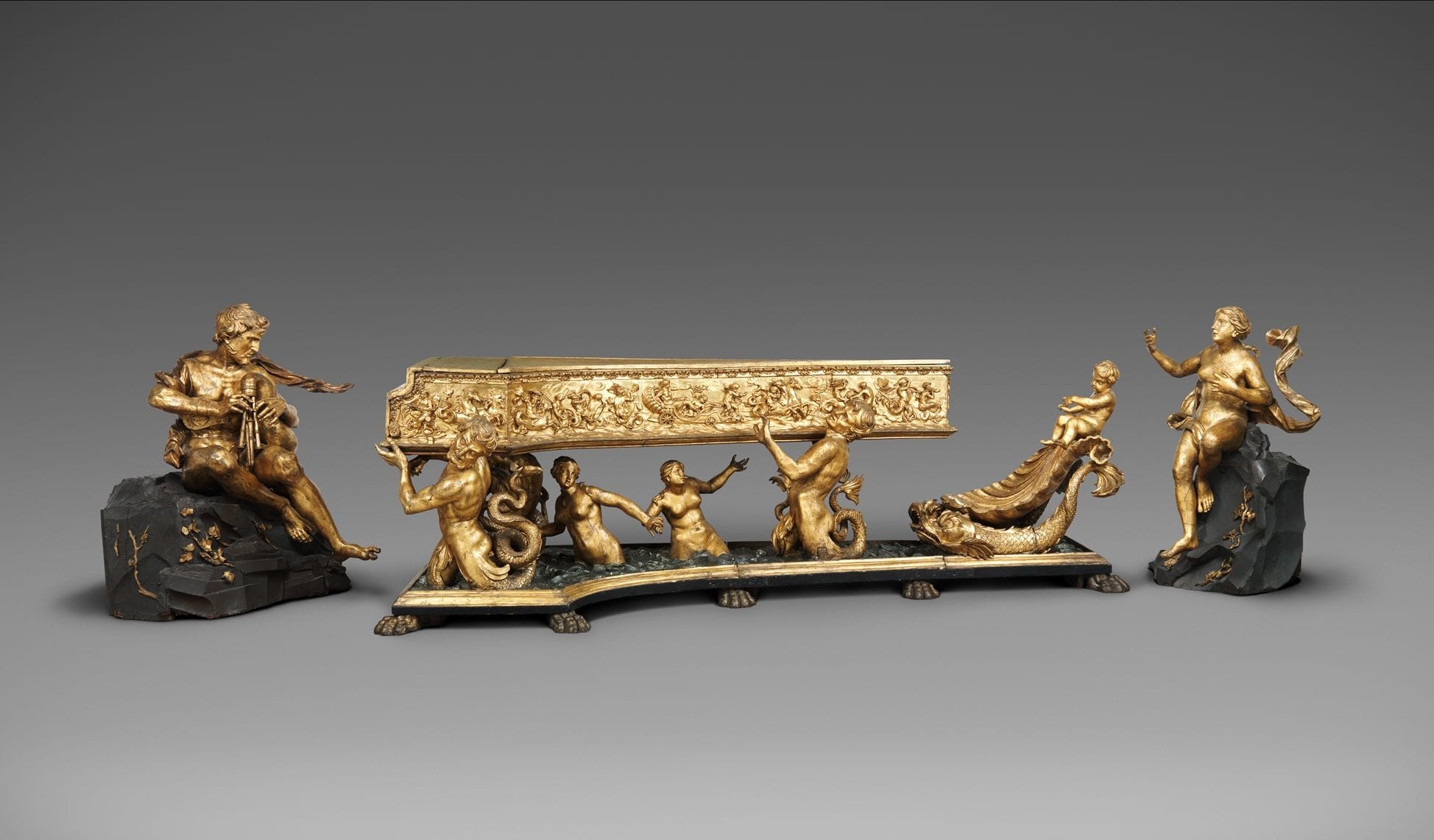
Equal temperament (12-TET) divides the octave into twelve steps of exactly the same size. Every key is identical to every other. Every fifth is slightly narrow; every third is slightly wide. No wolf, no wolf-avoidance, no key colour. Perfect portability and perfect standardisation — at the cost of the subtle distinctions that unequal systems preserved.
What Bach actually meant
Das Wohltemperirte Clavier, Book I, appeared in 1722. It contains 24 preludes and fugues, one in each major and minor key. The pedagogical point was clear: here is music for a keyboard instrument that has been tuned well enough to circulate through all the keys without breaking.
That is what "well tempered" meant. Not "equally tempered." Not "tuned according to the modern ISO standard that would not exist for another two centuries."
The phrase identified a category of tuning — one that allowed full key circulation — not a specific system within that category. In 1722, several well temperaments existed, each with different distributions of the comma, each producing slightly different key colours while avoiding the wolf. Bach's title says he assumed one of them. It does not say which one.
Recent peer-reviewed analysis makes this explicit. A 2024 corpus study by Blake and Albrecht, published in the Journal of New Music Research, examined the harmonic and melodic patterns of the WTC and found that the collection was not composed "with equal temperament in mind." The exact temperament, however, remains unknown — and despite a century of ingenious proposals, no source has settled the question.
This matters because a common shorthand has compressed two distinct things: the practice of playing in all 24 keys, and the specific tuning system in which all keys become identical. The first is what Bach described. The second came later and for different reasons.
Three specific claims deserve particular caution. Bach did not invent equal temperament, and the WTC does not prove he used it. The attribution to Werckmeister III — a specific historical well temperament developed by theorist Andreas Werckmeister — appears frequently but rests on inference, not a document. The interpretation of a looping squiggle on the WTC title page as an encoded tuning recipe, proposed by scholar Bradley Lehman and covered widely in popular music writing, remains a live and contested reconstruction, not a consensus.
The honest version of the story is more interesting: Bach wrote music that could be played in any key, in a period when that was not yet taken for granted, using a tuning method he never specified. The mystery is part of the historical record.
Why the piano converged on uniformity
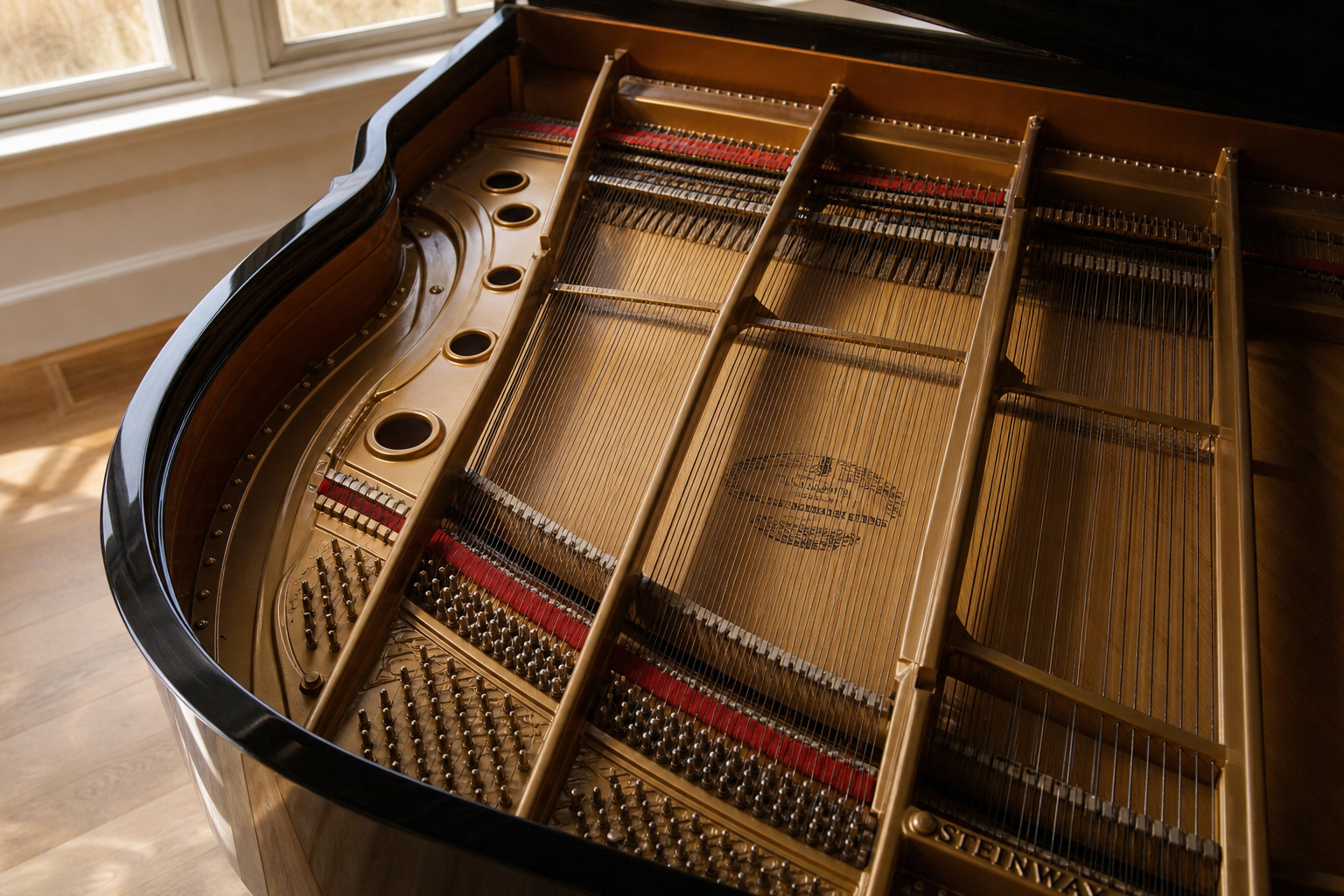
Equal temperament did not conquer keyboard music through sudden mandate. The shift was gradual and practical, stretching across much of the 18th and 19th centuries, driven by overlapping pressures.
Composers were writing more chromatically — using remote modulations, enharmonic respellings, passages that moved freely through many keys in a single movement. Each of those movements put stress on unequal temperaments, where some intervals would sound fractionally worse than others. The more adventurous the harmony, the more audible the compromise.
Piano manufacturing scaled up. Broadwood in London, Érard in Paris, Bösendorfer in Vienna — large workshops producing instruments for concert halls and domestic parlours across Europe and eventually the world. Factory tuners needed a consistent, teachable standard. An 1846 account records Alfred James Hipkins, tuner at Broadwood, being tasked with training factory staff in equal temperament. Some of those tuners, the account notes, were still using meantone. The transition was real, but it happened in workshops and tuning manuals, not in a single decree.
Ensemble music compounded the pressure. When a piano, a clarinet, and a violin share a stage, they cannot easily negotiate temperament together. The piano sets its terms and everyone else bends slightly to fit. A piano tuned in a well temperament with distinct key colours will create friction with instruments that naturally favour pure intervals in whatever key they happen to be playing. Equal temperament reduces that friction by accepting a uniform, modest compromise that all parties can meet.
The phrase "equal temperament ruined harmony" — used by musicologist Ross Duffin as a provocation in his 2007 book of the same name — captures a real loss. But framing it as ruin misses the tradeoff. The piano became the universal instrument of Western music partly because its tuning made it a reliable partner for everything else.
What the alternatives sound like today
The alternatives are not archival curiosities. Within historically informed performance (HIP), organs and harpsichords are routinely tuned to well temperaments appropriate to specific repertoire. A Dutch 17th-century ensemble performing Sweelinck will use different tuning than a German ensemble performing Buxtehude. The choice is artistic and practical, not purely historical.
The Vater-Müller organ in Amsterdam's Oude Kerk, built between 1720 and 1738 and substantially restored between 2015 and 2019, is one of the finest surviving examples of a large historic organ maintained in active use. Its restoration was carried out by the Reil workshop in Heerde and adopts Neidhardt III, a well temperament that allows all 24 keys to function while preserving subtle differences of character between them. The instrument stands as evidence that the choices made in the early 18th century remain a working presence in the city. For a different perspective on how organ builders are working with contemporary tools, see our earlier piece on AI in pipe organ design.
For listeners who want to hear the difference without travelling to Amsterdam, the Huygens-Fokker Foundation maintains a comparison page with audio examples across several temperament systems. The most instructive exercise is simple: listen to a sustained major third in C major under just intonation, then under equal temperament. The just third settles into stillness; the equal-tempered third has a gentle, regular pulse. Then do the same thing in a remote key under just intonation, and listen to what happens to that stillness.
That pulse — technically, a beating pattern caused by frequencies that don't quite align — is what equal temperament distributes evenly across all keys. In C major it is unremarkable. Distributed universally, it becomes inaudible. But it is there.
The invisible choice
Equal temperament did not abolish the old decisions about consonance and key colour. It made one particular set of decisions so universal that they stopped seeming like decisions. The piano arrived in virtually every school, church, parlour, and concert hall in the Western world, and it arrived tuned the same way. After three generations, "in tune" came to mean "tuned the way this piano is tuned."
Bach's title was naming a desirable property of a keyboard: flexible enough to play everywhere. It described a possibility, not a prescription. The specific tuning he used — if he was consistent about it, which itself is uncertain — has not survived in a form we can verify. What survives is 48 pieces of extraordinary music, written for a keyboard that could travel through all 24 keys without breaking, in a century when that still needed to be said.
Understanding that changes the way you listen. Not because well temperament is better than equal temperament — it is not, in any absolute sense — but because it is different, and the difference carried meaning that composers once exploited deliberately. The next time you hear a C major prelude that feels sunlit and a C-sharp minor fugue that feels constricted, you are not imagining a contrast. You may be hearing something that was put there on purpose, for an instrument tuned in a way no modern piano is.
The compromise is still in there. You have simply stopped hearing it as a compromise.
Sources
- Andrew Blake & Joshua D. Albrecht, "Tempering the clavier: a corpus-based examination of Bach's cognition of intonation in the Well-Tempered Clavier" — Journal of New Music Research (2024). Primary peer-reviewed source establishing that the WTC was not composed with equal temperament in mind.
- Franck Amiot, "Discrete Fourier Transform and Bach's Good Temperament" — Music Theory Online 15.2 (2009). Mathematical analysis of temperament systems in relation to Bach's harmonic language.
- Oude Kerk Amsterdam, Vater-Müller Organ — Institutional source on the 1720–1738 organ and its 2015–2019 restoration by the Reil workshop in Heerde.
- Huygens-Fokker Foundation, comparative temperament audio examples — Listening resource demonstrating the sonic differences between just intonation, meantone, well temperament, and equal temperament.
- Paul Walker, Bach's Well-Tempered Clavier (Oxford University Press, 2024). Scholarly reference on the WTC.