Democratization's Dark Side: When Everyone Can Create, No One Gets Seen
The DJI Pocket 4 paradox
A freelance videographer uploads his best vlog yet. Shot on the new DJI Pocket 4, the footage is flawless — buttery-smooth stabilization, cinematic 4K slow-motion at 240fps, 10-bit color grading that makes every frame look like a painting. Technically, it's everything a professional video should be.
He checks the view count after 48 hours: 47 views.
Three years ago, he shot a similar video on his smartphone. Shaky, cropped 1080p, auto-exposure flickering under streetlights. That one hit 12,000 views in the first week.
What changed? The camera got better. So did everyone else's.
The Great Accessibility Leap
In 2016, producing professional-quality video required serious investment: €2,500 to €5,000 for a DSLR, gimbal, audio gear, lighting, and storage. Setup time? Thirty minutes minimum. Learning curve? Months of practice before you could shoot anything worth publishing. Crew size? For most corporate work, at least two to five people.
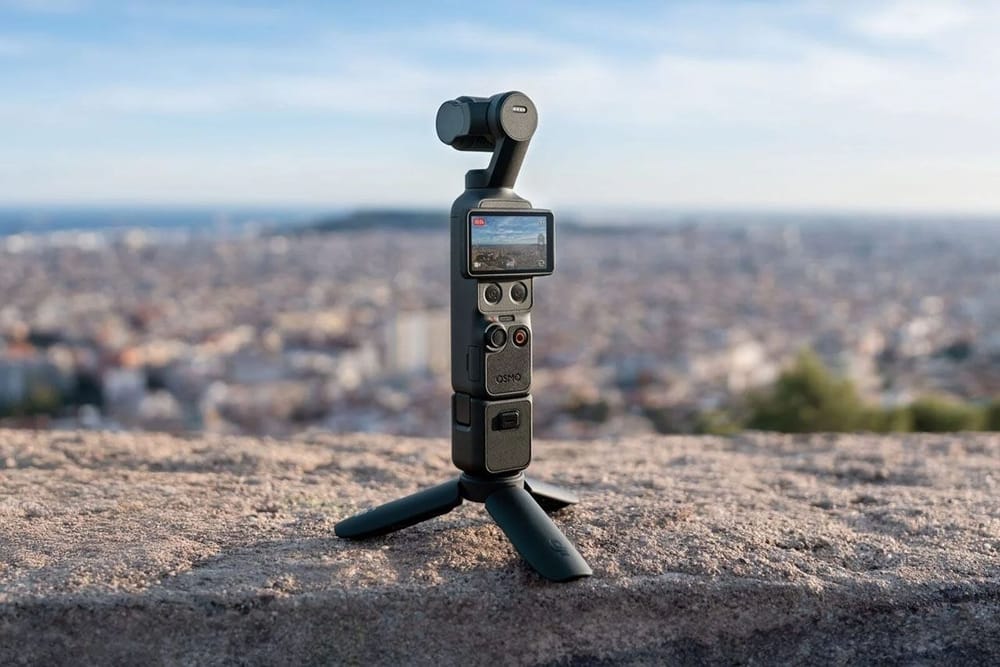
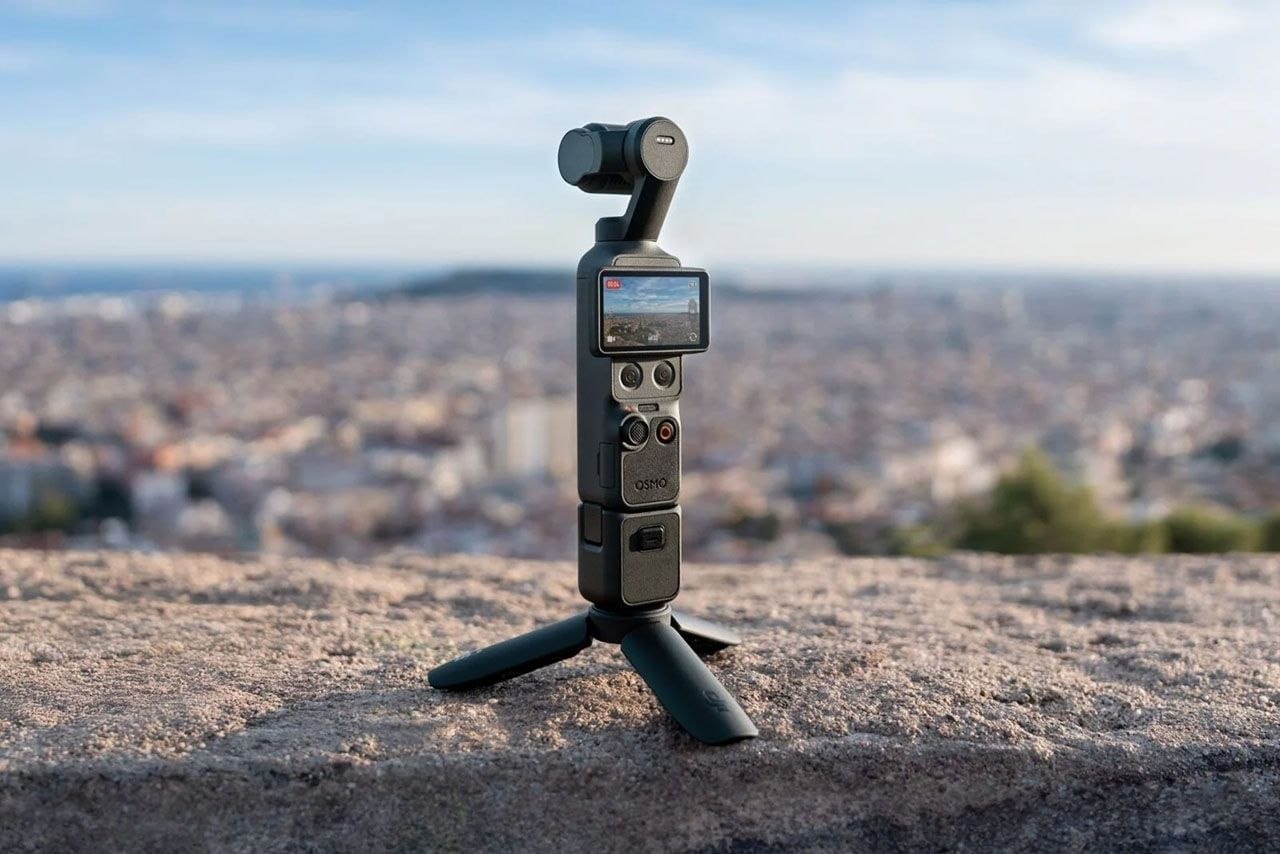
Fast forward to April 2026. The DJI Osmo Pocket 4 Creator Combo costs $499. Setup time? Under two minutes. Learning curve? Days, maybe weeks for advanced features. Crew size? One.
This isn't incremental improvement. This is an order-of-magnitude accessibility shift.
The Pocket 4 compresses five distinct roles into a single device. The gimbal operator? Eliminated — ActiveTrack 7.0 "seems to anticipate where you're going rather than just following," according to Gadget Match. The sound engineer? Automated via 4-channel OsmoAudio and DJI Mic 3 integration, delivering "professional audio capabilities essential for solo production." Camera operator and focus puller? Handled by autofocus with double-tap lock-on. Data wrangler? The 107GB internal storage at 800MB/s means no SD card juggling mid-shoot — roughly 90 minutes of continuous 4K60 recording before you need to offload.
Even lighting gets partially democratized. The 14-stop dynamic range and two-stop low-light improvement mean you can shoot concertos and dimly-lit events with confidence, situations that would've produced "dark or fuzzy" footage on earlier models.
Consider a concrete before-and-after scenario: A wedding shooter in 2016 arrived with a backpack full of gear, spent thirty minutes setting up, needed an assistant for dual-angle coverage, and charged €1,500 for the day. In 2026, that same shooter arrives with a Pocket 4 in their jacket pocket, pulls it out, hits record, and delivers cinema-grade footage — solo. Throughput triples. Cost per event plummets.

The technology works. That's not the problem.
The Oversaturation Consequence
Here's the catch: when production becomes this accessible, technical quality stops being a differentiator. It becomes baseline.
The numbers tell the story. On YouTube, over 20% of videos shown to new users qualify as "AI slop" — low-effort content gaming the algorithm with minimal creative input. The platform is drowning in content that meets technical standards but offers nothing unique.
Content strategist analysis reveals the mechanism: "The more established a platform becomes, the harder it is for newcomers to break through" — a phenomenon called "diminishing discovery". When everyone can produce 4K stabilized footage with slow-motion highlights, those features no longer attract viewers. They're expected.
> "In ten years, the barrier to professional video production fell. The problem: everyone's barrier fell."
The bar hasn't just moved. It's been raised so high that technical excellence is now the entry fee, not the prize.
This mirrors exactly what happened in AI music production. In our April 17 analysis of AI's impact on music creation, we documented the same pattern: Suno and Udio democratized music production, leading to 87% creator adoption. The result? Not egalitarianism, but a quality standard inflation. Solo creators could suddenly output professional-grade tracks — which meant professional-grade tracks became unremarkable. Human certification, authenticity verification, and niche expertise emerged as the new differentiators.
The irony is brutal. The Pocket 4 makes it easier to create and simultaneously harder to succeed — because success now depends on standing out in a sea of technically perfect content.
What Remains Human
When tools automate technical execution, what's left?
Storytelling. Two creators shoot the same event with identical Pocket 4 settings. Creator A delivers chronological coverage — well-shot, properly exposed, perfectly stable. Creator B structures the footage as a hero's journey with an emotional arc, conflict, resolution. B's video performs 10x better — not because of image quality, but because of narrative structure.
The Pocket 4 automates camera operation. It doesn't write the script.
Authenticity. Consumer research shows 32% of US and UK audiences view AI-generated content as "negatively disruptive" to the creator economy — they're "staunchly against AI" content. Viewers in 2026 actively seek out "the funny, messy and imperfect side of life".
The Pocket 4's compact form factor actually enables authenticity by allowing unobtrusive capture. But the tool only lowers the technical barrier — it doesn't make the creator authentic. A camera can't manufacture lived experience or genuine personality.
Niche expertise. Content strategists observe: "Creators who break through offer content that deeply resonates with a specific audience. Niche podcasts, hyper-focused YouTube channels, and specialty newsletters that address narrow topics can carve out loyal followings precisely because they deliver unique insights".
Example: An orthopedic surgeon uses a Pocket 4 for surgical education videos. The value doesn't come from 4K240fps capability — it comes from medical expertise that took a decade to build. The camera is a convenience, not the competitive advantage.
> "The camera is democratic. The audience is still limited."
Community building. Audience development, consistent engagement, comment responses, collaborations, fan recognition — none of these skills are automated by better hardware. Lived experience, storytelling and fan connection remain human-only domains.
The tool equalizes technical capability. It doesn't equalize talent, domain knowledge, or relational skill.
Economics: Winners & Strugglers
Democratization creates new winners and new losers. The distribution isn't fair.
Winners
Established creators with existing audiences. They eliminate crew costs while maintaining output quality. A YouTuber with 500K subscribers can now produce daily content solo instead of hiring a two-person crew — same revenue, 60% lower costs.
Niche professionals where expertise trumps cinematography. Medical educators, B2B consultants, technical trainers — domains where what you know matters infinitely more than how you shoot it. The Pocket 4 removes production friction without threatening their core value proposition.
Freelancers in emerging markets. Geographic arbitrage still works, but now with lower capital requirements. A wedding videographer in Indonesia can deliver Western-standard quality for a fraction of the price, eliminating logistics overhead and tripling throughput.
Strugglers
Generalist beginners without a niche. They enter a market where technical quality is baseline and discoverability is brutal. Standing out requires "tactics, frameworks, and dedication" — exactly what they don't have yet.
Mid-tier generalist videographers whose USP was technical execution. When €500 hardware matches €5,000 output, clients ask: "Why hire you?" The answer can no longer be "better footage" — it has to be creative specialization, industry connections, or strategic insight.
Losers
Gear rental businesses focused on entry-level equipment. Why rent a smartphone gimbal for €50/day when a €500 Pocket 4 outperforms it and you own it?
Low-end corporate video agencies whose clients can now shoot acceptable quality in-house. Agencies must move upmarket (strategy, distribution, brand storytelling) or downmarket (volume plays with razor-thin margins).
The AI Music Parallel
The pattern is eerily familiar.
In our April 17 report on AI music production, we documented three core findings:
1. Democratization is measurably real — barrier to entry dropped dramatically (MiniMax Music, Suno, Udio all reduced production costs by 90%+) 2. Oversaturation threatens discoverability — more output ≠ more successful creators; streaming platforms now require AI disclosure labels 3. Value shifts to curation, storytelling, community — technical skill commoditizes; human-only capabilities become premium
The Pocket 4 follows the exact same trajectory:
- ✓ Same dynamic: Tool lowers barrier → baseline quality rises → value shifts to human skills
- ✓ Same authenticity premium: Viewers reject generic AI slop music and generic polished vlogs alike
- ✓ Same niche advantage: Specialty content (surgical education, drone racing, hyperlocal storytelling) outperforms generic content even with worse production values
The key difference: AI music developed consent frameworks (Kobalt/Merlin opt-in licensing deals, 50/50 royalty splits). Video hasn't reached that stage yet — but the economic pattern is identical.
Both technologies prove the same principle: accessibility and success are inversely correlated when everyone gets the same access simultaneously.
The Ultimate Irony
Here's what democratization actually delivered:
It's easier to produce professional-quality video than ever before. A solo creator with €500 can output footage that required a €5,000 rig and a three-person crew a decade ago.
But it's harder to get seen than ever before. Because that solo creator is competing with ten million other solo creators who have the same €500 tool and the same ambition.
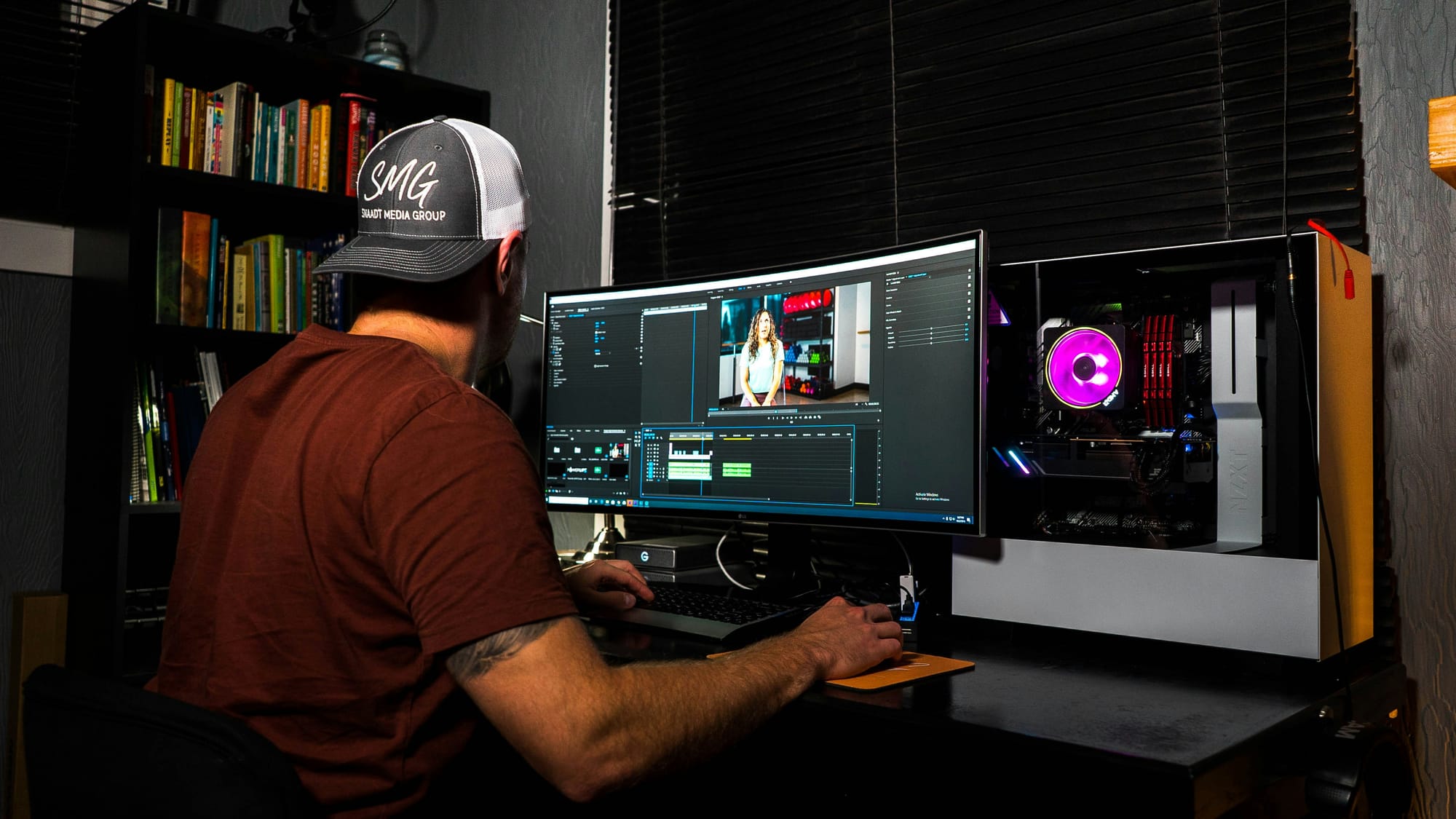
The Pocket 4 didn't create a level playing field. It created a hyper-competitive playing field where technical skill is commoditized and differentiation requires exactly the skills that can't be bought: storytelling, authenticity, niche expertise, community building.
Democratization didn't eliminate elites. It replaced them. The old elite (those who could afford gear and training) gave way to the new elite (those who can tell stories, build audiences, and create genuine connection).
The camera is a tool. The audience is still a relationship. And relationships don't scale with technology.
The Way Forward
Six months after our freelancer's 47-view video, something shifted.
He stopped chasing views with generalist content. He launched a hyper-focused channel: he now specialises in street art and graffiti. Valuable to exactly one audience.
He documents emerging graffiti artists in niche neighborhoods most people ignore. He interviews them on-site while they work, captures their process with the Pocket 4's unobtrusive form factor, and explains the cultural context behind each piece — the neighborhood history, the artist's message, the technique behind specific styles. He shoots in alleyways and underpasses where larger camera rigs would attract unwanted attention or break the trust. No flashy editing. No manufactured drama. Just authentic access to a subculture that mainstream vloggers either fetishize or ignore.
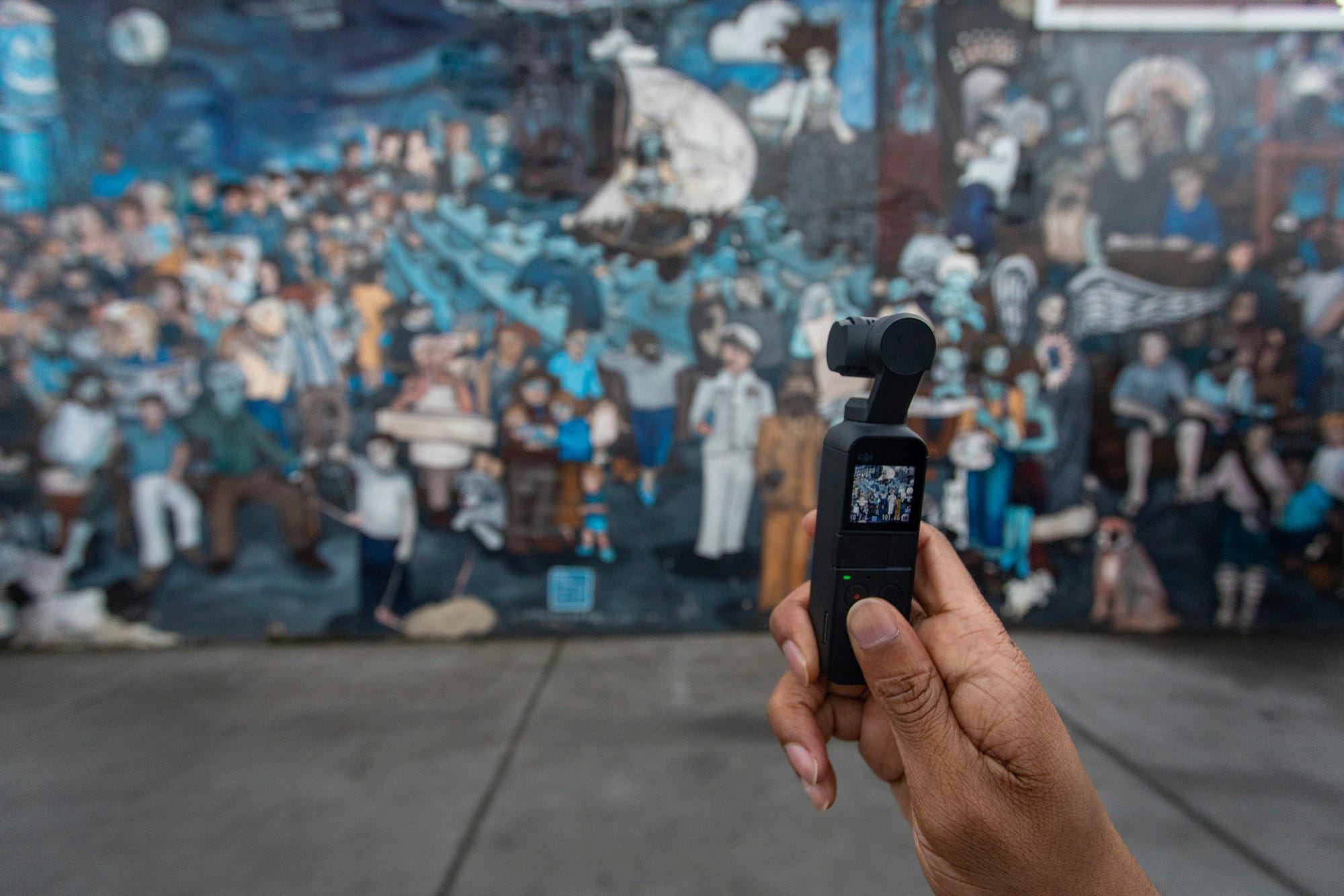
Current subscriber count: 12,000. Average views per video: 8,000. Sponsors: three spray paint brands and a streetwear label.
He didn't upgrade his camera. He already had the Pocket 4.
He upgraded his positioning. He stopped competing on production quality and started competing on unique insight. The camera became invisible — the knowledge became indispensable.
That's the actual lesson of democratization: when everyone can create, creation stops being the competitive advantage.
The question isn't whether you can shoot 4K240fps with perfect stabilization. The question is whether anyone cares what you're saying.
The Pocket 4 answered the first question. You have to answer the second one yourself.
Sources
Hardware & Reviews (Selection from 11 sources)
- Engadget DJI Osmo Pocket 4 Review — "Only vlogging camera you'll ever need" assessment
- CineD Pocket 4 Announcement — 4K 240fps specs, ActiveTrack 7.0, 107GB storage
- Notebookcheck Pocket 4 vs Pocket 3 Comparison — Technical differences, 37MP sensor, D-Log
- Gadget Match Full Review — ActiveTrack "anticipates where you're going" analysis
- Trusted Reviews DJI Osmo Pocket 4 — Low-light performance, concert shooting capability
- DJI Newsroom: Why Gimbal Cameras Win — Stabilization advantages over smartphone footage
- Heliguy Comparison Guide — Feature comparison, upgrade considerations
Content Saturation & Creator Economy
- Digiday: Authenticity in High Demand — 20% AI slop on YouTube, 32% viewer rejection rate
- WinningWP: The Saturation Problem — Diminishing discovery analysis
- Digital Clarity: Content Saturation — Niche strategy, specialty content advantages
- Keron Rose: Best Tech for Content Creation 2026 — "Funny, messy and imperfect" demand trends