The second problem
Fusion has nearly solved the first question. The harder ones are waiting.
The joke has been circulating since the 1970s: fusion energy is always twenty years away. For decades it held. Big machines, promising results, revised schedules, repeat. The joke worked because fusion kept failing on the same terms it was promised on.
Something has changed. The change is specific enough to describe. High-temperature superconducting magnets now operate at roughly 20 tesla in a laboratory coil—not in a computer rendering, but as physical hardware. Private investors put $4.48 billion into fusion in the twelve months to July 2026, pushing cumulative investment past $14 billion. The U.S. Department of Energy published a roadmap that names specific engineering gaps rather than vague timelines. A first pilot plant in the mid-to-late 2030s is a credible engineering objective, not a hopeful extrapolation.
But the joke still contains something true. Nobody has built a fusion power station. Nobody has delivered a single watt of fusion electricity to the grid. What has changed is the nature of the remaining problem. Fusion has crossed from a primarily scientific question—can we make a star?—into something harder to explain and harder to dismiss: a full-stack engineering programme in which the physics is nearly understood and the machine is not yet built.
That distinction is the story.
The record that is not proof
The Fusion Industry Association's 2026 supply-chain survey is the source of the $4.48 billion figure. The FIA represents the industry, and its data read most honestly as a record of investor commitment rather than a measure of technical progress. That is not a reason to ignore the number; it is a reason to understand what it buys.
Fusion hardware is not generic. A tokamak needs specialist superconducting magnets, precision vacuum systems, pulsed-power infrastructure, tritium-handling equipment, diagnostics and control systems that do not exist in most manufacturing catalogues. An investor willing to put capital into a fusion startup is implicitly funding the creation of supply chains and a trained workforce. Those things take years to build and cannot be conjured the week a laboratory announces a result.
The FIA's own survey signals as much. Companies report more established industrial suppliers entering the sector—a sign that fusion is becoming legible to manufacturers who once considered it too speculative. At the same time, long-term demand visibility and fuel-cycle capability remain persistent bottlenecks. Money has made the field more serious. It has not made difficult components routine.
A quieter signal comes from a joint venture announced in July 2026: RH3OVA, a company created by the UK Atomic Energy Authority and Eni to provide consultancy and operational services in deuterium–tritium fuel cycles. That is not a reactor milestone. It is the formation of the companies, procedures and institutional knowledge a fleet of reactors will eventually need. Fusion is acquiring an industrial perimeter before it has a commercial core. The perimeter is real. The core does not yet exist.
What Q>1 actually measures
Commonwealth Fusion Systems is building SPARC, a compact tokamak in Massachusetts that aims to operate in 2027. Its headline target is Q>1: fusion reactions should release more energy than is injected into the plasma to initiate them. When that result arrives, it will matter.
It will not mean what the headlines will suggest.
Q is a plasma-level ratio. The energy injected is the energy used to heat the plasma; the energy measured out is the fusion energy released by the plasma reactions. A power station must do much more than balance that equation. It must run superconducting magnets and their cryogenic cooling. It must operate heating systems, pumps, plasma control, instrumentation and fuel processing. It must capture the fusion energy as heat, convert that heat into electricity, and still have enough output left over to run itself and export power to the grid. Engineering break-even—the point where a plant produces more electricity than it consumes in total—is a far stricter test than Q>1.
SPARC's genuine advance is the magnet. The MIT–CFS programme demonstrated a high-field coil using REBCO superconducting tape at roughly 20 tesla. Stronger magnetic fields can confine the same plasma performance in a smaller volume, which could make compact, high-field tokamaks more practical than the enormous machines of the previous generation. That is the bet SPARC is testing.
But SPARC is a pulsed research machine. It does not carry a tritium-breeding blanket, a heat-extraction system designed for continuous industrial operation, or a turbine island. CFS's subsequent ARC plant is meant to be the successor that actually puts electricity on the grid. Reading "SPARC in 2027" as "electricity in 2027" is the predictable error. The honest reading is: a valuable answer to one decisive physics-and-magnet question, followed by several decisive plant questions that SPARC was never meant to answer.
The blanket is the real protagonist
Here is the part the fusion coverage usually skips.
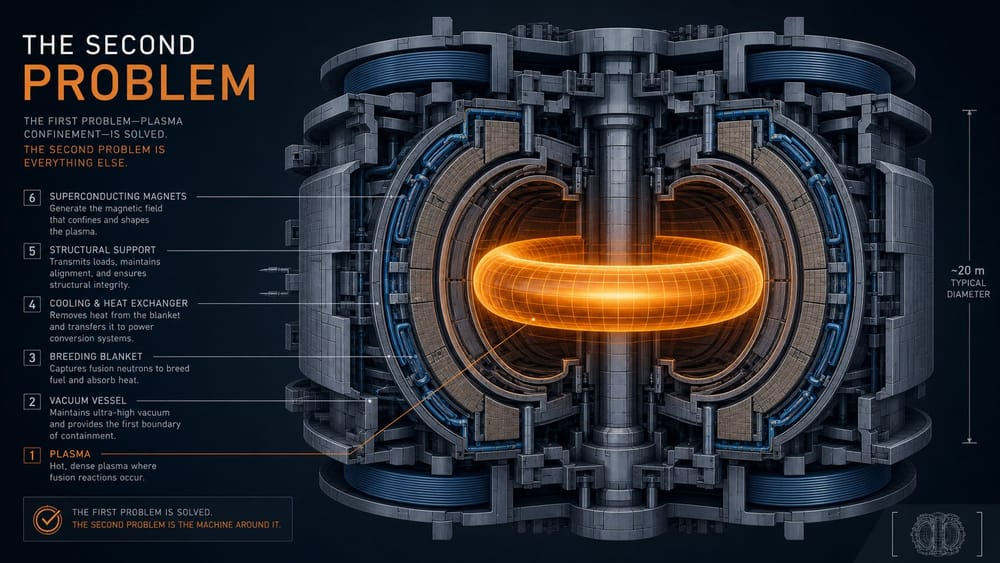
A deuterium–tritium reactor releases most of its energy as fast neutrons. Those neutrons are what makes the machine both promising and difficult. They carry the energy a plant wants to harvest. They also damage structural materials, activate reactor components, complicate every maintenance procedure and load the first wall and divertor with heat that must be continuously removed.
A useful model: the plasma is the engine. The blanket surrounding it is the boiler, the heat exchanger and the fuel factory at once.
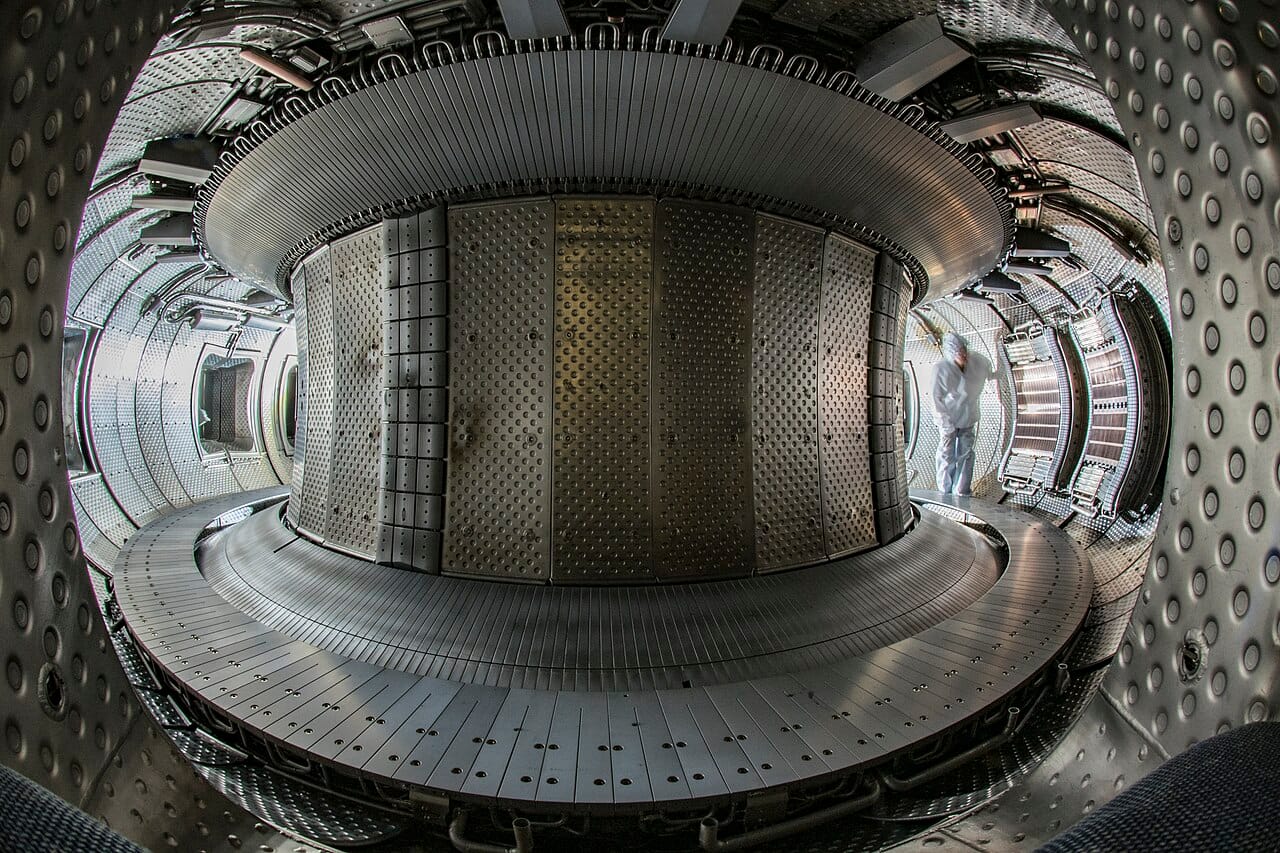
The blanket must do several things simultaneously. It must slow down neutrons and extract their energy as usable heat. It must contain lithium, which reacts with neutrons to produce tritium—the fusion fuel that is too scarce and too radioactive to stockpile in bulk. A large fleet of fusion plants cannot run on external tritium inventories indefinitely. Each plant must breed its own fuel, recover it, handle it safely and reinject it. The blanket components will need to be replaced remotely, because they will be activated. The system must then operate with enough availability over enough years to justify the capital invested.
The U.S. Department of Energy's 2026 Fusion Science and Technology Roadmap is more revealing than most fusion announcements precisely because it focuses on these gaps: materials performance under neutron irradiation, tritium management, blanket technology and systems integration. In other words, the official programme has identified the hurdles that a successful plasma experiment—even a decisive one—does not resolve.
The question confronting fusion in 2026 is not whether plasma physics works. It broadly does. The question is whether the machine around the plasma can be built, maintained, fuelled and operated at a cost that makes sense in an energy system that is already transforming rapidly. That is a harder question, and no amount of Q>1 language resolves it.
China's density result: open door, not power grid
In January 2026, researchers at EAST—the Experimental Advanced Superconducting Tokamak in Hefei—reported sustained plasma operation at densities 1.3 to 1.65 times the Greenwald limit.
The Greenwald limit is an empirical boundary in tokamak physics. Push fuel density too high and the plasma frequently loses confinement or disrupts. Since fusion power output rises steeply with density, the ability to operate above this limit without disruption would permit more productive use of a given machine volume, or allow more compact designs. The EAST team achieved stability in this regime by controlling startup gas pressure and electron-cyclotron heating, finding what they described as a density-free operating space.
That is a genuine physics result. It expands the credible design space for tokamaks. It is not a demonstration that a reactor can operate in this regime at larger scale, in hotter burning plasma, over sustained periods, under the heat-exhaust conditions that a real plant must endure. Neither dismissal nor "artificial sun" is the right frame. The door is open; what lies through it still has to be tested.
One factual note worth preserving: the result belongs specifically to EAST, not to a blended "EAST/HL-3" attribution that implies two separate Chinese machines contributed equally. EAST is the facility; HL-3 is a distinct tokamak. The distinction matters when tracing what was actually demonstrated and where.
Two clocks running toward the same place
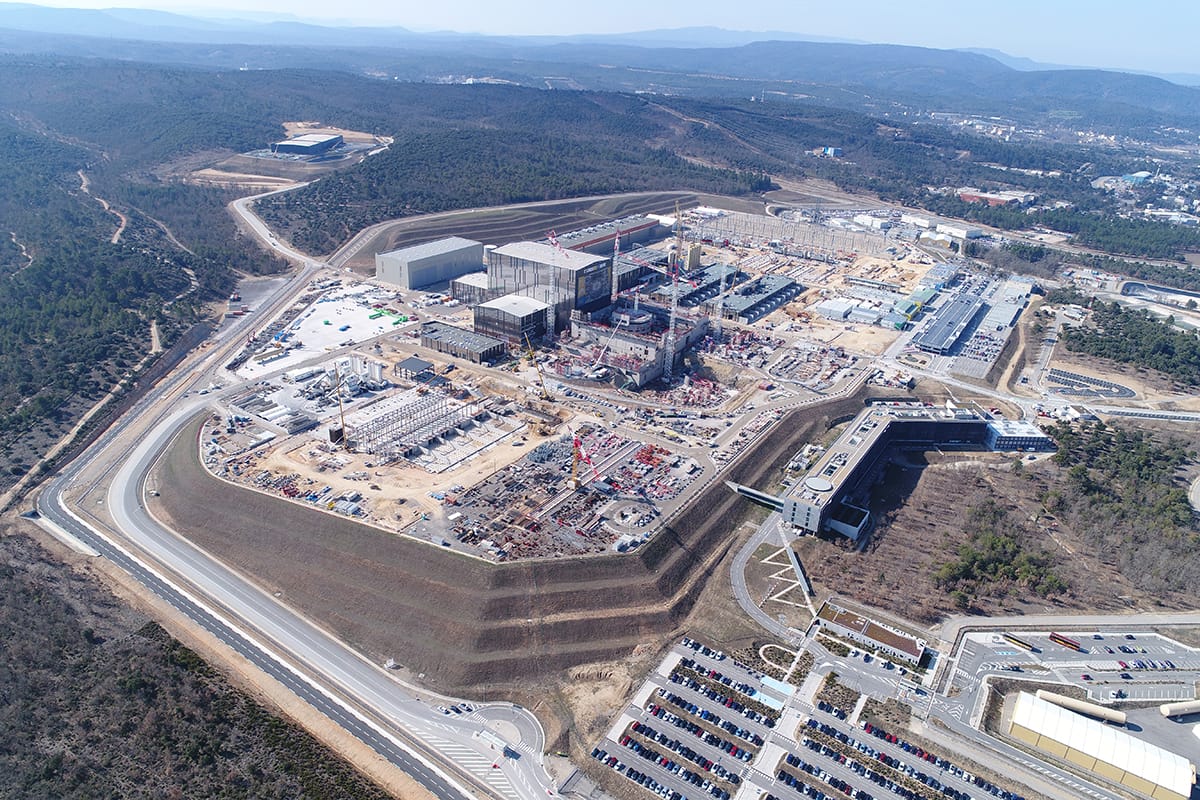
ITER is the 35-nation international fusion experiment being built in southern France. Its revised baseline points to research operation in 2034 and deuterium–tritium burning experiments in 2035. Its delays have been substantial and are frequently cited as evidence that large public science projects cannot deliver on schedule.
The more useful lesson is different. ITER's delays reveal why calendar optimism about fusion has historically been unreliable—and why private companies, moving faster with smaller teams and focused designs, do not automatically escape that lesson. ITER is targeting plasma scale and duration that no private startup has reached. The materials data, plasma-control knowledge and component lessons coming from ITER are ecosystem infrastructure that the private sector cannot fully replicate internally.
Conversely, companies like CFS can iterate hardware quickly in ways a 35-nation programme cannot. Realta Fusion, working with a magnetic mirror approach, recently demonstrated direct conversion of plasma kinetic energy to electricity—an interesting power-conversion result that no tokamak programme had achieved. It is one component result, not a complete plant. But it illustrates that the private sector is not simply running faster on the same track as the public programmes; it is sometimes opening different tracks.
Neither route replaces the other's knowledge. They are complementary clocks.
The honest timeline
The most defensible description of where fusion stands in mid-2026 is this: a first pilot plant in the mid-to-late 2030s is a plausible and serious engineering goal. The DOE aims to enable a U.S. pilot plant by the mid-2030s. CFS is targeting an early-2030s timeline for ARC. The UK's STEP programme is working toward construction and commissioning through 2040.
These are programme goals, not predictions with quantified uncertainty. They share a common set of assumptions that have not yet been tested at full scale: that blanket technology can be developed and certified, that tritium breeding ratios can be demonstrated in a burning plasma, that materials can be qualified under realistic neutron loads, and that all of this can happen on a schedule and at a cost that investors and utilities will accept.
The appropriate response to these timelines is neither enthusiasm nor dismissal. It is the same scepticism any serious engineering programme deserves: track which risks are being retired, in which order, and at what rate.
What a 2035 fusion plant would—and would not—mean
If a fusion plant came online around 2035, it would be strategically significant for reasons that have nothing to do with climate rescue.
Firm, dispatchable, low-carbon power is genuinely useful in a grid built around variable wind and solar. Fusion would produce no carbon dioxide in operation, generate no long-lived actinide waste and require no large land footprint relative to its output. In settings where land, transmission capacity or continuous heat supply are constrained, the combination of high energy density and controllable output would have real value.
But it would not be in time to do the work the climate emergency requires in the 2020s and 2030s. By the time a first fusion plant is commissioned, grids need to have already decarbonised substantially using technologies that are available now: renewables, storage, efficiency, demand management, nuclear fission where it is accepted. The first fusion plants will be expensive, scarce and learning by operating. Their value will be in keeping options open for the decades after the acute phase—not in providing permission to wait.
The second problem
The twenty-year joke rested on a specific failure mode: fusion promised plasma milestones, delivered plasma milestones, and then discovered that the milestones were not the finish line. The plasma physics improved; the power stations did not appear.
What 2025 and 2026 may be remembered for is not that fusion solved its first problem—plasma—but that it arrived squarely at its second one. The tools for the second problem are different. Magnet factories. Tritium accounting. Blanket materials tested in neutron environments. Remote maintenance robots. Regulatory frameworks for a technology that doesn't fit neatly into existing nuclear licensing categories. Supply chains for components that don't yet have a market.
SPARC's first plasma will be a significant event, not a finish line. EAST's density result opens a design door, not a power grid. The $4.48 billion in private funding is building a real industrial capacity, but that capacity still has to pass through materials science, tritium management and thermal engineering before it becomes a kilowatt-hour.
The joke is less funny than it used to be. That is genuinely true. But the new version of the story is not that fusion has arrived. It is that the remaining distance is, for the first time, close enough to measure in engineering terms rather than decades. That is different. Whether it is enough to cross remains the open question.
Sources
Investment & industry
- Fusion Industry Association, 2026 Fusion Industry Supply Chain Report — 2026 supply-chain survey behind the $4.48 billion funding figure
- Nuclear Industry Association, Fusion industry attracts record annual funding of $4.48bn — 2026 funding data summary
- UKAEA & Eni, RH3OVA joint venture announcement — formation of the deuterium–tritium fuel-cycle services company, July 2026
CFS, SPARC & magnets
- Commonwealth Fusion Systems, SPARC overview and Q>1 target — programme description and 2027 milestone
- Zohm et al., MIT/CFS high-field REBCO magnet demonstration — the 20 T coil result, arXiv:2308.12301, 2023
EAST & China
- Nature, EAST beyond the Greenwald density limit — January 2026 density result
- Xinhua/People's Daily, EAST density-free regime result — January 2026
ITER
- ITER, Updated baseline presentation — revised schedule with 2034/2035 research milestones, 2024
- ITER, Baseline press conference summary — July 2024
DOE & regulatory
- U.S. DOE, Fusion Science & Technology Roadmap — 2026 roadmap naming specific engineering gaps
- U.S. DOE, Office of Fusion Energy Sciences overview — programme context
- U.S. NRC, Fusion energy vision and strategy — regulatory framework being developed
UK & private sector
- UKAEA, Strategy 2026–2030 / STEP context — UK programme roadmap including the STEP pilot plant, 2026
- Realta Fusion, Direct plasma energy conversion announcement — first commercial demonstration of direct plasma-to-electricity conversion, 2026