The Energy Transition Does Not Need Better People. It Needs Better Deals.
What behavioral science, institutional history, and policy research say about why the transition is slow — and what it would actually take to make it faster.
The complaint that gets everything wrong
Sometimes I feel that an explanation for the slow pace of climate action points inward — at human nature itself. People, I fear, are constitutionally unfit for the task before them. They are too short-sighted to sacrifice present comfort for future benefit. Too tribal to care about strangers on other continents. Too prone to reasoning backward from conclusions they prefer. They will attend a climate rally and fly to a conference to attend another climate rally. They will tell a pollster they want carbon pricing, then vote out any government that introduces it. The same people who say they want a sustainable future will buy a larger car, take an extra flight, and explain at length why their particular case is an exception.
And this fear is not without grounds. There are real gaps between stated values and actual behavior, real difficulties in sustaining collective effort over decades, real friction when climate policy touches the heating bill or the price of a tank of fuel.
Having a feeling or a fear, however, is not really proof of anything. The question is whether this somewhat pessimistic view is supported by research literature, or whether it is just that: an overly pessimistic view of human behaviour.
To my relief, it turns out that as a diagnosis, the "people are too selfish" account is wrong in a way that matters enormously. It locates the problem in human nature, places it beyond institutional reach, and leads — if taken seriously — to one of two conclusions: either we should wait for a moral transformation that no one knows how to produce, or we should impose a transition that bypasses democratic politics altogether. Both conclusions are wrong, and both are unnecessary.
The question is not whether humans can become more altruistic. The answer to that, as a near-term policy variable, is indeed no. The question is whether institutions can be designed to make cooperation rational, visible, and fair — without requiring anyone to act against their own interests as narrowly understood.
That question has a more promising answer, and the evidence — from behavioral economics, institutional history, and policy research — points toward it.
The energy transition does not need better people. It needs better deals — arrangements that make the expected costs and benefits of a low-carbon economy legible, distributed fairly, and politically defensible. That is a harder problem than it sounds. But it is a political and institutional problem, not a moral one.
Conditional cooperation: what the science actually says
The behavioral science of cooperation has a finding that should reframe the climate conversation, but rarely does. The insight is not comforting in a simple way, but it is considerably more useful than the alternative.
In repeated studies of public goods provision, from experimental economics to field research on common-pool resources, the dominant human type is not the altruist who contributes regardless of what others do, and not the free-rider who always defects. It is the conditional cooperator — someone who contributes when they believe others are contributing, who monitors and responds to the behavior of the group, and who will reduce their own contribution if they observe persistent free-riding. People are not selfless. But they are not simply selfish, either. They are, in the phrase of Samuel Bowles and Herbert Gintis, strong reciprocators: prepared to cooperate with cooperators, and to sanction defectors even at personal cost.
This distinction between altruism and institutionalized reciprocity is not semantic. A welfare state, a public health system, or a national pension scheme does not run on the fuel of moral self-sacrifice. It runs on a different mechanism: rules that apply broadly, rights and obligations that are coupled, enforcement that is visible, and a credible expectation that if you contribute, others will too — and that the rules are not merely for you. When that infrastructure is in place, large-scale cooperation happens without requiring heroism from the participants. When it is not in place, even genuinely motivated people face a rational reason to hold back.
Elinor Ostrom's work on common-pool resources is often invoked in this context, and with reason — but it is frequently invoked too optimistically. Ostrom's studies documented communities that had developed effective self-governance over shared resources: fisheries, forests, irrigation systems, grazing land. The recurring ingredients were specific: clear boundaries around who is entitled to use the resource, rules tailored to local conditions, genuine participation in rule-making, active monitoring, proportionate sanctions, and accessible dispute resolution. These communities avoided the tragedy of the commons not through moral superiority but through institutional sophistication.
The lesson for climate policy is therefore not "let communities self-organize." The atmosphere fails Ostrom's conditions systematically. There is no clear boundary: every emitter is part of the relevant group, and the group is nearly eight billion people. There is no local link between cause and damage — emissions in one country drive sea level rise in another. The delays between cause and effect span decades. The inequalities between those who emit most and those who suffer most are extreme. Ostrom's lesson is the other one: that cooperation is an institutional achievement, not a character trait. And that a global problem needs layered institutions that can replicate, at scale and across borders, what successful local commons achieved through design.
The welfare state is the most powerful existing proof of that principle. Hundreds of millions of people pay into systems whose benefits they may never personally collect — for the health care of others, for the education of other people's children, for pensions of people who have not yet been born. This is not explained by their unusually warm feelings toward strangers. It is explained by the architecture of the arrangement: contributions are mandatory or near-mandatory, enforcement is credible, benefits are predictable, and the rule applies to everyone in the relevant community. The welfare state works, where it works, because it solved the reciprocity problem institutionally rather than morally.
Denmark's wind industry offers a narrower but directly relevant illustration. Danish municipalities began licensing wind turbines in the 1970s under a framework that included co-ownership requirements: local residents and cooperatives were entitled to buy into the projects sited near their communities. By the early 2000s, roughly 80 percent of Danish wind capacity was locally owned — a figure documented by Breukers and Wolsink in their comparative study of wind implementation across national regulatory frameworks. Acceptance of new installations was correspondingly high — not because Danish communities were uniquely enthusiastic about turbines, but because the arrangement made opposition structurally less rational. If the turbine goes up in your view and you own a share of it, your calculation changes.
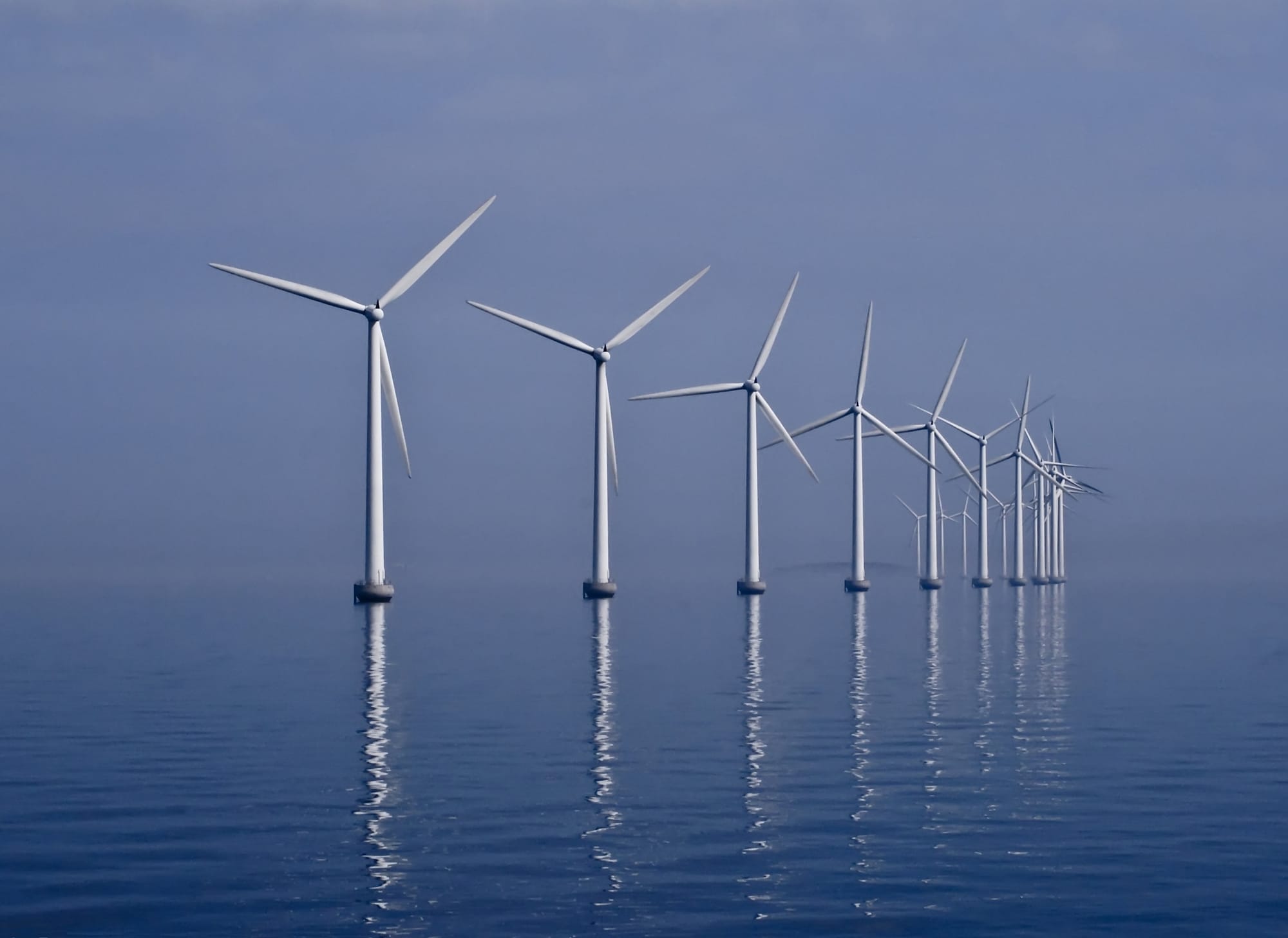
Germany's Energiewende, by contrast, initially emphasized national renewable portfolio standards without equivalent local benefit mechanisms. Acceptance remained uneven, and "not in my backyard" politics became a significant constraint on wind expansion in the south of the country, where community benefit mechanisms arrived later and inconsistently.
These examples do not prove that local ownership solves the energy transition. They illustrate the conditional cooperation principle at a policy scale: the design of the arrangement shapes the behavior it produces. That is the paradigm the energy transition needs to borrow. How local initiatives interact with European-scale infrastructure — and where that scale becomes structurally irreplaceable — depends on a separate but related institutional logic.
The welfare state and COVID: ambiguous evidence
The welfare state makes large-scale cooperation look easy, because the institutional infrastructure is invisible once it is working. COVID-19 was the stress test that revealed both the potential and the limits.
On one side: the production and deployment of effective vaccines against a novel pathogen, at scale, within a year, was a feat of mobilization that would have seemed implausible two years before it happened. Scientific networks, public funding, manufacturing partnerships, and regulatory systems moved faster than almost anyone predicted. Billions of doses were produced and administered. This was not individual altruism. It was organized capacity — coordinated investment, distributed expertise, public-private agreements, and enough institutional trust to make compliance broadly rational.
On the other side: vaccine nationalism. When doses were scarce, the dominant response of wealthy governments was to secure their own populations first and share later — or not at all. COVAX, the initiative designed to ensure equitable global access, was underfunded and late. Countries that had taken early delivery sat on surplus doses while health systems in low-income countries remained unvaccinated months longer than necessary. The mechanism that produced vaccines quickly was not the mechanism that distributed them fairly. The first required concentrated national investment with rapid feedback loops. The second required internationally credible rules, transfer mechanisms, and enforcement that did not exist in adequate form.
Climate policy faces the same architecture problem, at longer timescales and larger stakes. It is not useful to ask "can humans cooperate on climate?" The answer is: it depends entirely on the institutional design. The relevant questions are more specific. What arrangements make cooperation rational rather than idealistic? What makes the expected cost of defection high enough to matter? What gives people a credible reason to believe that their own contribution will not simply be absorbed by others' inaction?
The welfare state and COVID together suggest this: when reciprocity is institutionalized — when the rule applies broadly, when the benefit is visible, when enforcement is real — cooperation at scale is possible without requiring participants to act against their interests. When that infrastructure is missing, even genuinely motivated actors face a prisoner's dilemma that individual virtue cannot resolve.
The challenge for the energy transition is to build the infrastructure. That is harder than it sounds, for a specific reason. The welfare state was built largely within national political communities, where the relevant institutions already existed: tax administration, courts, social ministries, democratic accountability. The energy transition must do something analogous across borders and across generations, using institutions that are weaker, less democratic, and less trusted. That is the actual difficulty — not the weakness of human character.
The distribution fight hiding as a morality problem
The slow pace of climate policy is often narrated as a tragedy of the commons — a million rational individuals each choosing to free-ride, producing collective disaster. That narrative is cleaner than the reality, and it misleads in a specific way: it suggests that the barrier is the willingness to cooperate, when the actual barrier is usually a fight over who pays, who gains, and who decides.
The energy transition creates winners and losers. Not in the vague sense that all change creates winners and losers, but in the concrete sense that specific communities, industries, and households face specific gains and losses that are neither small nor evenly distributed. Coal regions and their workers face the end of an economic base. Refineries and petrochemical plants face stranded assets. Renters — who in most European countries cannot control the insulation of their homes or the heating system they pay for — face energy poverty without the option of investing their way out of it. Electricity network customers everywhere are being asked to fund grid upgrades whose costs are socialized while the connection benefits of new solar and battery installations accrue to those who can afford to install them.
These are not abstract distributional concerns. They are the reason specific governments fall, specific coalitions collapse, and specific policies — carbon taxes, subsidy reforms, land-use decisions for wind — encounter organized political resistance. The spatial and distributional question of who gains from energy infrastructure and who is asked to make room for it runs directly through every siting decision. The International Energy Agency estimates that more than 2,500 gigawatts of renewable energy, storage, and demand-response projects are currently waiting in grid connection queues worldwide. The bottleneck is not technology, willingness, or even — at the level of individual projects — finance. It is the time required to plan, permit, and build transmission and distribution infrastructure, which the IEA estimates takes five to fifteen years while new solar and wind installations require one to five. Even with political will, material constraints shape the speed of the transition.
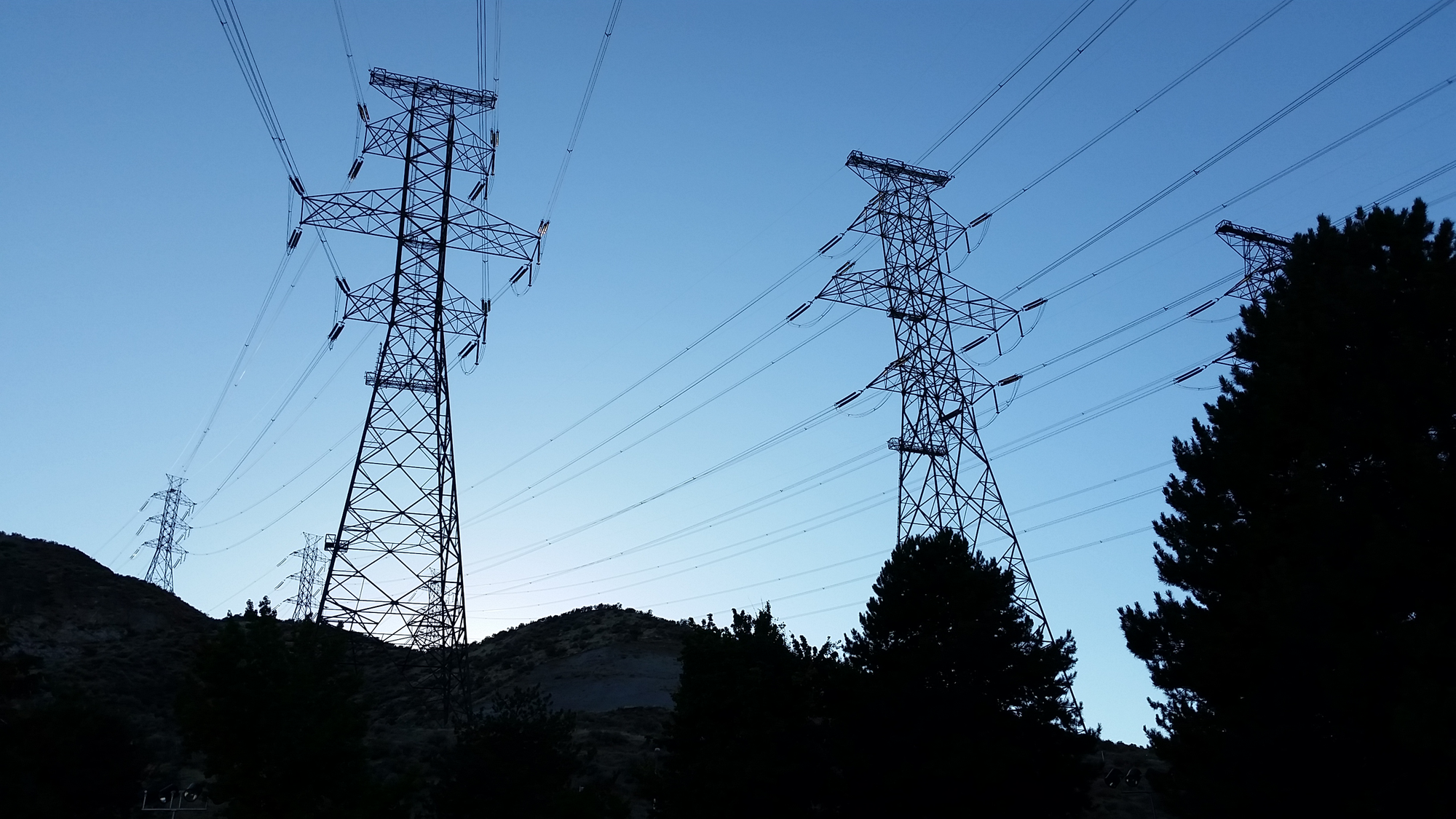
This matters for how the problem is framed. If the barrier were simply that individuals refuse to cooperate, the solution would be to change individual behavior — through prices, through communication, through moral exhortation. If the barrier is a distribution fight compounded by physical execution constraints, the solution is different: redistribution mechanisms, public investment in bottlenecks, rules that make the social contract of the transition legible and defensible, and the institutional capacity to actually deliver infrastructure at the required pace.
The literature is consistent on what institutional arrangements make this more likely. IPCC AR6's chapters on national policy and accelerating the transition identify a cluster of conditions that raise the probability of durable political support. Distributional justice matters: costs must not fall disproportionately on those with the least capacity to adjust. According to survey data analyzed in recent systematic reviews, support for carbon pricing is substantially higher — on the order of 58–60 percentage points in some samples — when revenue is visibly directed toward clean technology or environmental infrastructure rather than into a general fund. The nuance is important: survey support is not a blank check; the credibility of the commitment and the actual availability of alternatives are equally critical. A promise of future benefits is weaker than a present protection that people can see and use.
Visible reciprocity matters too. Climate policy that prices emissions for households while exempting or subsidizing large industrial emitters is not perceived as a collective effort. It is perceived, correctly, as a selective burden. The legitimacy of the arrangement depends on the credibility that the rule applies broadly — including to the actors with the most political and economic power to resist it. France's gilets jaunes movement, which erupted in 2018 partly in response to a fuel tax increase, was not primarily a revolt against climate policy as such. It was a revolt against a policy that appeared to impose costs on commuters and rural households while failing to touch the privileges of wealthy urban residents and large corporations. The diagnosis embedded in that movement — that the rule was not equally shared — was, on its own terms, largely accurate. The policy response to the protests involved rolling back the carbon price rather than redesigning the distributional architecture. The lesson was drawn incorrectly: the problem was not the price signal, but the absence of a credible social contract around it.
Meaningful participation — specifically early participation with real influence, not consultation after decisions are made — increases trust and acceptance. A meta-analysis of 129 empirical studies of energy transition governance in Austria, Germany, and Switzerland found that early involvement with transparency and genuine access to information can increase community acceptance, particularly for wind installations, grid expansion, and mining. The qualification is essential: informing people after decisions are final is not participation; it can increase conflict by making existing exclusions visible without offering a path to address them.
Energy communities illustrate both the promise and the limit of local participation. According to the European Commission, citizens, businesses, municipalities, and associations can legally form communities to produce, manage, share, or supply renewable energy. Their appeal is not purely idealistic: participants can receive lower bills, greater autonomy, a share of local revenue, and genuine decision-making power. A shared climate goal is connected to a visible and personal benefit. But the European Court of Auditors, assessing progress in 2026, found that the Commission's ambition of at least one renewable energy community in every municipality above 10,000 inhabitants by 2025 had likely not been met. Inconsistent national implementation, financing barriers, and structural exclusions for apartment renters limited the model significantly. Cooperation requires access to its fruits. The concrete test — whether a local energy community can actually prove its impact in kilowatts, not just in principle — is precisely the question that frameworks alone cannot answer.
Is capitalism the right explanation?
The slow pace of the energy transition has produced a persistent diagnosis on the political left: capitalism is the cause. Growth imperatives, shareholder pressure, fossil lobbying, the externalization of environmental costs — these are cited as the structural reasons why technological readiness and economic opportunity have not translated into rapid decarbonization.
There is something important in this diagnosis, but the label obscures as much as it reveals.
Within contemporary market capitalism, several mechanisms are clearly relevant. First, externalities: the cost of greenhouse gas emissions is not automatically included in the price of fossil energy, which means that the market signal pointing toward alternatives is systematically weaker than it should be. Second, short financial horizons: existing fossil infrastructure carries predictable returns over its remaining asset life, while the risk of stranded assets under aggressive climate policy remains politically contestable, reducing the urgency of transition. Third, concentrated power: fossil fuel producers, utilities, and fossil-dependent regions have direct financial stakes in delay and the organizational and political resources to defend those stakes. Diffusely distributed climate benefits lack equivalent representation. Leah Stokes's analysis of electricity policy in North America documents in precise detail how organized fossil interests have repeatedly shaped regulatory outcomes in their favor, even when renewable alternatives had become cheaper. Fourth, growth and consumption pressures: increases in energy and material intensity in some sectors can offset emissions reductions elsewhere. Fifth, unequal access to the transition: subsidies for electric vehicles, heat pumps, or rooftop solar that primarily reach capital-owning households in the top income quintile can delegitimize climate policy socially without achieving the scale of transformation required.
The IPCC's Working Group III is explicit: "political economy constraints" and the "risk-return profile of fossil assets" are among the key factors shaping investment flows and transition pace. This is a structural, not a behavioral, account.
But the mechanisms are not exclusive to capitalism. State-owned enterprises can and do defend fossil revenue streams — national oil companies in petrostate economies are often more effective at resisting transition than their private counterparts, precisely because they are intertwined with government finance. Authoritarian states can externalize local environmental damage as readily as market democracies. Public ownership does not automatically produce transparency or preclude regulatory capture. Countries with very different economic systems have all struggled to phase out fossil subsidies when doing so threatens fiscal stability, regional employment, or political coalitions.
The more precise formulation is this: market capitalism gives certain transition-blocking mechanisms — externalization, private veto and lobbying power, short return horizons — particular strength. The problem is more broadly a political economy of fossil lock-in, in which the financial, employment, and political interests tied to existing fossil systems resist redistribution regardless of the nominal ownership structure.
What follows from that framing is a more pluralistic but not therefore uncommitted policy picture. Regulated market capitalism can accomplish a great deal: carbon pricing that covers the full economy, sector-specific performance standards, public investment in grid and transit infrastructure, and income protection that makes the transition affordable for lower and middle incomes. Green industrial policy can organize the production, employment, and infrastructure that markets alone build too slowly — particularly where coordination problems and long investment horizons exceed what private actors can profitably navigate. Public or cooperative ownership makes particular sense for electricity grids, district heating, and local energy systems, where long-term coordination and community trust are central. Doughnut economics and post-growth frameworks illuminate genuine blind spots around material throughput, inequality, and the limits of GDP as a welfare measure; they are less developed as immediate universal implementation routes.
The short-term implication is not that the world must first choose a new economic system before acting on climate. It is that the transition currently underway needs to be designed with explicit public capacity, democratic accountability over distributional choices, and material justice for communities bearing concentrated transition costs. That is achievable within existing institutional frameworks — not easily, but without waiting for systemic change.
The double criterion: fair and buildable
A credible near-term agenda for the energy transition has to meet two criteria simultaneously. It must be fair — meaning that costs and benefits are distributed in ways that can sustain political support across the income spectrum and across geographies. And it must be buildable — meaning that it actually produces the physical infrastructure the transition requires, at the pace the climate problem demands.
These criteria are often treated as if they are in tension, with justice advocates pushing for slower, more consultative processes and delivery advocates pushing for faster, more centralized decision-making. In practice, they are more complementary than they appear. A transition that is fast but perceived as unfair will generate political opposition that slows it. A transition that is just but cannot actually deploy wind turbines, grids, heat pumps, and storage at scale will not achieve its purpose. The failure mode in many countries has been to achieve neither.
Five institutional conditions concentrate the problem into something tractable. First: make the social contract explicit. Carbon pricing revenues, redirected fossil fuel subsidies, and avoided future costs should flow to visible, upfront protection for lower and middle incomes and to affordable clean alternatives — not to general revenue where their purpose becomes invisible. Second: invest publicly in the bottlenecks. Grid planning, permitting, grid operator capacity, vocational training for installation and maintenance, concessional finance for renters and cooperatives, and public project development in underserved regions are not subsidies in the pejorative sense. They are the infrastructure of a transition that would otherwise remain inaccessible to the majority of people who cannot self-finance it. Third: distribute local benefits and decision-making power. Participation should be early and genuine, community benefit standards should be normal rather than exceptional, and clear rules should replace the current landscape of ad hoc negotiation that exhausts small municipalities and communities without resolving their concerns. Fourth: constrain fossil veto power. Transparency over lobbying and subsidy flows, effective standards for large industrial emitters, and a credible phaseout schedule for new fossil infrastructure — not because fossil companies are morally uniquely culpable, but because concentrated interests without adequate countervailing power predictably shape policy in their favor, and the consequences here are global. Fifth: build coalitions that connect emissions reduction to reliability, affordability, health, employment, and regional renewal — as testable material commitments, not as marketing overlays on an otherwise unchanged policy package.
What are the realistic political prospects? Mixed, and honestly so. None of these conditions is utopian: they describe instruments that already exist in some form in European Union policy, in IPCC recommendations, in OECD fiscal analysis, and in IEA investment projections. The political difficulty is that implementing them requires tax and budget choices, faster spatial planning decisions, redistribution of resource rents, and constraints on established interests. Those choices are the source of the political difficulty, not ignorance of what is needed.
Optimism about the energy transition is only earned when institutions show measurable improvement: shorter grid connection and permitting timelines, declining rates of energy poverty, broader access to the financial benefits of ownership in renewable infrastructure, and actually declining investment in new fossil assets. None of those metrics are currently pointing clearly in the right direction in most major economies. That is not an argument for pessimism. It is an argument for institutional seriousness.
The energy transition does not require a transformation of human nature. It does not require populations to become less attached to their livelihoods, their heating bills, or their political representation. It requires the same thing that made public health, universal education, and the welfare state achievable: arrangements that make cooperation rational, that distribute its costs and benefits in ways defensible to the people who bear them, and that have the organizational capacity to deliver what they promise.
The moral question is not whether people are good enough. The institutional question is whether the deals are fair enough — and whether the infrastructure can actually be built.
Those are soluble problems. Not easy ones. But soluble.
Sources
Behavioral science & cooperation theory
- Elinor Ostrom, Governing the Commons (1990) — Foundational study of how communities sustain collective resource management through institutional design rather than top-down regulation.
- Samuel Bowles & Herbert Gintis, "Strong Reciprocity and the Welfare State" (2006)20023-9?ref=schrijfhuis.jongbloed.net) — Behavioral evidence that most people are conditional cooperators, not pure free-riders.
- Breukers & Wolsink, "Wind power implementation in changing institutional landscapes" — Energy Policy 35(5), 2007 — Comparative study documenting how Danish co-ownership requirements produced durable acceptance of wind development.
IPCC & climate policy frameworks
- IPCC AR6, Working Group III, Chapter 13 — National and sub-national policies and institutions — Distributional and legitimacy conditions for durable carbon policy.
- IPCC AR6, Working Group III, Technical Summary — Cross-cutting synthesis of mitigation options, barriers, and enabling conditions.
- IPCC AR6, Working Group III, Chapter 17 — Accelerating the transition — Institutional and financial conditions for rapid deployment at scale.
- Rinscheid et al., "Public support for carbon pricing policies and revenue recycling options" (2024) — Survey evidence on acceptance conditions for carbon pricing across countries.
Energy communities & participation
- European Commission, energy communities — Legal framework for citizen energy communities under EU law.
- European Court of Auditors, Energy communities: Potential yet to be fulfilled (2026) — Assessment finding that implementation targets have not been met and structural barriers remain.
- Meta-analysis of participation in Central European energy transitions (2025) — 129 empirical studies showing when participation increases acceptance and when it backfires.
- OECD, Pricing Greenhouse Gas Emissions (2021) — Comparative analysis of carbon pricing design and distributional implications.
- OECD, Economic Surveys: Australia 2023, climate-policy acceptability — Survey evidence on public acceptance conditions across income groups.
Political economy & infrastructure
- IEA, Electricity 2026 — Grids — Data on the global renewable energy connection queue and grid bottleneck timelines.
- Leah Stokes, Short Circuiting Policy (2019) — Case studies of how fossil interests shaped electricity regulation even as renewables became cheaper.