The grid is losing its free stability
Europe’s clean-power transition is changing not only how electricity is generated, but which stabilising properties of the grid stay implicit and which must be engineered, bought, and defended in public.
In early 2018, electric clocks across parts of Europe started drifting behind real time. Not by seconds, but by minutes. The cause was tiny at first glance: the average frequency of the Continental European power system had sat slightly below 50 hertz for weeks. That sounds trivial. In its 3 March 2018 notice, ENTSO-E said the drift had already left frequency-steered clocks about five minutes late.

It is an irresistible opening image because it makes the grid feel physical again. A machine the size of a continent slips almost imperceptibly, and oven clocks in ordinary kitchens show the scar. But it is also the wrong template for the argument that usually follows. This was not the moment when wind and solar supposedly made Europe unstable. ENTSO-E said the imbalance originated in the Serbia–Macedonia–Montenegro control block, specifically Kosovo and Serbia, and described the problem as a prolonged political and operational dispute with a measurable energy shortfall. The event was real. The lazy explanation was not.
That distinction matters because the more interesting stability problem ahead looks different. The future risk is not mainly that Europe’s clocks will run late again. It is that power-system stability stops arriving half-hidden inside the presence of large spinning machines and starts showing up as a more explicit technical, economic, and political service.
What inertia used to do quietly
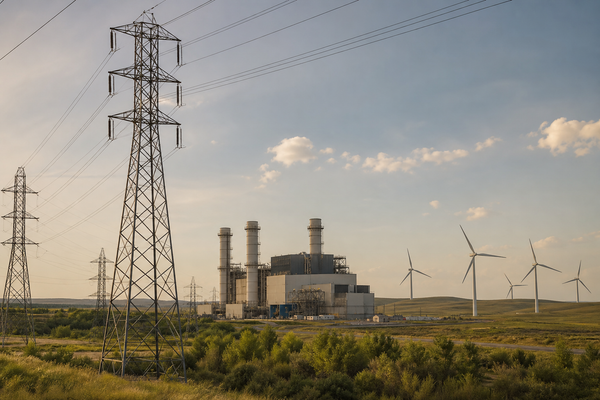
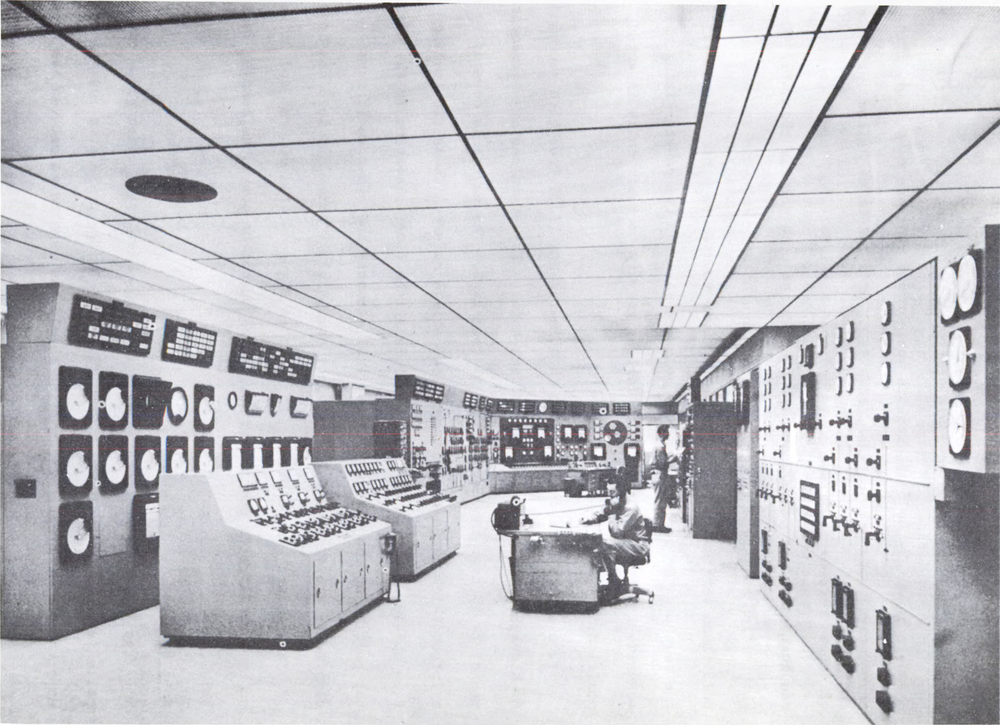
In a conventional grid, large synchronous generators store kinetic energy in heavy rotating masses. When generation and demand suddenly fall out of line, that stored motion resists an immediate change in frequency. Inertia does not solve the mismatch on its own. What it does is buy time. It slows the first moments after a disturbance, giving protection systems, reserves, and operators more room to react.
ENTSO-E’s January 2025 Project Inertia update describes the historical shift with unusual bluntness. Inertia used to be “intrinsically provided” by rotating synchronous generators connected to the system. As those machines run less often or disappear, resilience increasingly depends on dedicated network assets and technical capabilities supplied by third-party resources.
That changes the feel of the system. With lower synchronous inertia, frequency can move faster after a fault or sudden loss of generation. The Rate of Change of Frequency, usually shortened to RoCoF, rises. In plain terms, the system frequency starts moving away from 50 hertz more abruptly in the first instants after a disturbance. Containment margins tighten. At the same time, when synchronous machines disappear from the system, short-circuit strength often weakens as well, which complicates voltage behaviour, protection settings, and fault handling. These are related consequences of the same broader transition, not the same system variable. Stability becomes less forgiving and more dependent on how well the system has been designed, modelled, monitored, and contracted.
NESO, Britain’s National Energy System Operator, shows what that looks like in its 2025 Frequency Risk and Control Report. The report is essentially an annual statement of how much frequency risk the system faces, which combinations of inertia and other controls NESO intends to hold, and what those choices are expected to cost consumers. In that frame, inertia is not a buried engineering constant. It is an operational assumption with a price tag, linked explicitly to RoCoF risk, dynamic-response procurement, and consumer cost. That is the transition in one sentence: stability becomes something you manage as a portfolio, not something you inherit automatically from the generation fleet.
The new toolkit is real, but it is not interchangeable
At this point, the debate often swings from panic to overconfidence. One camp treats lower inertia as proof that renewable-heavy systems are fundamentally brittle. The other assumes power electronics and software will recreate the old machine physics without much friction. The published engineering literature supports neither reflex.
Synthetic inertia is real, but even ENTSO-E describes it carefully. In its reports, the term refers to converter-based controls that can inject or absorb power during a frequency event. That is useful. It is not the same as saying synthetic inertia is a neat physical clone of rotational mass. Implementations differ. Responses depend on measurement, filtering, and control design. A converter can imitate some of the effect of inertia without becoming a flywheel.
Grid-forming converters are more ambitious and more important. Instead of merely following the grid, they aim to behave more like voltage-forming sources that can help establish system behaviour. That makes them one of the most plausible foundations for a renewable-rich system that still behaves coherently under stress. But the official material is also clear about the edges. Dependable grid-forming support may require current headroom, energy headroom, additional storage, extra hardware, or a larger converter rating than a developer would otherwise choose. Behaviour can change when a device hits current limits or other operating boundaries. That means strong grid support is not just a software feature you toggle on after procurement. In many cases it is a design choice with capital, operating, and commercial consequences.
Synchronous condensers remain attractive for a simpler reason: they preserve a familiar kind of physical support. They provide inertia, fault-current contribution, and voltage support without having to generate active power. Operators understand them. Protection logic understands them. Their weakness is not mystery but economics. They are robust, but relatively dedicated. A synchronous condenser stabilises the system. It does not also trade energy or chase arbitrage spreads.
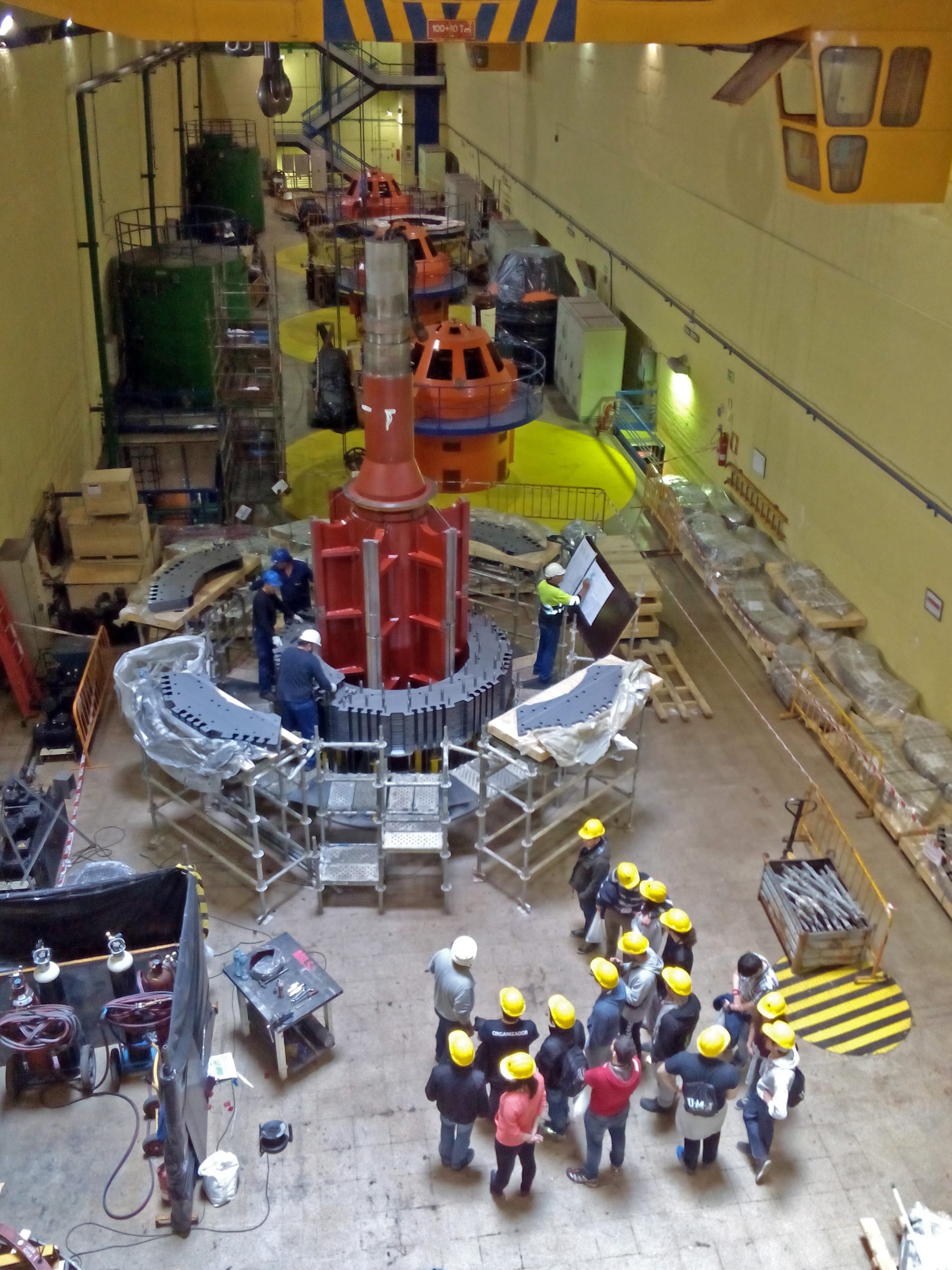
Batteries, by contrast, are compelling precisely because they can do more than one job. They can respond quickly, support dynamic services, and in some configurations contribute grid-forming behaviour. NESO’s Stability Pathfinder programme makes this concrete rather than theoretical. Stability Pathfinder is the operator’s procurement programme for long-term stability services in parts of Great Britain where the decline of synchronous generation leaves specific needs for inertia and short-circuit strength. In March 2025, NESO said Phase 2 contracts worth £323 million would secure those services through a mix of synchronous condensers and grid-forming batteries. That matters because it shows public procurement of stability attributes, not just conference optimism. But the battery story still has conditions attached. Firm support depends on inverter design, state of charge, reserved headroom, and contract structure. If a battery is fully committed elsewhere, its “available” stability support may be less solid than the headline suggests.
The honest conclusion is less elegant and more useful than a winner-takes-all story. Synthetic inertia helps, but it is not physical inertia. Grid-forming converters may become foundational, but wide-boundary dependable performance is not free. Synchronous condensers are sturdy but narrow. Batteries are flexible but only as firm as the power, energy, and commercial reservation behind them.
The bigger change is economic, not just technical
The most important shift is easy to miss because it does not sound dramatic enough. In the old system, many stabilising properties arrived bundled with large spinning machines simply because those machines were online. In a cleaner, more converter-heavy system, some of those properties need to be specified separately, procured separately, tested separately, and paid for separately.
That changes the map of costs. Some appear as dedicated assets: synchronous condensers, upgraded converters, added storage, stronger control hardware, or oversizing for headroom. Some appear as operating costs: ancillary-service procurement, certification, modelling, compliance work, remedial actions, and capacity that cannot simultaneously earn its maximum market revenue. Some appear only indirectly, folded into project economics, higher bids, stricter connection requirements, or network tariffs.
European rules already point in this direction. The System Operation Guideline places responsibility on TSOs to monitor the availability of ancillary services and to design and manage procurement where active and reactive power services are needed. ACER’s 2025 amended annex to the SO Regulation keeps that procurement-and-monitoring logic in view rather than treating these capabilities as incidental by-products of whatever plants happen to be online. In other words, the regulatory system already assumes that if operational security requires these capabilities, somebody must define them and somebody must obtain them.
But not every cost shows up in a neat TSO tender. Some capabilities may be imposed through connection requirements or equipment standards instead. In that case the system operator may appear to get the service “for free,” because the cost lands first on the generator, storage project, developer, or equipment supplier. Economically, nothing has vanished. The bill has just moved to another layer of the system.
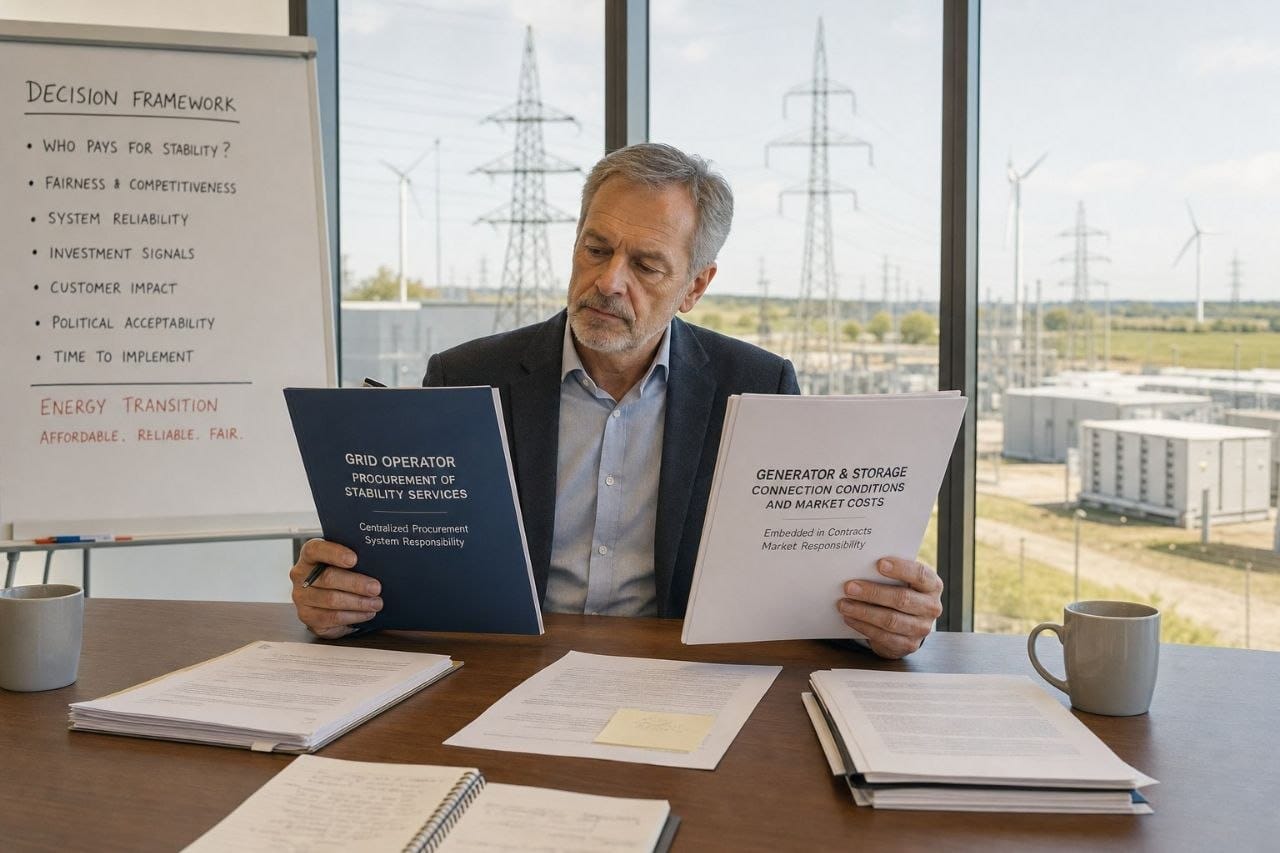
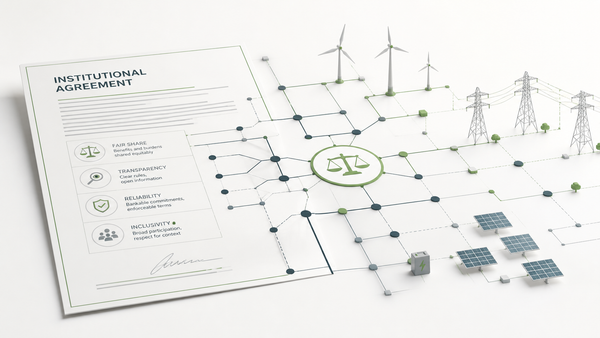
This is the point at which engineering turns into politics. If regulators push more stability obligations into baseline technical requirements, the costs become less visible but no less real. If they rely more heavily on explicit procurement, the costs become visible line items that consumers, developers, and network operators can argue over in public. Either way, the old arrangement is fading. Stability is becoming less of an inherited by-product and more of a contested allocation problem.
What the transition really makes visible
The strongest way to frame this shift is not as a story of impending failure. The grid does not become unstable by definition because more renewables and more converters enter the system. The stronger claim is narrower and, for that reason, more persuasive. As synchronous inertia declines, the system loses the illusion that stability comes for free.
The 2018 clock incident belongs in this story because it is memorable and humbling. A continental machine drifted just enough for ordinary people to notice. But the next chapter is not really about clocks. It is about which properties of the grid remain embedded in physics and which must be recreated through code, hardware margins, procurement rules, and political choices about who pays.
That is why this is not only a control-engineering story. It is a pricing story, a governance story, and eventually a legitimacy story. Once stability is no longer quietly bundled with spinning metal, every replacement choice becomes easier to see and harder to treat as neutral.
Sources
Frequency event and inertia
- ENTSO-E notice, 3 March 2018 — source for the clock drift and ENTSO-E's estimate that frequency-steered clocks were about five minutes late.
- ENTSO-E press release and FAQ, 6 March 2018 — explains the Serbia/Kosovo-originating imbalance and why the 2018 incident was political and operational rather than a renewables story.
- ENTSO-E Project Inertia update, 23 January 2025 — supports the shift from intrinsic inertia toward dedicated capabilities and network assets.
- ENTSO-E report Inertia and Rate of Change of Frequency (RoCoF) — defines RoCoF and frames it as a core frequency-stability indicator.
Converter-based support and stability services
- ENTSO-E report on power-electronic-interfaced sources and grid-forming converters — technical source for the limits of synthetic inertia and converter-based support.
- ENTSO-E report on grid-forming capability of power park modules, 2025 — details operational boundaries, headroom needs and implementation constraints for grid-forming behaviour.
- NESO Frequency Risk and Control Report 2025 — shows how Britain's system operator turns frequency risk and inertia assumptions into explicit operating choices and consumer cost.
- NESO Stability Network Services and Stability Pathfinder material — explains what Stability Pathfinder procures and why those services are needed.
- NESO announcement on Great Britain’s first grid-forming battery in Scotland — evidence that these contracted stability services are moving into live operation.
Regulation and procurement
- Regulation (EU) 2017/1485 — the System Operation Guideline and the legal basis for monitoring and procuring ancillary services.
- ACER Recommendation 01/2025 annex — shows how the updated annex keeps procurement and monitoring logic explicit under the SO Regulation.