The machine that gave away the future
IBM's Personal Computer turns 45 this week. The standard story calls it either a visionary gift to humanity or a catastrophic strategic blunder. Both are wrong.
Picture two groups of engineers working in deliberate isolation from each other. The first group examines an IBM PC, runs software on it, tests its responses, and writes down everything the machine does at the lowest level — a specification of behaviour, not a copy of code. The second group never sees the original. They take that specification and write equivalent firmware from scratch.
This is the clean-room method, and it is what made IBM-compatible computing possible without IBM's permission. Compaq used it. Columbia Data Products used it. Dozens of manufacturers followed. The legal principle was straightforward: you cannot copyright a behaviour, only its expression. IBM had copyrighted its BIOS firmware. The cloners recreated the contract, not the text.
Forty-five years after the IBM PC Model 5150 shipped on 12 August 1981, the clean-room detail is a useful corrective against two equally misleading stories. The first says IBM made a naive gift of its technology to the world. The second says IBM committed a historic strategic blunder. The truth is more diagnostic and, in the end, more useful.
A deadline, not a doctrine
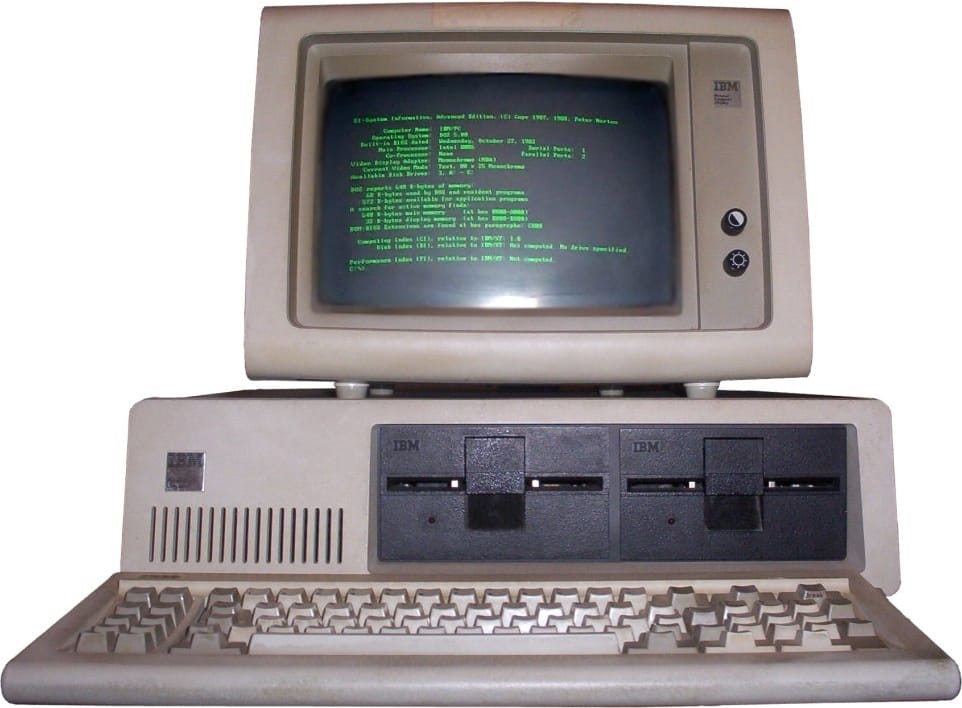
The PC arrived because IBM needed something fast. Bill Lowe had a month to produce a working prototype and roughly a year to ship a product. His successor Don Estridge led the Boca Raton team — code-named Project Chess — under the same constraint. IBM's normal development process, which had produced mainframes and minicomputers through deep vertical integration, would not fit the schedule.
The solution was engineering pragmatism, not philosophy. The team bought components from existing suppliers: an Intel 8088 processor, supporting chips, external peripherals. It licensed an operating system from Microsoft. It published technical documentation about the machine's interfaces so that third-party software and expansion-card makers could build for it without needing IBM to certify every card.
Intel's retrospective on the 8088 selection is telling about what actually drove the decision. Raw processor performance was one factor. But supplier support, delivery certainty, and a commitment to continuity within the 8086 family were equally important. You cannot ship a machine if the chips do not arrive. The 8088's 8-bit external bus allowed cheaper, established support hardware while keeping software compatible with the 8086 lineage. That is not an open-architecture manifesto. That is supply chain management.
The IBM brand did the legitimising work. Before the 5150, the personal computer market was fragmented: Apple IIs, TRS-80s, Commodore machines and CP/M-based business systems each formed their own software island. Buyers who chose one were choosing a whole ecosystem that would not talk to the others. IBM's entry was social as much as technical — its name told corporate purchasing departments that a desktop computer could be serious office equipment. The technical recipe, once credible, became the coordination target.
What "open" actually meant
Precision matters most here, because the folklore is imprecise. IBM published technical design details for the 5150. This was enough for third-party expansion-card makers to work from and enough for competitors to understand the machine's hardware behaviour. But IBM did not publish its BIOS code. The Basic Input/Output System was copyrighted firmware.
That distinction is not a footnote. It is the mechanism that produced both the clean-room method and the early clone litigation. Compaq licensed MS-DOS and legally reverse-engineered IBM's BIOS through the two-group isolation process. Columbia Data Products did the same. Companies that copied the BIOS code directly found themselves in IBM's courtrooms.
So the architecture was not open. It was legible. IBM made the machine's functional contract reproducible — not by releasing it, but by documenting enough of it that the functional contract could be independently recreated. The clone market did not exploit a gift. It exploited a combination of copyright law's limits and the technical specificity of IBM's published documentation.
This distinction carries forward: a platform that allows compatible implementations is structurally different from one that releases its source. Android's open-source project is available under permissive licences; the IBM PC's BIOS was not. Both cases generate ecosystems of compatible products. But the legal and economic dynamics differ in ways that matter once you ask who can certify what, who controls the upgrade path, and who profits from the compatible ecosystem.
The operating system that scaled without factories
The DOS story has a similar problem of compression. The version that circulates most widely has Bill Gates buying QDOS for $50,000 and thereby becoming Microsoft. The number is contested — some accounts say $75,000, counting different stages of the transaction — and the sequence it summarises involves Microsoft licensing 86-DOS from Seattle Computer Products, adapting it with Tim Paterson's involvement, and later acquiring rights that permitted licensing to other manufacturers.
The number was never the point. The point was non-exclusivity.
IBM received PC DOS. Every other PC manufacturer received MS-DOS. As the compatible hardware market multiplied, each new machine required an operating system licence. Microsoft did not have to build a factory, manage a supply chain, or compete on hardware margins. It collected at a layer that scaled with every compatible box that shipped, regardless of who made the box.
Intel occupied the same structural position. The 8086 family offered developers and system builders continuity and investment protection. As the installed base of compatible software and tooling grew, it became increasingly costly to move to a different processor architecture. The instruction set became infrastructure. IBM made the box; Intel and Microsoft made themselves indispensable to the box's usefulness.
The feedback loop that commoditised IBM's own product
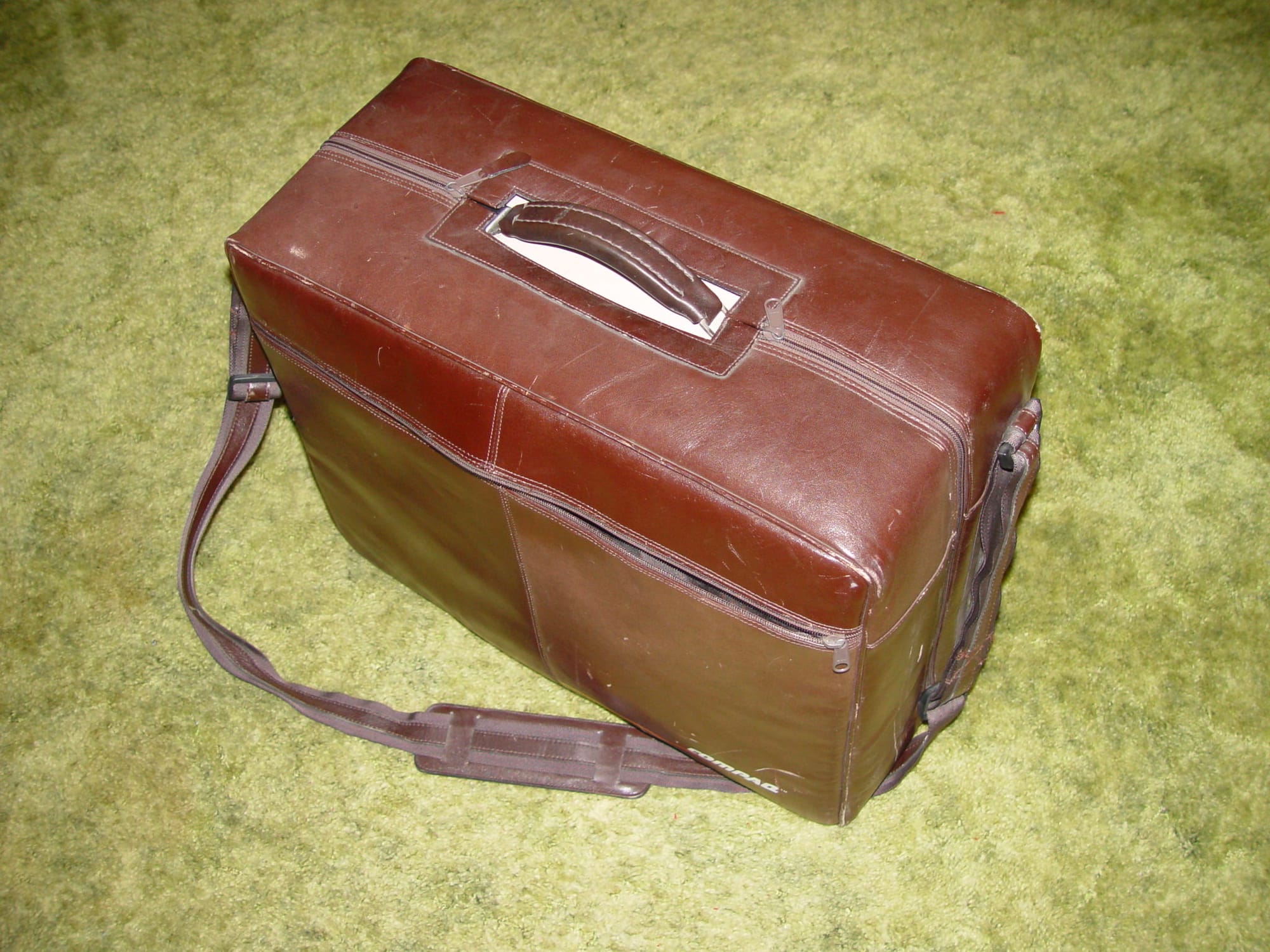
Compaq's Portable, announced in 1982 and on sale in 1983, made the structural problem concrete. Here was a machine that could run IBM-PC software, used MS-DOS, had an independently produced compatible BIOS, and did not come from IBM. First-year sales exceeded $100 million. The message was clear: compatibility was the product, not the IBM logo.
The dynamic that followed was self-reinforcing. IBM's entry made the platform credible. Software accumulated around the credible platform. Buyers wanted machines that ran the software. More manufacturers could build those machines from available components and a licensed operating system. Greater scale strengthened the compatible ecosystem. IBM's hardware differentiation weakened.
IBM's own history page records the consequence: from roughly 80 percent PC market share in 1982–83 to around 20 percent a decade later. The company later attempted to reassert control with the proprietary PS/2 and Micro Channel Architecture. The market declined the invitation. Once compatibility had become the platform's common property — distributed across software titles, peripheral standards, developer tooling and user expectations — a single manufacturer could not reclaim it by reintroducing proprietary interfaces. In 2005, IBM sold the PC division to Lenovo for $1.75 billion. IBM redirected itself toward services, software and enterprise systems, where it has remained more profitable. But it had permanently lost the ability to make "PC" mean "an IBM product."
A diagnostic, not a lesson
The IBM PC is often recruited into arguments about open versus closed technology strategy. It makes a poor ambassador for either side, because it illustrates neither.
The 5150 was not an intentional commons. It was a proprietary product whose interfaces became sufficiently legible for the market to do something IBM had not planned and could not easily reverse. RISC-V, by contrast, is a royalty-free instruction-set architecture governed by RISC-V International, with the explicit goal of being usable in both open and proprietary implementations. The specification is shared by design. The IBM PC's architecture became reproducible by market action. The similarity is surface-level; the politics are different.
Android sits in a third position. The Android Open Source Project is largely available under Apache 2.0 licensing. But Google's documentation distinguishes clearly between having the source code and participating in the compatible Android ecosystem with access to Google Play. Source availability and platform power are separable. The IBM PC's clone market showed that you could build compatible hardware without the original manufacturer's participation; Android's history shows that a downstream manufacturer can ship a compatible device while remaining outside the profitable centre of the ecosystem.
Apple is the deliberate counter-example. Its hardware, operating system and services are designed to resist cloneability. This is not a strategic error on Apple's part. It reflects a different trade-off: vertical control preserves margins and the coherence of the user experience; it forecloses a clone market. Apple's bet is that the experience justifies the premium. IBM's original bet — that the IBM name could sustain premium pricing even in a cloneable market — did not survive the market's verdict.
The diagnostic question the 5150 leaves behind is more useful than any of these comparisons: Which layer is open enough to reproduce, and who controls the scarce layer that the reproducible market depends on? IBM made the hardware layer legible and therefore contestable. Intel's processor family and Microsoft's operating-system licence were not contestable in the same way — they controlled scarce, scalable positions that the compatible ecosystem needed.
The doorway was the business
In retrospect, the IBM PC's design was neither naïve nor visionary. It was a deadline-driven response to a market IBM could not afford to miss. The off-the-shelf components, published documentation and outside software suppliers were not strategic choices about platform openness; they were the only way to ship a credible machine in time.
But decisions made for one reason can have consequences that matter for an entirely different one. IBM's pragmatic choices created a machine whose behaviour was legible enough to be legally recreated. Clean-room engineering closed the legal gap. Non-exclusive software licensing made the operating system a commons without anyone calling it one. The compatible machine became more than a product — it became a coordination standard, then an industry, then infrastructure.
IBM gave the future a common doorway. It discovered, somewhat slowly, that the doorway was the business — not the house built around it. Intel and Microsoft understood, earlier and more clearly, that a layer controlling the scarce complement to a commodity platform grows with the platform without being exposed to platform competition.
Forty-five years on, the PC architecture remains alive in every x86-family server and desktop, albeit evolved beyond recognition from the 5150's specifications. The IBM brand is no longer on it. The lesson the machine carries is not "open always wins" or "IBM made a blunder." It is that the decisive political economy of a platform lies at the boundary that other people can reproduce — and that whoever controls what sits just beyond that boundary often ends up holding the ledger.
Sources
Primary documentation
- The IBM PC — IBM's own history page, including market share data and the development story of the 5150. IBM History, 2024.
- The Intel 8086 and the IBM PC — Intel's retrospective on why the 8088 was selected, with detail on supply chain and continuity considerations. Intel Virtual Vault.
Computer History Museum
- August 12: IBM introduces personal computer — timeline entry on the 5150's announcement and launch. CHM, 2024.
- The IBM PC — CHM Revolution exhibition overview of the 5150 and its significance for personal computing.
- Send in the clones — CHM Revolution exhibition on the clone market, clean-room engineering, and the compatible ecosystem.
- Compaq Portable — CHM entry on the first commercially successful IBM-compatible clone.
- MS-DOS early source code — CHM blog post on the origins of DOS and the licensing structure that let Microsoft scale without factories.
Contemporary analysis
- The complete history of the IBM PC, part two: The DOS empire strikes — Ars Technica deep-dive on DOS licensing, the clone wars, and how the compatible ecosystem outgrew IBM. July 2017.
Modern comparisons
- About RISC-V — RISC-V International on the royalty-free instruction-set architecture designed to be explicitly open, by contrast with the IBM PC's accidental legibility.
- Android Open Source Project FAQ — Google's documentation distinguishing source availability from ecosystem access — the third position between IBM and Apple.
- Apple Developer: Business — Apple's closed-ecosystem approach as the deliberate counter-example to the IBM PC's cloneability.
- Apple Developer: Platforms — Apple's platform integration documentation, illustrating vertical control as an explicit strategic choice.