420 Years of Rembrandt — and we're still not sure which ones are his
On July 15, visitors at the National Gallery in London join guided birthday tours through rooms full of Rembrandts. In Leiden, his birth city stages a weekend of living 17th-century history. And in Amsterdam, the Rijksmuseum puts a painting on display that was dismissed as a fake in 1960, disappeared into a private collection for sixty years, and was confirmed in March 2026 as the real thing. It's a fitting way to mark a 420th birthday — by reminding everyone that the count is still in progress.
In 1968, the Dutch art historian Horst Gerson sat down and counted. His catalog Rembrandt Paintings proposed exactly 420 works as the authentic canon. It was a number chosen with the full confidence of mid-20th-century scholarship. Today, in the year that marks Rembrandt's 420th birthday, that same number appears to be where the certainty peaked. Roughly 250 paintings now pass serious scrutiny. The corpus has lost 40 percent of itself — and it isn't done.
This is not the story of a discipline failing. It is the story of what a discipline looks like when it refuses to stop asking.
The project that started shrinking things
The Rembrandt Research Project began in 1968, the same year as Gerson's catalog — a coincidence that, in retrospect, feels pointed. Commissioned by the Netherlands Organisation for Scientific Research (NWO), five art historians embarked on what would become the most sustained attribution study in the history of Western art. A Corpus of Rembrandt Paintings was published in six volumes between 1982 and 2014.
Their system was clinical: Category A for works accepted as autograph, B for the undecided, C for the rejected. When the first three volumes appeared in 1982, 1986, and 1989, more than 100 works had been downgraded. Museums that had displayed a Rembrandt for decades discovered they had an atelier copy. Auction houses watched valuations crumble overnight.
The project also revealed its own limitations. The methodology shifted partway through: early volumes were chronological, later ones thematic. Decisions made in the 1980s were quietly revised. A self-portrait rejected in 1982 later found its way back into the Corpus. Critics pointed to the subjectivity lurking behind what passed for scientific rigor — connoisseurship, however sophisticated, is still one expert's eye judging another expert's hand.
When the project closed in 2014, around a quarter of the oeuvre had never been fully examined. There is no finished version of this investigation. There is only the version that exists now, with the tools available now.
What technology actually tells you
The instruments used to analyze Rembrandt paintings today would have been unrecognizable to the experts who wrote those early catalog volumes. Macro X-ray fluorescence scanning — MA-XRF — moves a beam across an entire canvas and maps the chemical composition of every paint layer without touching the surface. It can confirm whether the pigments are consistent with Rembrandt's documented material choices in a given period, and flag anachronisms: some pigments simply did not exist in the 17th century.
Dendrochronology dates oak panels by their growth rings, often down to the year. It provides a terminus post quem — the painting cannot have been made before the tree was felled. Infrared reflectography penetrates the paint layers to reveal the underdrawing beneath: the initial sketch, the corrections, the pentimenti that show an artist reconsidering a hand or a fold. Rembrandt's underdrawings are characteristic. When you've seen enough of them, you can start to recognize what you're not seeing.
But there's a limit that none of these tools can overcome. They can verify that a panel is the right wood, that the pigments match, that the paint layers are structurally consistent. They cannot rule out a talented student who used the same materials, on the same type of panel, in the same studio, learning from the same master. Every technique in the forensic toolkit is ultimately a supporting argument, not a verdict. The expert's eye remains in the room.
A painting that was wrong for sixty years
In March 2026, the Rijksmuseum confirmed that Vision of Zacharias in the Temple, dated 1633, is an authentic Rembrandt. The announcement was the outcome of two years of investigation — and six decades of institutional forgetting.
The painting was rejected in 1960. The scholarly consensus of the time found it wanting, and one year later it passed into a private collection, where it remained inaccessible to researchers. The owner, by some accounts, was not initially aware of what he had — or what was being disputed.
When the owner eventually granted the Rijksmuseum access, the research began in earnest. Curator Jonathan Bikker described the wood evidence: "The wood that was used for the panel is definitely from a tree that was cut down before 1633." Then the pigments: "All the pigments were used by Rembrandt in other paintings. And the layers of paint... is also precisely the same."
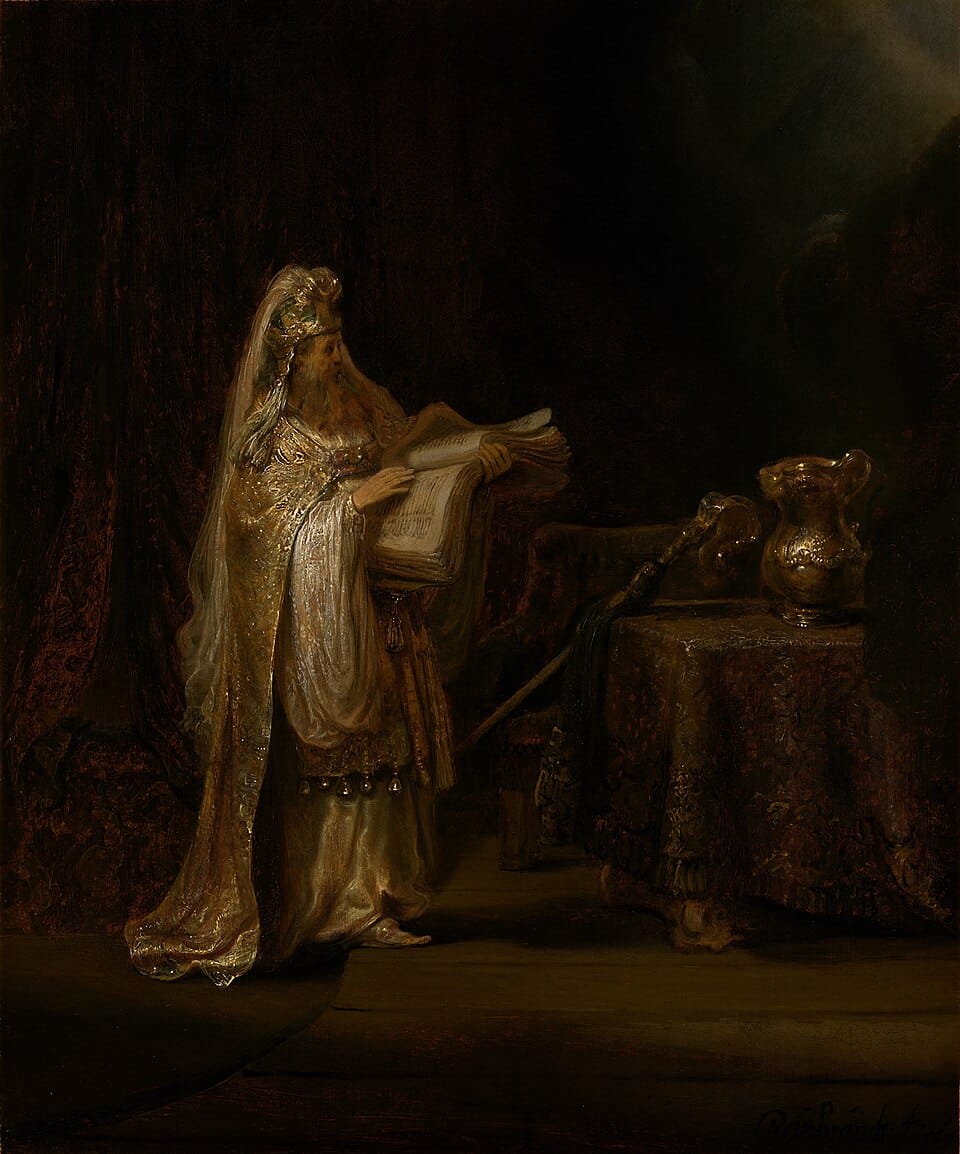
No single element was sufficient. What settled the question was convergence — every line of inquiry pointing in the same direction, with none pointing elsewhere. History paintings are rare in Rembrandt's output; he found portraits more profitable and spent most of his career making them. Vision of Zacharias now hangs in the Rijksmuseum on long-term loan, next to works that have carried his name without interruption for centuries.
The 1960 rejection was not a scandal. It was how attribution works before the tools exist to see clearly. The sixty years in a private collection, inaccessible to any researcher who might have looked again — that is a different kind of problem.
What the workshop actually was
Rembrandt took his first pupils in 1628. Gerrit Dou and Isaac Jouderville moved into his house to study. Govert Flinck joined around 1635, Ferdinand Bol around 1637, then Carel Fabritius, Nicolaes Maes, Samuel van Hoogstraten, Aert de Gelder. The list runs to several dozen names.
Students paid 100 guilders a year. In exchange, they learned not merely technique but Rembrandt's specific style — how he handled light, how he built a face from glazes, how he made cloth look heavy. They produced paintings in that style. These were sold. This was not fraud; it was the standard organization of a successful 17th-century studio. The idea that a painting must have a single identifiable author is a Romantic notion that the 17th century would not have recognized.
The Leiden Collection currently holds ten paintings made in Rembrandt's atelier whose authorship — master or pupil — remains unresolved. Not ten paintings where experts disagree and a consensus might eventually form, but ten paintings that may be structurally unanswerable with available evidence. That's a feature, not a flaw, of how the workshop actually functioned.
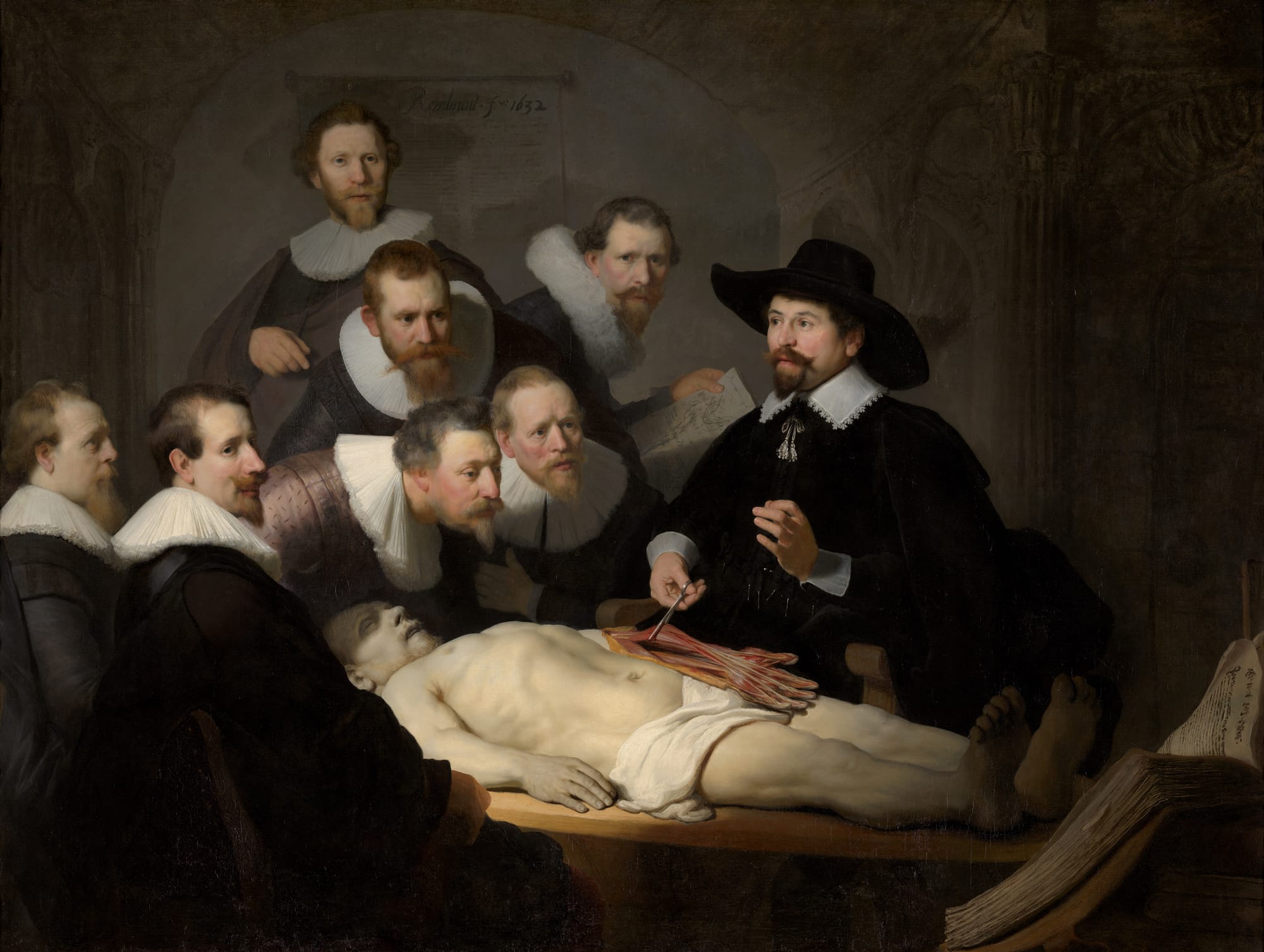
In 2026, art historian Gary Schwartz opened a new question around Old Man with a Gold Chain at the Art Institute of Chicago, where two versions of the painting hang side by side — one accepted as autograph Rembrandt, the other labeled a workshop copy. Schwartz argues that the second version might be an autograph replica: a copy Rembrandt made himself for a second client. The assumption that Rembrandt never produced replicas, he points out, derives from the art dealer Wilhelm Bode in 1912 — and has been silently steering attribution decisions ever since.
Whether Schwartz is right about this specific painting is almost secondary. His point about inherited assumptions is not.
The cost, in numbers
The financial consequences of attribution are well-documented and, at this point, extraordinary.
In 2021, Christie's offered a 17th-century painting cataloged as "related to Rembrandt" with an estimate of around $17,000. The hammer fell at $992,000. Two years later, the same painting appeared at Sotheby's — now described as by Rembrandt himself — and sold for $13.8 million.
Two words — by or after — and twelve-point-eight million dollars.
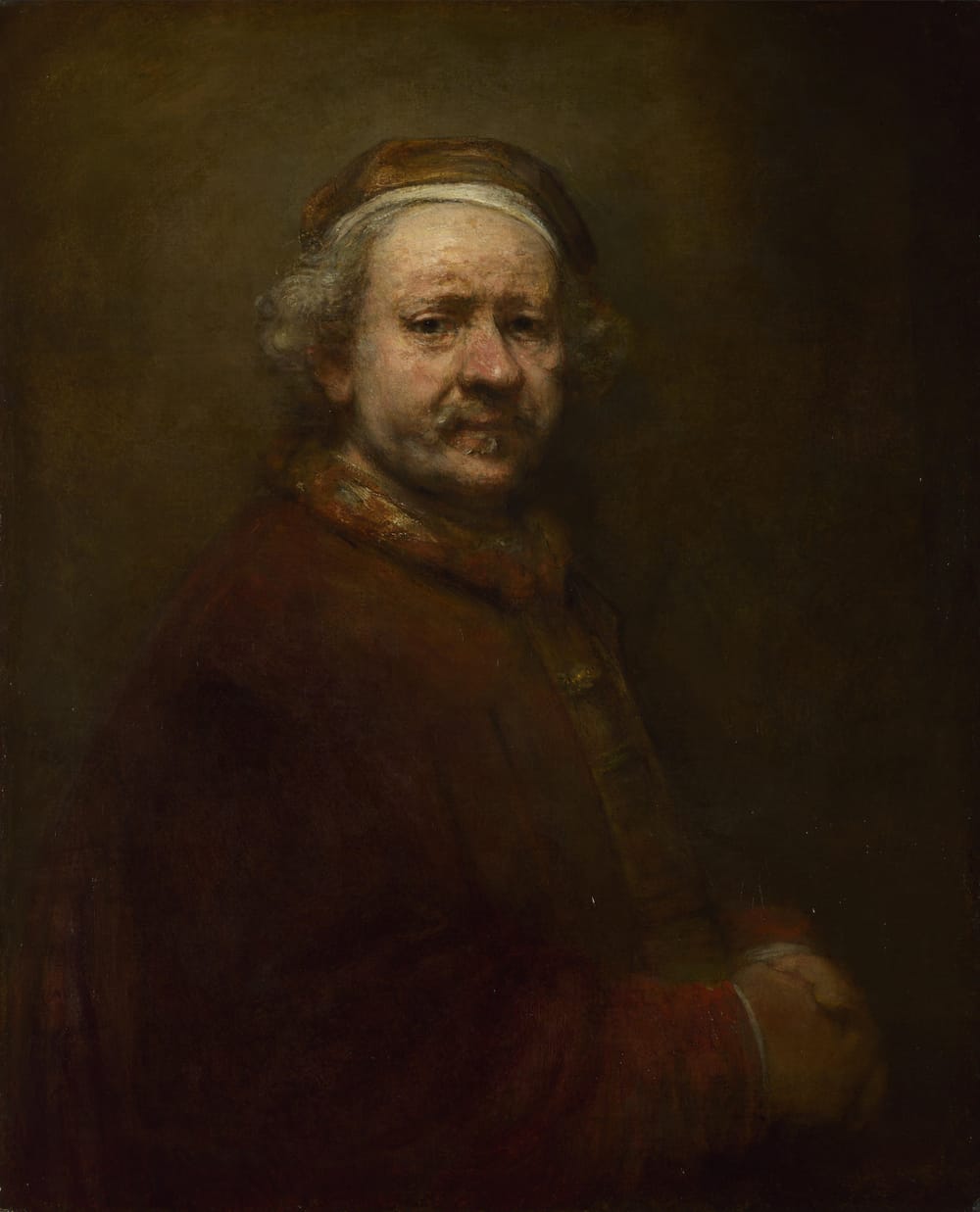
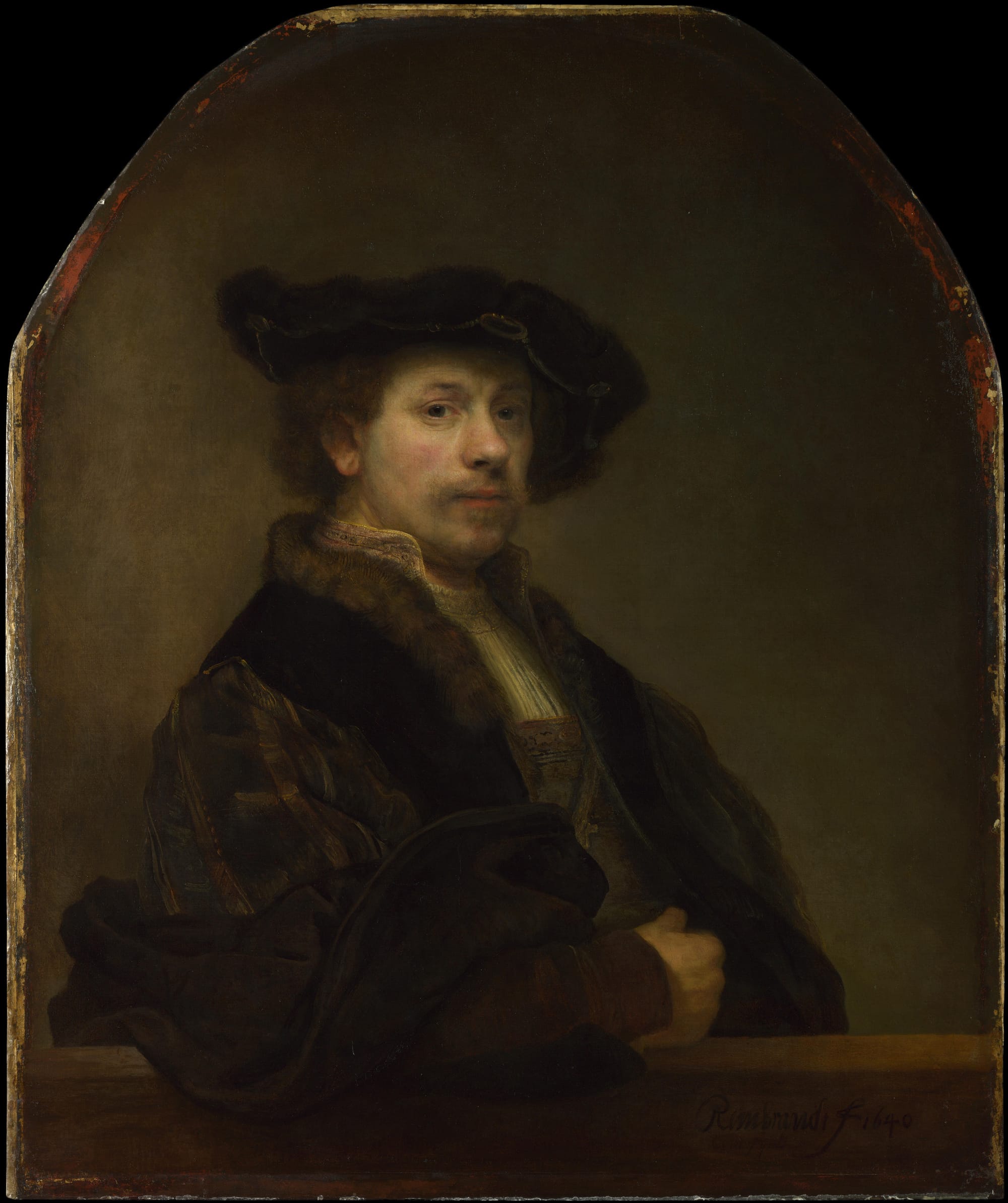
Museums face a different kind of arithmetic. The Portrait of Rembrandt Wearing a Feathered Bonnet at the National Trust had been accepted as autograph for roughly 350 years. A 1968 expert suggested it might be Govert Flinck's work. By 1989, the Corpus classified it as "atelier of Rembrandt." The painting still hangs where it always did, but the audio guide, the insurance policy, the scholarly literature, and the tourist appeal are all different objects now.
The Head of a Bearded Man at the Ashmolean in Oxford was rejected by the RRP in 1981 and moved into storage. It stayed there for decades, invisible, until a 2020 analysis reinstated it — not as an autograph Rembrandt, but as a workshop piece. A half-correct answer, as the Smithsonian framed it. That may be the most accurate description available.
What's still open
The de-attribution trend is not unidirectional. Vision of Zacharias demonstrates that the movement runs both ways: works are reclaimed as well as demoted. The B-category of the Corpus contains dozens of unresolved cases that no current technology has definitively settled. Schwartz's hypothesis about Chicago's Old Man with a Gold Chain is being investigated and has not been confirmed.
Then there is the AI question. A company called Art Recognition recently claimed, with "up to 91% certainty," that two Jan van Eyck paintings were misattributed. Maximiliaan Martens, a leading Van Eyck specialist, rejected the analysis: the model was poorly trained, it had not been guided by adequate art-historical input, and its confidence metrics did not correspond to scholarly standards.
Rembrandt's name will appear in similar claims. The combination of commercial interest, large training datasets, and a well-documented corpus makes him an obvious target. The issue is not whether AI attribution tools will claim a Rembrandt — it is whether the art world will examine those claims with the same rigor it applies to any other argument.
The genius nobody asked to be
Rembrandt did not think of himself as a genius. The word, in its Romantic sense — the lone creator, the muse-haunted outcast ahead of his time — was not yet in circulation. He was a successful master who ran a profitable workshop, went bankrupt in 1656, was subsequently pushed out of the Amsterdam portrait market he had once dominated, and kept working. He described himself in business terms.
The image of Rembrandt as the supreme misunderstood visionary was assembled in the 18th and 19th centuries, when writers and critics were constructing the narrative of the tortured artist against society. It is a story that has survived because it is useful. A lone genius producing 420 singular masterworks is far more commercially coherent than a workshop director whose output was partly collective. Museums need great names on their labels. Auction houses need the same.
What the scholarship has made clear — and it is now difficult to dispute — is that a substantial portion of what is labeled "Rembrandt" in museums around the world reflects collaborative production. Not fraud, and not failure on the part of earlier experts. Just a different understanding of what painting was.
What you're actually looking at
The visitors walking through the National Gallery on July 15, guided through rooms of Rembrandts by experts who have spent careers in front of these paintings, will almost certainly be looking at a mix: some autograph works, some products of his atelier, some borderline cases that remain genuinely contested. The exact proportions are not known. They may never be.
That is not an embarrassing admission. It is a more honest relationship with what these objects are. A painting made in Rembrandt's studio in 1637, by a student working under his direct supervision and correction, in materials he supplied, in a style he taught, is not nothing. It is something specific — just not the same thing as a canvas he painted himself.
The number 420 was supposed to be the answer in 1968. In 2026 it has become the age. Both are still counting.
Sources
- Rembrandt Research Project — Wikipedia overview of the six-volume Corpus and ABC methodology
- Cataloguing Rubens and Rembrandt — Academic comparison of RRP methodology (Academia.edu)
- Issues of Attribution in the Rembrandt Workshop — National Gallery of Art essay on workshop attribution
- New Rembrandt confirmed by Rijksmuseum — FAD Magazine, March 2026
- Painting dismissed for years confirmed as genuine Rembrandt — PBS NewsHour
- Needle-in-haystack confirmation — Washington Times
- Five ways experts are decoding Rembrandt — The Arts Society
- MA-XRF in authentication — ScienceDirect
- Dendrochronology replication study — Nature/Humanities (Mauritshuis/VU Amsterdam, 2025)
- Head of a Bearded Man reinstated — Smithsonian Magazine
- Rembrandt mystery: Is workshop copy actually by the master? — FAD Magazine, March 2026 (Gary Schwartz / Old Man with a Gold Chain)
- List of Rembrandt pupils — Wikipedia
- Leiden Collection: Rembrandt biography — Ten workshop paintings with unresolved authorship
- The Adoration of the Kings / attribution price jump — Denver Post via PressReader
- De-attributed Rembrandt still valuable — CODART
- Rembrandt: myth, legend, truth — ARTnews
- National Gallery London: Rembrandt birthday tour, 15 July 2026
- Rembrandt Days Leiden — Leiden International Centre