The Builders of Sound We Never Learn to See
What the death of Hans Gerd Klais reveals about the cultural invisibility of organ builders, and why that matters in a country that still depends on its organ heritage.
When a great violin maker dies, culture more or less knows what to do. We write about the hands, the wood, the varnish, the lineage, the particular tone that seemed to live inside a person's fingers. When a master organ builder dies, the response is usually thinner. Outside the trade, silence arrives quickly. That is odd, because the organ builder has often shaped not just one instrument but the entire acoustic identity of a church, a cathedral, or a concert hall.
Hans Gerd Klais, who died in Bonn on 11 June 2026 at the age of 95, is a good reason to look at that silence more closely. He mattered in the world of organ building: he entered the leadership of the Klais workshop in 1953, took full charge after his father's death in 1965, helped build the firm's international stature, and was associated with roughly four hundred new instruments. His work is tied to places such as the cathedrals of Wurzburg and Trier, the Kolner Philharmonie, Hallgrimskirkja in Reykjavik, and Symphony Hall in Kyoto. He was also a builder of institutions, serving as a co-founder of the International Society of Organ Builders and later as president of the Bund Deutscher Orgelbaumeister.
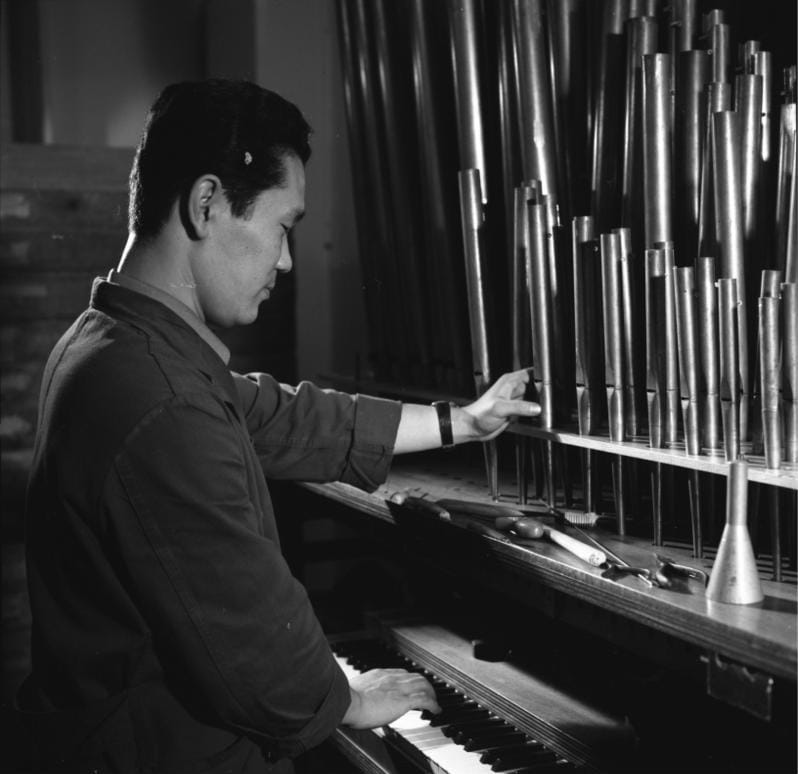
But the point is not that Klais deserves a longer obituary. The point is that his death exposes a larger cultural blind spot. Most people will recognize some of the buildings and perhaps some of the music played inside them. Far fewer will know who helped determine how those spaces actually sound. Even that forgetfulness can turn sloppy. In the assignment that prompted this article, the Berliner Philharmonie was initially linked to Klais; the official Philharmonie page attributes its organ to Karl Schuke. The correction matters. It is not merely a factual cleanup. It is also evidence of the problem itself: outside specialist circles, organ builders are easy to confuse because we rarely train ourselves to notice them in the first place.
That invisibility is built into the nature of the work. A violin can be held, photographed, sold, and discussed as an object. An organ is much harder to separate from its setting. It belongs to a room, to air pressure, to reverberation time, to architecture, to liturgy, to a concert tradition, and often to a long history of restorations and compromises. The builder is therefore partly craftsperson, partly acoustician, partly historian, partly designer, and partly interpreter. An organ is not simply manufactured and delivered. It is tuned into a place.
That point can sound romantic until you look at what the trade itself says. The Dutch association of organ builders describes the field as one that requires knowledge of materials, wood types, construction, aerodynamics, acoustics, organ-building history, building physics, architecture, restoration techniques, and music history. That is an almost absurd range of competencies for a profession whose practitioners most people could barely name at all. Yet the description is not inflated. It reflects the reality of an instrument that asks its maker to think simultaneously about mechanics, hearing, historical style, and the future behavior of a room.
So what disappears when a master organ builder dies? Not only a business leader. Not only a maker with a recognizable house style. What disappears is a body of judgment that is hard to archive in full. Intonation is not just a sequence of written instructions. Restoration ethics are not just a checklist. A seasoned builder carries an ear trained by decades of comparison, a memory of what different spaces do to sound, an instinct for when historical fidelity becomes theatrical imitation, and a sense of how far one can intervene before a restoration becomes a rewrite. Those things can be discussed, taught, and partly documented. They are not easily downloaded. In that sense this piece sits close to our earlier essay What a Machine Doesn't Know When I Put My Feet on the Pedals, which made a similar argument from the player's side rather than the builder's.
That is especially true in a trade where training still depends heavily on practice. In the Netherlands there is no broad, regular initial training pipeline for organ building in the way many larger trades have one. The field is learned largely in workshops, through apprenticeship-like transmission, and then deepened through specialization. The structure has strengths: it keeps the craft close to real instruments and real decisions. It also creates vulnerability. When experienced builders retire or die, the loss is not just numerical. A segment of the profession's working memory goes with them.
This is why it is too simple to speak of organ building as a dying trade, and also too comforting to say there is nothing to worry about. Internationally, the field is still alive. The International Society of Organ Builders reports more than 280 member firms worldwide. UNESCO documentation on German organ craftsmanship refers to around 400 workshops in Germany, roughly 2,800 employees, and about 180 apprentices or trainees. The Bund Deutscher Orgelbaumeister represents more than 140 workshops. Those are not the numbers of a vanished art.
They are, however, the numbers of a niche ecosystem. The field is alive in the way certain ecologies are alive: still functioning, still fertile in places, but structurally dependent on continuity, recruitment, and institutions that cannot be taken for granted. In the Netherlands the narrowness becomes more visible. According to the VON policy plan for 2023-2028, the country has roughly 20 active firms in the branch. The domestic market has been pressured by secularization and shrinking church budgets. New church organs have become exceptional. Restoration, partial restoration, and maintenance are far more important to the economic life of the sector, with roughly 30 to 40 restorations commissioned annually, helped by subsidy structures.
That shift from new building to restoration is not just a market fact. It changes the cultural meaning of the profession. The future of Dutch organ building now lives less in spectacular new church commissions than in the care of instruments that already exist. The trade survives, in other words, by maintaining the audible past. There is something paradoxical in that. A living craft remains alive by serving inheritance. It does not vanish, but it risks becoming visible only through preservation budgets, technical reports, and crises of succession.
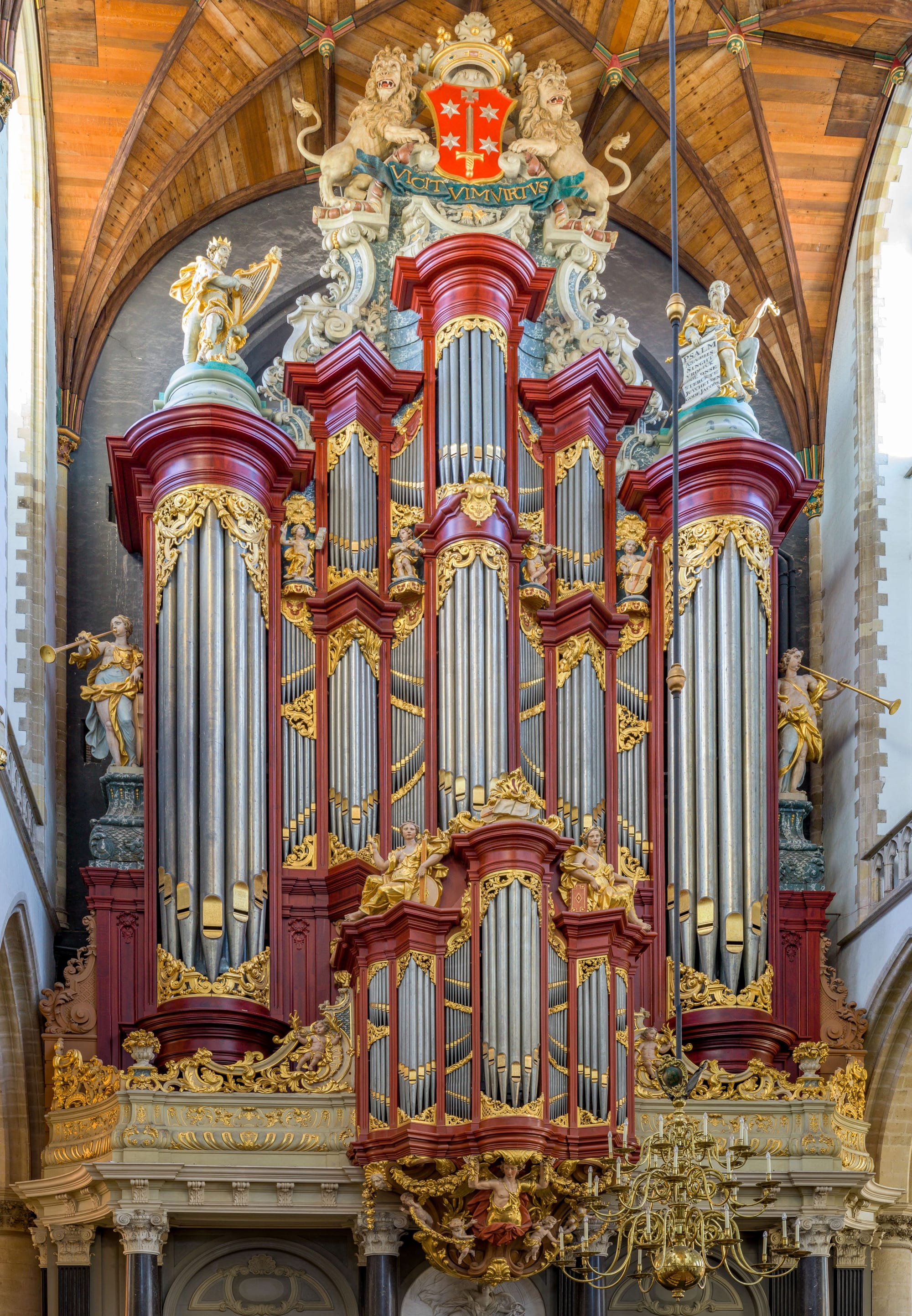
If that sounds abstract, the Netherlands offers a perfect concrete example. The Grote of St. Bavokerk in Haarlem houses the Muller organ of 1738, presented by the church as the most depicted organ in the world. It is one of those objects that feel larger than any one maker or caretaker, almost like a natural feature of culture itself. And yet the instrument's continued existence as a sounding reality depends on the exact kind of patient, nearly invisible work this article is about. The Bavo's own material notes that, despite several restorations, the concept was preserved and around 90 percent of the pipework remains intact. Flentrop maintains the instrument and has carried out work to bring its sound closer again to the original profile.
That is the whole story in miniature. People know the image. They know the grandeur of the case, the prestige of the church, perhaps even the aura of famous listeners and players. They usually do not know the chain of builders, restorers, and maintainers whose labor keeps that grandeur from becoming mute. Even in a country that likes to regard itself as an organ land, the visible monument depends on almost invisible stewardship.
The same is true at a broader historical level. Dutch organ culture is inseparable from a long northern tradition shaped by figures such as Arp Schnitger and by later builders and restorers who had to decide, again and again, what fidelity to that tradition actually means. Restoration is never just repair. It is interpretation under pressure. What belongs to the original concept? What counts as later accretion worth preserving? How far should a builder go in recovering a presumed historical sound? These are technical questions only in the shallowest sense. At a deeper level, they are arguments about cultural memory conducted through metal, wood, wind, and time.
That is why the death of someone like Klais should not be folded into nostalgia and left there. Nostalgia makes the story smaller than it is. The sharper point is structural. A culture that depends on highly specialized makers can become strangely indifferent to them, especially when their best work disappears into institutions that seem to have always sounded the way they sound now. We remember conductors, soloists, composers, and sometimes instrument makers whose work travels visibly from hand to hand. We are less practiced at remembering the people who create an acoustic world tied to one building and one long continuity of care.
The result is an odd imbalance. We celebrate heritage while overlooking the professions that make heritage audible. We photograph organ cases while ignoring the people who decide how those instruments speak. We admire the endurance of old churches and halls without asking how much judgment, maintenance, and transmitted expertise are required to stop endurance from collapsing into mere survival.
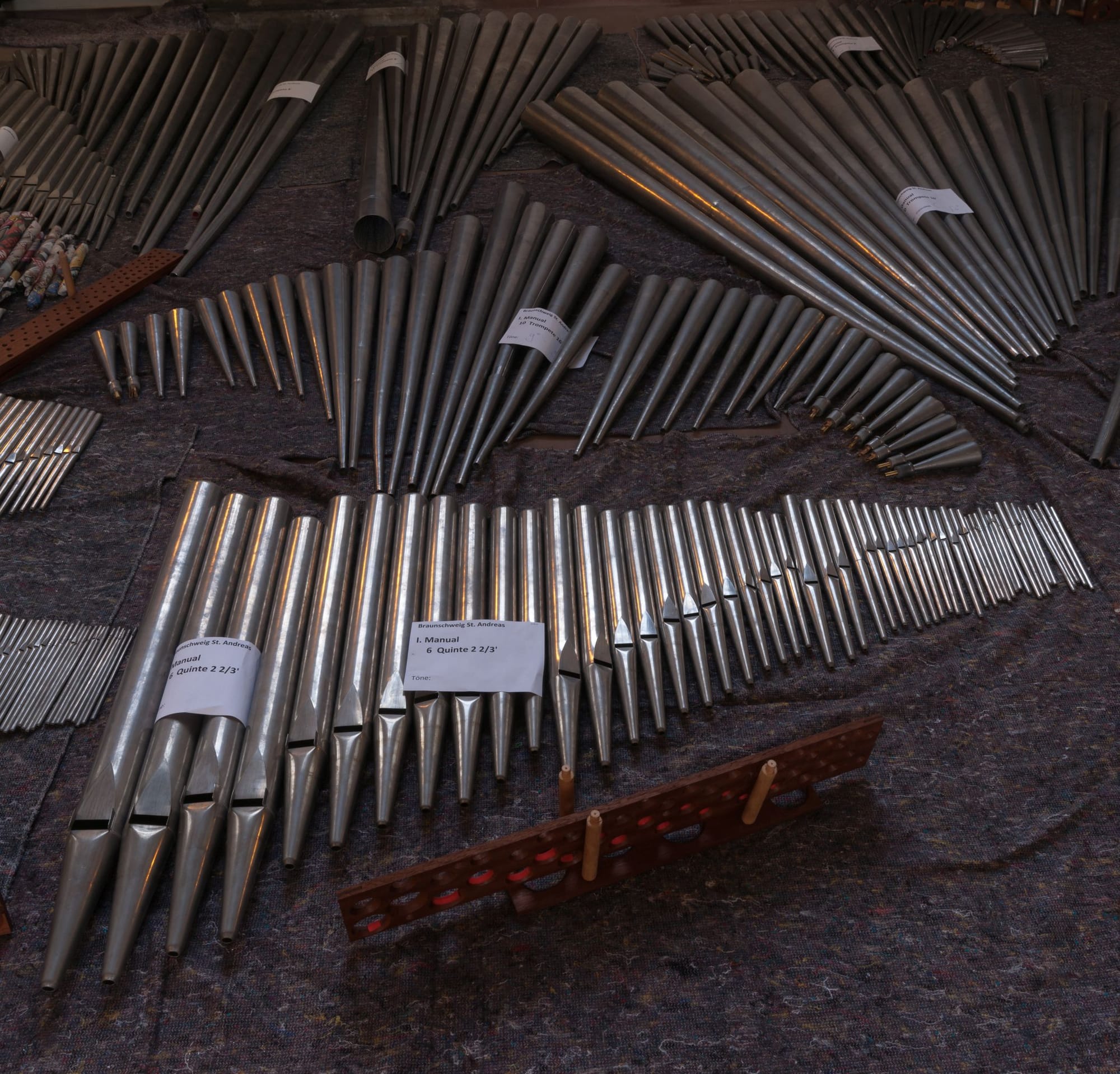
Perhaps that is the real meaning of Hans Gerd Klais's quiet disappearance from the general cultural conversation. Not that the world failed to honor one man sufficiently, but that it revealed how poorly our habits of attention fit the realities of certain kinds of work. Organ builders shape the sound of public memory while remaining largely outside public memory themselves.
If the trade has a future, it will not depend only on sentiment or obituary space. It will depend on apprenticeship, viable workshops, restoration funding, and institutions willing to treat sounding heritage as something more than a static possession. But attention matters too. A society that claims to value its cathedrals, concert halls, and historic instruments should learn to see the people who make those spaces speak.
Otherwise the next master will die, the buildings will remain, the music will continue, and we will once again hear the result without learning the name of the person who taught the room how to sing.
Sources
Klais and the obituary trigger
- Orgelnieuws, "Orgelbouwer Hans Gerd Klais (95) overleden" - Death date, leadership timeline, and the list of major instruments tied to Klais.
- Klais Orgelbau, "Hans Gerd Klais 1930-2026" - Official company memorial page confirming the workshop succession and institutional roles.
Attribution and trade context
- Berliner Philharmoniker, organ page - Confirms that the Philharmonie organ is attributed to Karl Schuke rather than Klais.
- Vereniging van Orgelbouwers in Nederland, knowledge page - Overview of the disciplines and technical knowledge demanded by organ building.
- VON Beleidsplan 2023-2028 - Dutch branch structure, restoration volume, market pressure, and training context.
- UNESCO, "Organ craftsmanship and music" - Scale of the German ecosystem and the apprenticeship structure behind it.
Haarlem and stewardship
- Grote of St. Bavokerk, organ page - Notes on the 1738 Muller organ, the preserved concept, and surviving pipework.
- Flentrop Orgelbouw - Background on the firm that maintains the Haarlem organ.