Seventy Years of Lugano: What Does AI Do to the Song That United Europe?
Today, exactly seventy years ago, seven European countries gathered at the Teatro Kursaal on the shore of Lake Lugano. No grand stage, no glitter balls, no enormous scoreboards. An orchestra of twenty-four musicians, a microphone, and fourteen songs. It was May 24, 1956, and the first edition of the Eurovision Song Contest lasted exactly one hour and forty minutes.
Lys Assia won on behalf of the host country Switzerland with "Refrain." The complete results were never officially published — the jury scores were presumably lost, and international television viewers had no reason to expect them anyway: there was no international broadcast. The festival was small-scale, almost amateurish compared to the productions that would follow. But the idea was revolutionary: after a war that had torn Europe apart, the very broadcasters that had once mobilised nations through radio would now work together to find a common song.
That was seventy years ago. Since then, Europe has expanded, fractured, and pulled itself back together — and each time, Eurovision was there to reflect it.
---
A Contest as European Memory
Few cultural institutions serve as reliably as a thermometer of the European continent as Eurovision. In the 1960s and 70s, it grew into a colourful but predominantly western competition. After 1989, the Eastern European countries joined — Slovenia in 1993, Hungary in 1994 — and for many post-communist countries, participation was not entertainment but a declaration: we belong here.
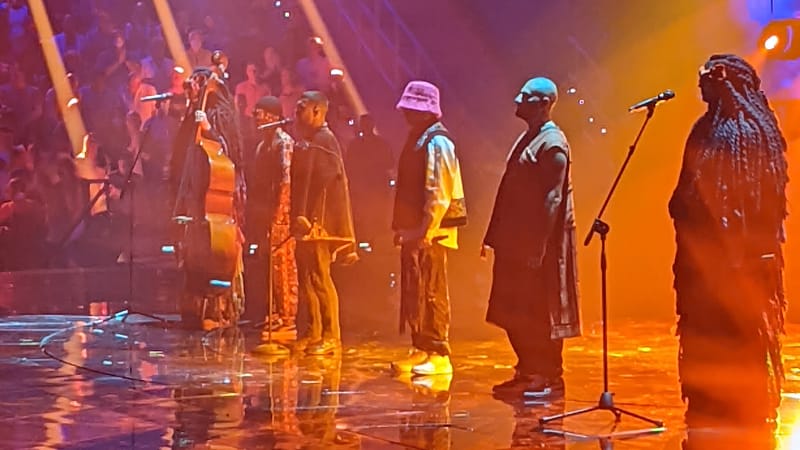
The most striking example dates from 2022. On May 14 of that year, Kalush Orchestra took to the stage in Turin, three months after Russia had invaded Ukraine. They won with 439 public points — a record. Never before in the history of the festival had European viewers voted so unanimously. Researchers at the London School of Economics concluded afterwards that the audience had consciously chosen solidarity, even when they felt another song was musically superior. Eurovision had always had political undertones; in 2022, viewers openly made it a political act.
That makes the festival something special. It is not a museum of European identity, but an ongoing experiment: what do we find beautiful now, what moves us, whom do we love? For seventy years, the answer was always human. Someone had written it. Someone sang it. Someone had chosen it as their story.
---
The Uninvited Guest
While Europe celebrates this anniversary, a new player is standing at the door. Not a country, but a technology.
Suno version 5 — one of the dominant AI music generators of this moment — produces tracks at 44.1 kHz, the same audio quality as a CD. The vocal parts sound human: vibrato, breathing, emotional phrasing. In tests from 2025, professional listeners could not distinguish the best outputs from human demo recordings. The platform counts more than two million paying users, has a partnership with Warner Music Group, and includes a built-in editor that lets you adjust every element layer by layer.
Ask Suno today to write an emotional, cinematic Eurovision entry for a fictional Eastern European country — with a bridge, a chorus, a climax, and a hint of folk melody — and you get something back that sounds as though it belonged there in 1956. In less than a minute. For a few cents.
This is not a theoretical threat. In the San Marinese national selection, four AI-generated songs competed in 2024. Junior Eurovision used AI-generated visuals in its preliminaries, which sparked fierce backlash on social media. And meanwhile, platforms like EuroReVision are flourishing — a fan competition where participants represent countries with songs made entirely in Suno, this year with 32 finalists.
---
The Synthesizer War We Already Fought
Anyone who has read history books — or plays guitar in a band — knows this feeling. We have been here before.
In 1982, the British Musicians' Union tried to ban synthesizers after Barry Manilow had toured with electronic instruments instead of an orchestra. The American Federation of Musicians had already temporarily barred the Moog synthesizer from paid work. Robert Moog later described how union members thought you just had to press a button labelled "Jascha Heifetz" to get a perfect violin. Only when it became clear that the instrument required study — that it was just as demanding as any other instrument — was the synthesizer player recognised as a professional musician.
That battle was won. Kraftwerk, Depeche Mode, Daft Punk: nobody asks any more whether it is "real music."
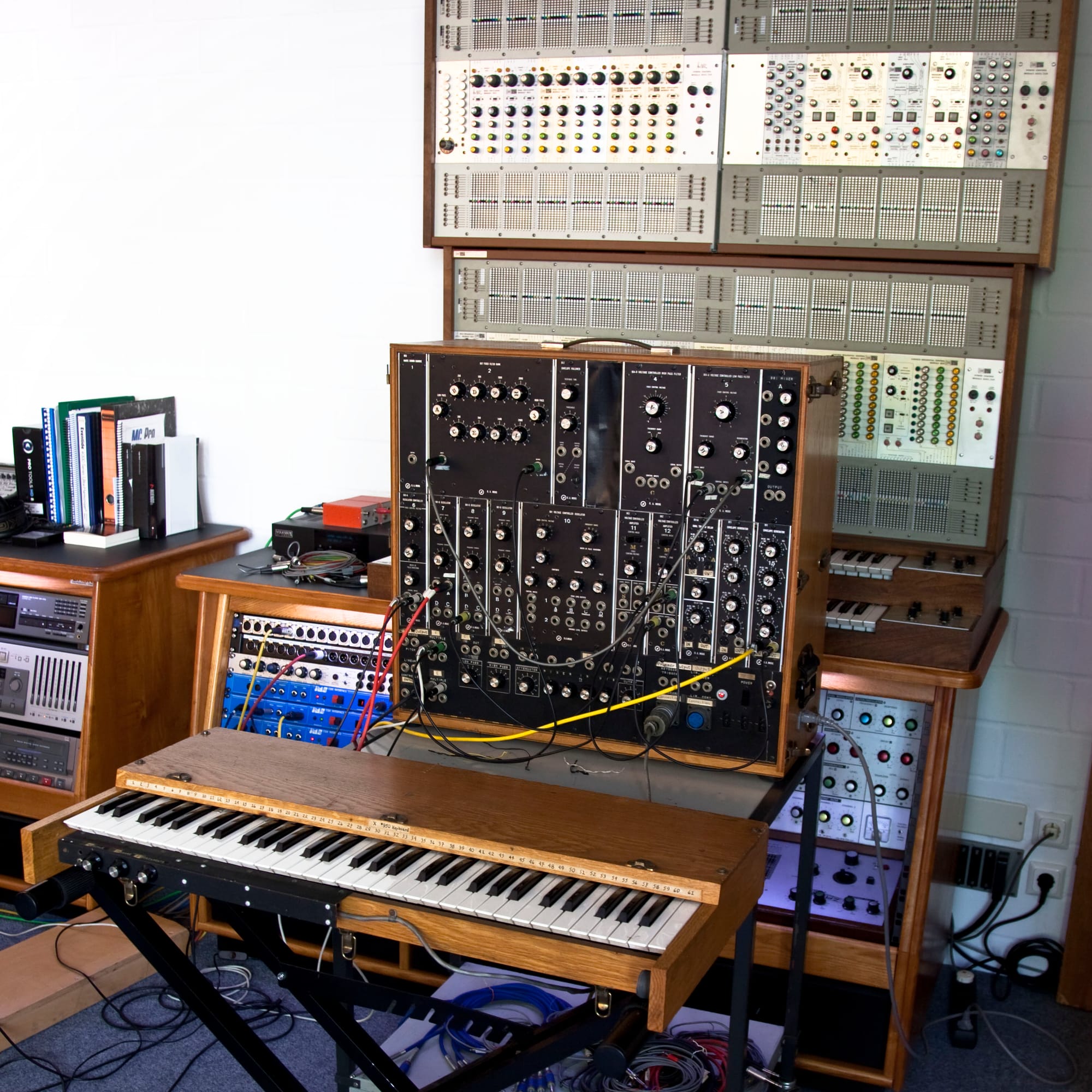
But there is a crucial difference between the synthesizer and today's AI tools. The synthesizer was a new instrument. The person who played it still made the composition, the structure, the emotional choices. The timbre changed; the author remained.
With Suno and similar systems, the author disappears as a creative force. The human types a description. The algorithm writes the song, chooses the chord progression, determines the arrangement, sings the melody, mixes the whole. The human contribution is the idea, not its elaboration. That is no longer a question of tools — it is a question of who is actually speaking.
---
What the EBU Says, and What That's Worth
The European Broadcasting Union (EBU) now has an official position: AI-generated music is banned. ESC Director Martin Green stated unequivocally that "protecting creative people" is the priority. Supervisor Martin Österdahl added that Eurovision wants to "become friends" with AI — but for production elements, not the music itself.
The problem is enforcement. The ban applies only to the ESC stage. National selections fall under the responsibility of national broadcasters, who operate under their own rules. And even if a song reaches the stage — how do you prove it was not wholly or partly AI-generated? A songwriter who uses Suno as a starting point, adjusts the melody, writes new lyrics, and records the whole thing with real musicians: is that an AI entry or a human work?
The boundary is sharp on paper. In practice, it is nowhere to be found.
---
The Litmus Test
Seventy years ago, seven countries came together with one shared idea: music can connect people who have been estranged from each other by war. The idea worked. It was human to the core — uncertain, often kitsch, sometimes admirable, always recognisable as someone's.
The question Eurovision must now answer is not technical but philosophical: what do we actually understand by a song?
If an AI composition moves five hundred million European viewers, is it worth less than a human-written song that leaves them cold? Or is the listener's emotion — equally real regardless of its source — the only thing that matters?
And if the answer is "yes, the emotion is enough," what does that mean for the musician who has devoted her life to her craft? For the Ukrainian artist who sang in 2022 while his country burned? For Lys Assia, who stood before twenty-four musicians in 1956 and performed a song to a continent that hoped for peace?
Eurovision is Europe's oldest, most democratic, and most chaotic music experiment. For seventy years, it has managed to be grand and remain human. Whether that combination is sustainable, the coming editions will show. But the question now hangs in the air — sharper than ever.
---
Research: Roel (content researcher, Aïda) | Published by: Het Schrijfhuis
Sources
Eurovision — History and Anniversary
- Eurovision Song Contest 1956 — Wikipedia — Overview of the first edition in Lugano: participants, results, and context around the lost jury scores
- Eurovision Song Contest Marks 70th Anniversary — EBU — Official EBU announcement on the 70th anniversary global celebration
- Aussievision.net — Comprehensive English-language Eurovision news and background coverage
- EurovisionFun.com — European fan perspective on Eurovision news and analysis
Ukraine, Solidarity, and the Politics of Voting
- Ukraine wins Eurovision as European voters show solidarity — Atlantic Council — Analysis of the political dimensions of the Kalush Orchestra victory in 2022
- What Eurovision told us about attitudes toward Ukraine — LSE EuroPP Blog — Academic research on public voting patterns and the solidarity factor in 2022
- The Real Meaning Behind Russia's Eurovision Controversy — JSTOR Daily — Historical context on politics and exclusion in Eurovision's past
AI and Music Tools
- AI Music Generator Comparison 2026 — Chartlex — Comparative analysis of Suno, Udio, and other AI music generators, including quality benchmarks from 2025
- Warner Music Group and Suno Partnership — Suno — Official announcement of Suno's licensing agreement with Warner Music Group
- Warner settles lawsuit with Suno — Cybernews — Background on the legal and commercial tensions between AI music platforms and major labels
- Martin Green rules out AI for songs at Eurovision — Aussievision — ESC Director Martin Green's statement on AI-generated music and the limits of the ban
The Synthesizer Debate
- Synthesizer — Wikipedia — History of synthesizer technology, including the Musicians' Union controversies of the early 1980s and the gradual cultural acceptance of electronic instruments